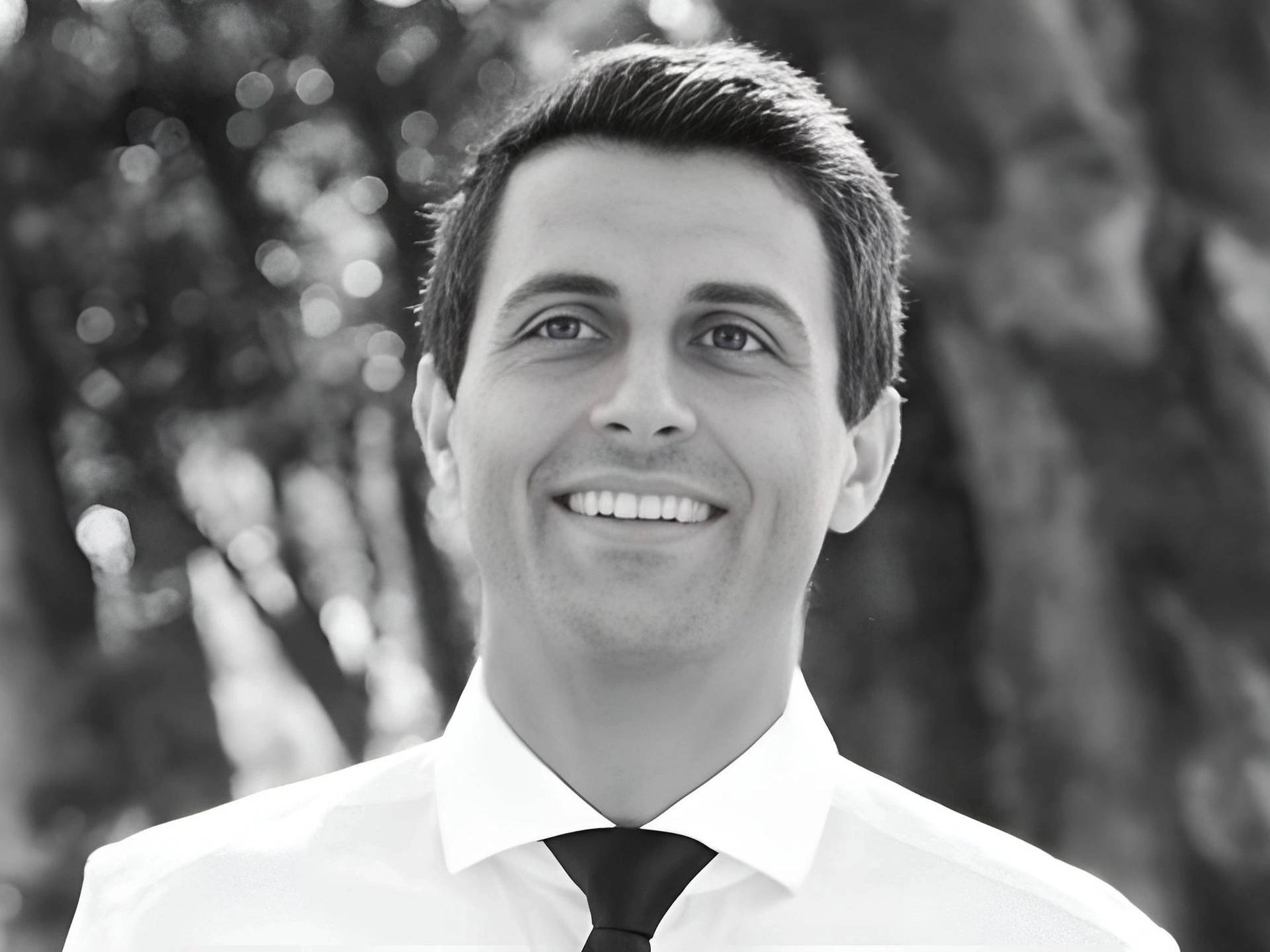
Arrash Yasavolian
Arrash Yasavolian is the co-founder and CEO of Taoshi, a software company that develops decentralized trading infrastructure on the Bittensor blockchain. He is also the CEO of Glitch Financial, a subsidiary of Taoshi that functions as a user-facing platform for the network's strategies. [1]
Education
Yasavolian earned a Bachelor of Science degree in Biochemistry and Molecular Biology from the University of California, Davis. [2]
Career
Yasavolian began his career in the San Francisco Bay Area, co-founding a venture called Intreeka, where he worked from 2011 to 2013. During this same period, he also served as a Sales Launch Manager at Spendgo. In 2013, he transitioned into a more specialized technical sales role as an Associate Sales Engineer at Apttus. He continued this trajectory at Marketo in 2014, first as a Mid-Market Pre-Sales Solutions Consultant and later advancing to Pre-Sales Solutions Architect in 2015. From 2015 to 2018, he was a Senior Solutions Engineer at Glint, further developing his expertise in enterprise software solutions.
In 2018, Yasavolian made a significant career shift by joining LinkedIn, where he moved into a direct software development capacity. Over nearly four years at the company, he advanced through several engineering roles, starting as a Senior Software Engineer, progressing to Staff Software Engineer, and ultimately becoming a Manager of Software Engineering before his departure in 2022. This period marked his transition into technical leadership and management.
Following his tenure at LinkedIn, Yasavolian focused on entrepreneurship in the Web3 and decentralized technology space. He founded TARVIS Labs in 2022 and served as its CEO until 2024. In 2023, he founded Taoshi and assumed the role of CEO. In 2024, he also became the CEO of Glitch Financial, a subsidiary launched to commercialize Taoshi's technology. [7]
Taoshi (PTN)

Under Yasavolian's leadership, Taoshi was developed as a subnet on the Bittensor blockchain, specifically identified as Subnet 8. He has described Taoshi's core product as a decentralized Proprietary Trading Network (PTN). This network functions as a competitive environment where miners—quantitative traders and data scientists—develop and submit machine learning-based trading strategies. These strategies are then evaluated and scored by validators based on a suite of advanced financial analytics and risk-adjusted return metrics. The "digital commodity" produced by the Taoshi subnet is high-quality trading signals.
The project evolved from an initial focus on Bitcoin price prediction to a comprehensive network supporting diverse strategies across various liquid asset classes. The network's design prioritizes transparency and open participation, leveraging blockchain to create a fair and competitive ecosystem. The development roadmap includes plans for EVM integration and the use of smart contracts to enhance its on-chain capabilities. [5] [6]
Glitch Financial
Glitch Financial was launched on October 25, 2024, as a subsidiary of Taoshi, with Yasavolian as its CEO. He has positioned Glitch as the enterprise Software-as-a-Service (SaaS) platform and commercialization layer for the Taoshi network. It serves as the user-facing bridge that connects clients to the AI-enhanced trading strategies generated by Taoshi's miners. The platform is designed to be non-custodial, allowing users to link their external brokerage accounts and retain control over their funds while utilizing automated trading features. Glitch operates on a revenue and subscription-based model, catering to both novice and experienced traders. [4] [5]
Interviews
Tensor Economy
In an August 2025 appearance on the DWeb Decoded podcast with host Aaron Stanley, Yasavolian provided an overview of the Bittensor economy. He described it as a "network of competing subnets," with each subnet dedicated to producing a unique "digital commodity." He explained that this open and competitive framework is designed to foster rapid innovation in decentralized AI. Within this context, he introduced Taoshi as a decentralized proprietary trading network producing trading signals and positioned Glitch Financial as its user-facing SaaS platform.
Glitch Financial
Yasavolian was a guest on the Brave New Coin podcast in June 2025, where he discussed Taoshi's mission to democratize access to advanced trading strategies. He elaborated on how Taoshi operates on the Bittensor network, using incentive mechanisms to reward miners and validators for developing effective, risk-managed trading models. He clarified that Glitch Financial serves as the bridge connecting users to these strategies across various exchanges and mentioned the role of the Theta token in the network's growth and incentive structure.
Disrupting Fintech
During a February 2025 interview with leadership coach Cynthia Corsetti, Yasavolian shared his vision for disrupting the fintech industry by expanding public access to sophisticated trading tools. He reflected on how his unconventional career path, from biochemistry to tech sales and software engineering, influenced his approach to building Taoshi and Glitch Financial. He also spoke at length about the importance of fostering an authentic and innovative workplace culture, emphasizing that inclusivity and employee well-being are fundamental to achieving success.
Building the Proprietary Trading Network (PTN)
In a January 2025 interview with Ventura Labs, Yasavolian detailed the technical and strategic evolution of Taoshi. He explained its transition from a platform focused on Bitcoin price prediction to a comprehensive, decentralized Proprietary Trading Network for machine learning-based strategies. He highlighted the network's emphasis on transparency and open participation as key differentiators from traditional proprietary trading firms. He also elaborated on Glitch Financial's function as an enterprise SaaS product designed to serve both institutional and retail clients.
Panels
Sustainable Business Models
Yasavolian participated in a panel discussion at the Proof of Talk conference on June 22, 2025, titled "Building a Sustainable Business Model as a Subnet Owner." He was joined by other Bittensor subnet owners, including Will Squires of Macrocosmos, Evan Malanga of Yuma, and Maxime Sebti of Score, in a session moderated by Marcus Graichen of taostats. The panel explored the challenges and strategies involved in creating and maintaining a viable business on the Bittensor network. Topics included the initial technical setup, long-term revenue generation, achieving market alignment, and the importance of effective stakeholder communication and community collaboration to foster innovation.