0% read
Last updated:
Yannik Schrade
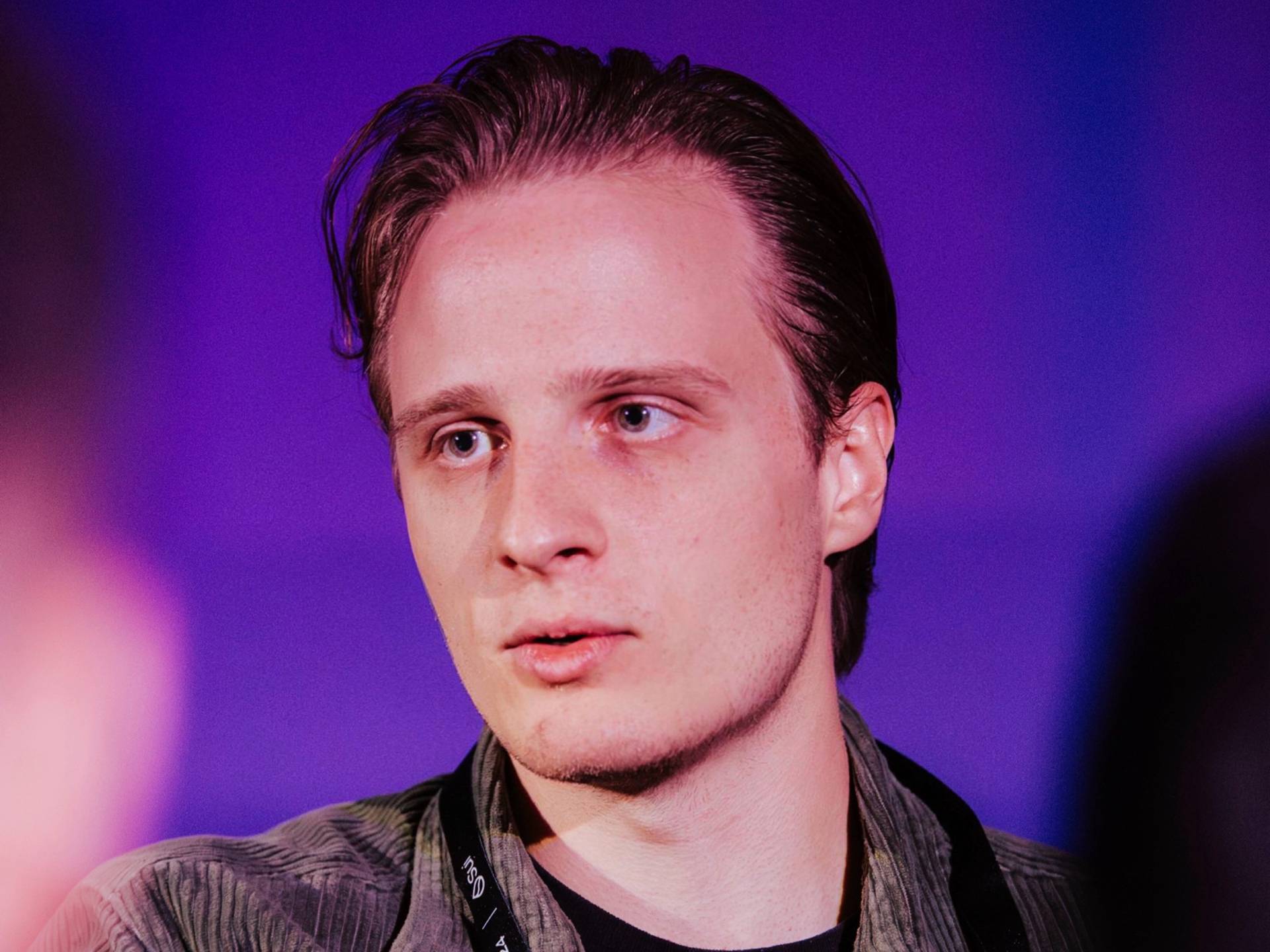
Yannik Schrade is a German cryptography researcher and entrepreneur. He is the CEO and Co-Founder of Arcium, a company developing an encrypted computing network using cryptography and distributed systems.[5][6]

Early Life & Education
Born on June 17, 2000, Yannik Schrade’s interest in privacy and societal systems began in childhood after reading 1984. He taught himself programming at a young age by developing video game modifications.[5][6]
After high school, Schrade enrolled at Heidelberg Law School but dropped out to found his first company, shiftscreen. He later studied Computer Science and Mathematics at the Technical University of Munich before leaving to found Arcium. Schrade is primarily self-taught in the field of cryptography.[5][6]
Career
In 2020, Yannik Schrade founded Shiftscreen, an iOS and iPadOS productivity application that enabled users to connect their devices to external displays. The app became one of the top-selling productivity apps in the Apple App Store, with hundreds of thousands of customers in over 130 countries.[5][6]
As the CEO and Co-Founder of Arcium, Schrade leads the company's mission to build a decentralized confidential computing network. Arcium has raised over $15 million from investors including Coinbase and announced the acquisition of Inpher, a company in the secure computation field. In May 2025, Schrade announced Arcium had secured its first deal with a major financial institution.[5][6][7]
Schrade is a frequent speaker at global technology conferences, including Solana Breakpoint (2024, 2025), EthCC, Emergence Conference Prague (2024), and Solana Accelerate NYC (2025). He has also been interviewed about Arcium and privacy on the Tucker Carlson Show and at the New York Stock Exchange.[5][7]

Cryptographic Work
Schrade is the author or co-author of several cryptographic protocols and tools designed to advance encrypted computation.[5]
Cerberus MPC Protocol
Schrade is a co-author and inventor of the Cerberus MPC protocol, a secure Multi-Party Computation (MPC) protocol designed for "dishonest majority" settings. It features "identifiable abort," a security property that allows for the identification of malicious parties, making it suitable for trustless decentralized applications. The academic paper for Cerberus is planned for publication in Q1 2026.[5]
MPC Scaling Law
In August 2025, Schrade formalized a bandwidth-growth heuristic known as the MPC Scaling Law. Inspired by Nielsen's Law of Internet Bandwidth, it helps model the hardware-based scalability of MPC protocols by classifying them as either latency-constrained or bandwidth-constrained.[5]
w25519
Schrade authored w25519, an open-source cryptographic library providing a Short-Weierstrass representation of the Curve25519 isomorphism. This allows for more efficient Elliptic-Curve Diffie–Hellman (ECDH) key exchanges within R1CS (Rank-1 Constraint Systems) used in Zero-Knowledge Proofs (ZKPs).[5]
Arcium
In late 2022, Yannik Schrade co-founded Arcium, originally named Elusiv, with Nicolas Schapeler, Julian Deschler, and Lukas Steiner. Elusiv initially focused on providing transactional privacy on blockchains using methods like secure Multiparty Computation (MPC) and Zero-Knowledge Proofs (ZKPs). In 2024, the company rebranded as Arcium to reflect a broader mission centered on general-purpose confidential computing.[1][2]
Arcium is developing a decentralized network for "encrypted computing," using generalized Multi-Party Computation (gMPC) to allow programs to run on encrypted data without ever decrypting it. In Q4 2025, the Arcium Mainnet Alpha was launched on the Solana network. Schrade articulated the vision during a keynote at Solana Breakpoint in 2024:[6][8]
"Imagine a world in which any data can be stored securely in an encrypted way while it remains possible to do anything with this data. A world where we can analyze, process, and learn from information without ever having to expose it." - Yannik Schrade
Private Life and Philosophy
Influenced by cypherpunk ideals, Schrade advocates for privacy as a fundamental human right, stating, "I believe privacy is the most important freedom right of the 21st century and beyond." He is an outspoken critic of mass surveillance, including both corporate "surveillance capitalism" and government mandates like the EU's proposed "Chat Control" laws.[5][7]
He strongly opposes the use of Trusted Execution Environments (TEEs), arguing they represent a "trusted single point of failure" and are vulnerable to exploits. He advocates for purely cryptographic solutions like MPC to build secure systems. Schrade expresses admiration for the ZCash ecosystem and Zooko Wilcox for their contributions to decentralization.[3][7]
In addition to his work in technology, Schrade is involved in wildlife preservation and conservation in southern Germany. He is an avid reader of Friedrich Nietzsche and aligns with ideas of personal sovereignty and the rejection of external authority, stating:[5][4]
"Crypto as a movement is actually a movement rooted on the application of their will, the construction of a new system, outside of traditional structures, traditional moral judgments." - Yannik Schrade
Tucker Carlson Interview (2026)
During his appearance on the Tucker Carlson Show, Schrade discussed Arcium's mission to build a confidential computing network and his broader philosophy on digital privacy. He positioned privacy as the "most important freedom right of the 21st century and beyond," framing it as a prerequisite for personal liberty in the digital age. Schrade was a vocal critic of mass surveillance, condemning both corporate "surveillance capitalism" and governmental overreach. He specifically cited the European Union's proposed "Chat Control" legislation as a dangerous infringement on individual rights.
On a technical level, Schrade detailed his skepticism of commonly used security hardware. He explained his strong opposition to Trusted Execution Environments (TEEs), arguing that they represent a "trusted single point of failure" and are therefore unsuitable for building genuinely secure systems. Instead, he advocated for purely cryptographic solutions like Multi-Party Computation (MPC), which underpins Arcium's technology. He explained that such methods allow for computation on encrypted data without ever needing to expose the underlying information, thus guaranteeing privacy and security through mathematics rather than trust in hardware manufacturers.[7]
See something wrong?
Official Website:
Social Profiles: