0% read
Last updated:
Benedikt Wagner
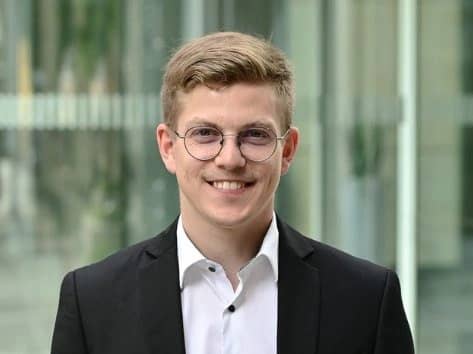
Benedikt Wagner is a German cryptography researcher from the Ethereum Foundation, recognized for his contributions to applied cryptography, particularly in areas directly relevant to blockchain technology and the Ethereum ecosystem. [1]
Education
Wagner completed his Ph.D. in Computer Science in May 2024 from CISPA Helmholtz Center for Information Security and Saarland University, under the supervision of Julian Loss. His dissertation received both the Helmholtz Doctoral Award and the CAST/GI Doctoral Award. He earned his Master of Science in Computer Science from the Karlsruhe Institute of Technology (KIT) around 2021/2022, where he was recognized with an award for the best graduation in the computer science department. His master's thesis, supervised by Jiaxin Pan, received the Sick Science Award in 2021. Previously, he completed his Bachelor of Science at KIT, where his bachelor's thesis, also supervised by Jiaxin Pan, won the Sick Science Award in 2019. [1]
Career
Following the completion of his Ph.D. in May 2024, Dr. Wagner joined the Ethereum Foundation as a Cryptography Researcher. In this role, he focuses on applied cryptography research and development to enhance the security and scalability of the Ethereum network. His work involves designing and implementing cryptographic protocols that underpin various aspects of the ecosystem. [1]
Research and Contributions
Dr. Wagner's research is centered on applied cryptography, with a significant number of publications in top-tier security and cryptography conferences. His work has had a direct impact on the development of the Ethereum protocol. His primary research areas include designing secure and efficient signature schemes for distributed systems, formalizing data availability sampling for blockchain scalability, and developing cryptographic primitives secure against attacks from quantum computers. He has also conducted security analyses of privacy-focused cryptocurrencies like Monero. [1] [2]
His key research areas include:
- Threshold & Multi-Signatures: He has co-authored several papers on efficient and tightly secure multi-signature and threshold signature schemes, including Twinkle, HARTS, Chopsticks, and Toothpicks, which are designed for use in distributed environments like cryptocurrency wallets and staking protocols.
- Data Availability Sampling (DAS): Wagner has worked on the theoretical foundations of DAS, a technique crucial for blockchain scaling solutions. He is a co-author of practical constructions like FRIDA and PeerDAS, the latter of which is a core component of Ethereum's data availability strategy.
- Post-Quantum Cryptography: His research includes the development of signature schemes for a post-quantum secure Ethereum, focusing on both hash-based and lattice-based cryptography. He contributed to the design of LeanSig, a post-quantum signature scheme.
- Blind Signatures: He has worked on creating compact and efficient blind signature protocols such as Rai-Choo and PI-Cut-Choo, which are useful for privacy-preserving applications.
- Privacy in Cryptocurrencies: Wagner co-authored a holistic security analysis of Monero transactions and designed protocols for private coin swaps, such as Sweep-UC.
Throughout his academic and professional career, he has collaborated with notable researchers including Julian Loss, Jiaxin Pan, Dmitry Khovratovich, Mark Simkin, and Stefano Tessaro. His primary institutional affiliations have been the Ethereum Foundation, CISPA, Saarland University, and the Karlsruhe Institute of Technology. [1] [2]
See something wrong?