Engramme
Engramme is a technology company developing an artificial intelligence (AI) system designed to augment human memory. The company was publicly announced on April 10, 2026, with the stated mission of helping users remember personal, professional, and factual information by creating a queryable digital record of their lives. [1] The project is led by co-founder and Harvard neuroscientist Gabriel Kreiman and is based on scientific principles of memory formation and recall. [2]
History and Founding
Engramme's public launch occurred on April 10, 2026, through a coordinated media strategy that included a feature article in Bloomberg and public statements from its founders. [1] The company was co-founded by Gabriel Kreiman, who serves as CEO, and a co-founder identified as Kimmon. [1] Upon the announcement, Kreiman stated that the company was founded on the premise that while "forgetting is human, remembering can be too." Kimmon described the product as a "personal memory assistant to help you recall anything" and "a search engine for your own life." [3]
Prior to the public announcement, the company conducted research to guide its product development. In March 2026, Engramme completed a study titled "What do people need to remember?" to identify common areas of memory failure in daily life. [4] In the same month, a related research paper on the ability of AI to mimic human performance in complex tasks was accepted for publication in the journal Nature Human Behaviour. [2]
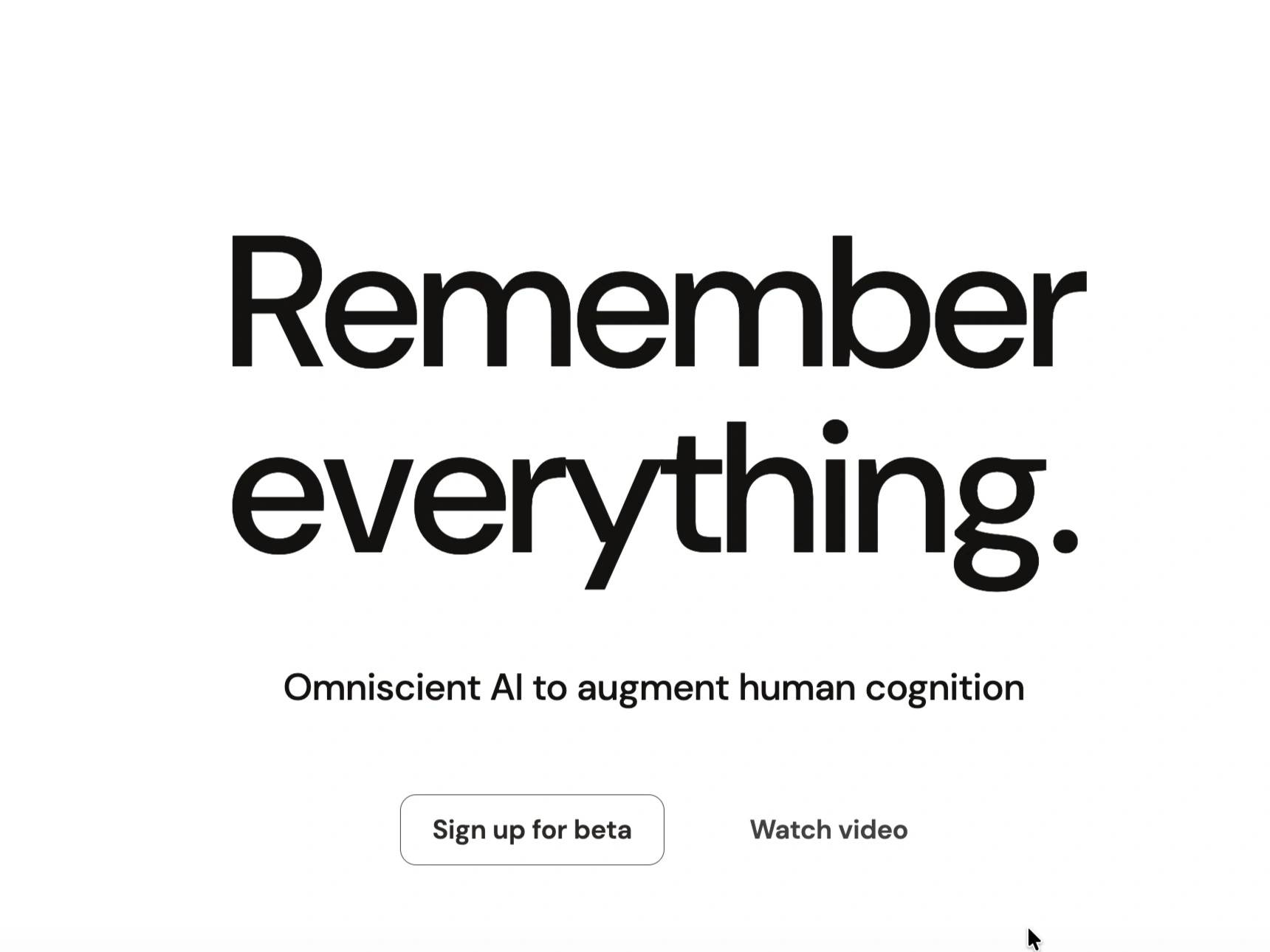
As of its launch date, Engramme is a pre-launch company. Its official website offers a waitlist for a future beta version of its product. [2]
Technology and Vision
Engramme's central mission is to "Remember Everything," with the goal of endowing humans with what it describes as "infinite memory." The technology is positioned as an "omniscient AI to augment human cognition" rather than a general-purpose large language model, focusing specifically on memory functions. [2]
Core Concept: Personal Memory Graph
The company's technology is designed to function as a "memory prosthesis" or a "search engine for your own life." The system works by ingesting a user's personal data, which can include text, audio, and images. This information is then processed and organized into a "personal memory graph," which creates contextual links between different pieces of data. Users can then query this graph using natural language through an AI assistant to retrieve specific memories, facts, or experiences they have encountered. [1]
The company's long-term vision for the user experience is to provide "searchless, promptless recall," suggesting a system that can proactively or intuitively surface relevant information without requiring a specific user query. The technology aims to help users remember a wide range of information, including people, conversations, books, professional documents, and personal events. [2]
Scientific Foundation
The company's name and scientific approach are derived from neuroscience. An "engram" is the theoretical biological unit of a stored memory trace in the brain. Engramme's technology aims to create a digital counterpart to these biological memory traces. [1]
The project's research is grounded in the concept of the "dark matter of memory." This theory posits that many memories are not permanently lost but are simply inaccessible through voluntary, unassisted recall (free recall). These memories can often be retrieved when the brain is presented with a specific prompt, a process known as cued recall, which is significantly easier. Engramme's primary technological goal is to digitally generate these cues to "illuminate" this dark matter and make a user's stored memories accessible on demand. [4]
The company's development pathway indicates an initial focus on creating technology to assist individuals with progressive memory loss. The insights gained from this work are intended to be applied to a memory-enhancement tool for the general population. [4]
"Questions in the Wild" Research Study
In March 2026, Engramme published the findings from its "Questions in the Wild (QITW)" study, a foundational research project designed to understand the everyday memory challenges people face. The study's objective was to collect and categorize real-world "memory questions"—questions people ask themselves about things they have forgotten—to inform the development of its technology. [4]
Methodology
The study was conducted using the Prolific research platform and involved 134 participants, aged 18-80, with a mean age of 41. Participants were asked to submit questions about things they had forgotten in their daily lives. From an initial collection of 3,609 submissions, a dataset of 1,940 personal memory questions was analyzed. For classification and analysis of these questions, the research team used a large language model identified as "gpt-5.2." [4]
Key Findings
The study identified several common themes and categories related to everyday memory lapses. Analysis of word frequency in the questions showed a high prevalence of terms related to people (name, friend), time (time, year, week), and specific details (password, folder, document). [4]
The primary categories of forgotten information were:
- The participant's own past actions, particularly recent ones.
- Contact information.
- Schedules and plans.
- The location of misplaced objects.
- Tasks and to-do items.
"What" questions were the most common type, constituting approximately 40% of the data. The study also found that memory lapses frequently occurred in specific contexts. The most common activities during which participants experienced memory failure were:
- Working (19.8%)
- Planning or Organizing (12.8%)
- Socializing (11.0%)
The research further correlated specific activities with particular types of memory failures. For example, participants were 11 times more likely to ask about locations while traveling. During internet browsing, users were 6.4 times more likely to forget account IDs and 4.3 times more likely to forget passwords. "Tip-of-the-tongue" phenomena were most common during media consumption, with users being 6.2 times more likely to experience it while watching television and 5.8 times more likely while reading. These findings provide a quantitative basis for the types of memory problems Engramme aims to solve. [4]
Key People
-
Gabriel Kreiman: Co-founder and CEO of Engramme. Kreiman is a Professor of Neuroscience at Harvard Medical School and a researcher at Boston Children's Hospital. His academic work focuses on the neural basis of vision and memory, which forms the scientific foundation for Engramme's technology. [2] [1]
-
Kimmon: Co-founder of Engramme. Kimmon is involved in building the company's technology alongside Gabriel Kreiman and publicly articulated the product's vision as a "search engine for your own life." [1]
Funding
As of its public announcement on April 10, 2026, Engramme is actively seeking to raise $100 million in funding. This fundraising goal was reported by Bloomberg and is intended to finance the development of its core AI technology, team expansion, and product rollout. This figure represents a fundraising target, not a completed funding round. Details regarding investors have not been disclosed. [1]