0% read
Last updated:
Kelly Ryan
Kelly Ryan is a software engineer and founder who serves as the co-founder and Chief Technology Officer (CTO) of Sapien. His career has included roles in healthcare technology, consumer applications, and artificial intelligence infrastructure, with a focus on building decentralized systems for large-scale data management and labeling. [3]
Education
Ryan attended the University of Waterloo, where he graduated with a degree in Physics in 2013. [1]
Career
Ryan began his career in 2014 as Lead Software Developer at eQOL, where he developed healthcare software aimed at improving infection prevention and treatment efficiency in nephrology and kidney care. From 2020 to 2023, he co-founded and served as CTO of Treatwell Pet Care, helping to build the company into a profitable remote pet care service during the pandemic. At the same time, he worked as Engineering Manager at FastAF Technologies, contributing to the company’s growth from inception to a Series A valuation of $200 million. In 2023, Ryan co-founded Sapien, where he serves as CTO, leading technical development and team building to address large-scale challenges in AI model production and data management. [1] [4]
Interviews
Sapien
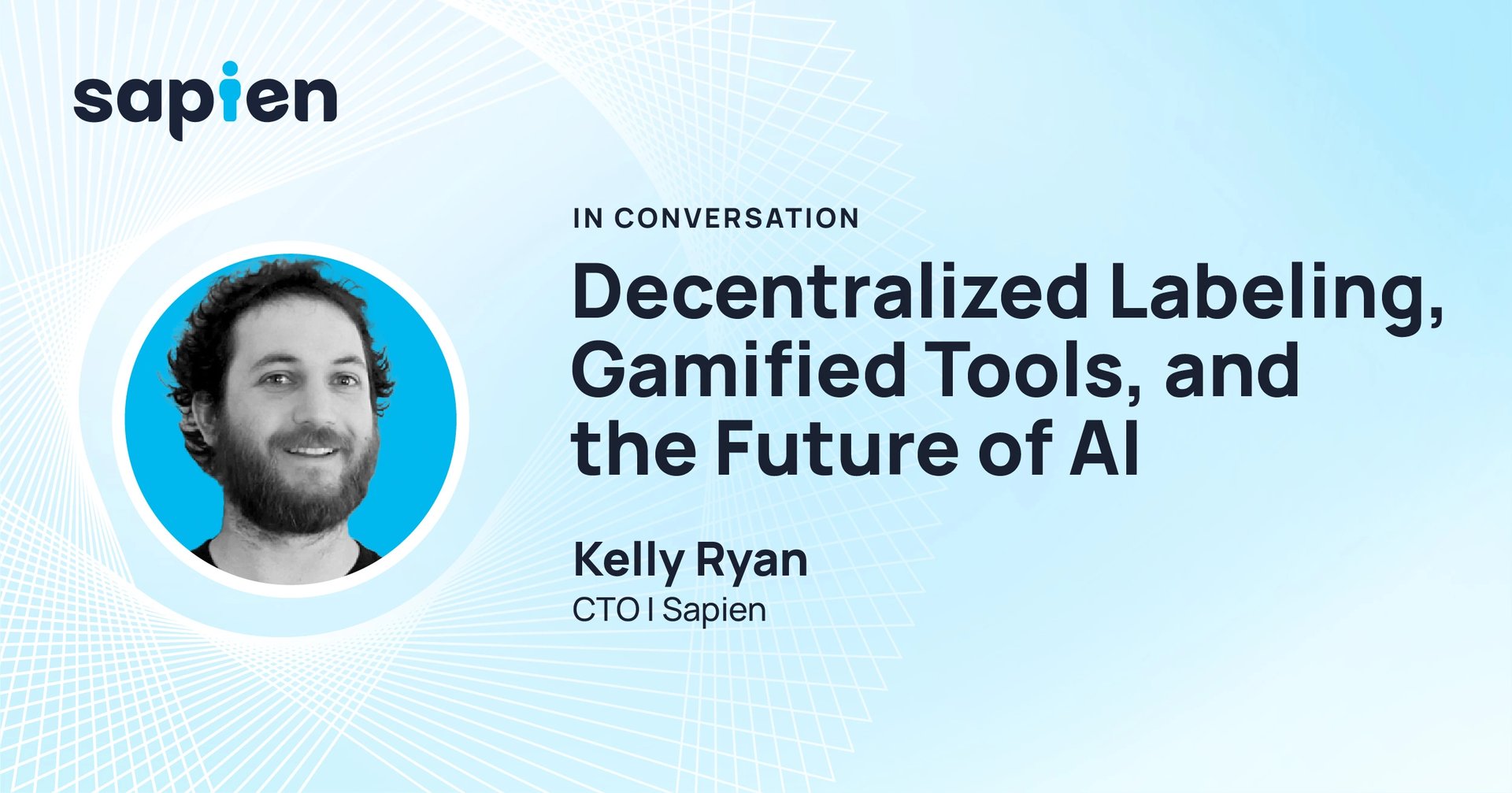
In an interview on the Sapien Blog, Ryan described the platform as a two-sided marketplace that connects data labelers with AI projects requiring structured data. He explained that Sapien’s decentralized network and modular tools enable efficient, scalable, and accurate data production. Ryan highlighted that the diversity of labelers supports a broad range of tasks, from general qualifications to specialized expertise. The platform’s modular design breaks tasks into smaller components, improving accuracy and lowering costs for clients. Its distributed infrastructure allows contributors from different regions and languages to collaborate effectively. He also noted that gamified features increase engagement and precision, while internal systems maintain consistent data quality. According to Ryan, as automation advances, human-generated data remains essential, with AI tools enhancing rather than replacing human input. The decentralized framework also enables projects to scale dynamically, adapting the workforce to meet evolving data and skill requirements. [2] [3]
See something wrong?