0% read
Last updated:
Matt White
Matt White is the General Manager of AI at the Linux Foundation and the Executive Director of the PyTorch Foundation, a role he assumed in June 2024 [1]. With a career spanning nearly three decades, White has focused on applied AI research, data standards, and the development of open technology, particularly in the fields of generative AI, simulations, and robotics [2] [3]. He is a key figure in initiatives aimed at creating open standards for AI and the metaverse, including co-founding the Open Metaverse Foundation and chairing the Metaverse Standards Forum [4].
Education
White holds a Master of Science in Data Science from the University of California, Berkeley, where he also serves as a Reader in Data Science. He earned a Master of Business Administration (MBA) from the University of Denver's Daniels College of Business and a Bachelor of Science in Information Technology from York University [3].
He is the author of the book Generative AI for Business: The Essential Guide for Business Leaders, which was published by Wiley & Associates in 2023. The book is intended to provide guidance to business leaders on leveraging generative artificial intelligence [3] [2].
Career
White's career in technology extends over nearly 30 years, beginning with programming expert systems in the telecommunications sector [2]. Since 2012, his work has increasingly specialized in machine learning, simulations, and multi-sensory learning [4].
Prior to his leadership roles at the Linux Foundation, White held several senior positions across major technology and telecommunications companies. He served as the Head of Artificial Intelligence and Data at Amdocs from 2020 to 2024 and was the National Director of Data Science at IBM from 2018 to 2020. His experience also includes roles as Director of Enterprise Architecture and Technology Innovation at Shaw Communications, Principal Architect at CableLabs, Senior Director at Rogers Communications, and Senior Manager of Engineering at Sprint. In 2022, he founded Berkeley Synthetic, a company focused on generative AI research, where he serves as CEO [3].
Linux Foundation and PyTorch Foundation
On June 11, 2024, the PyTorch Foundation announced Matt White as its new Executive Director. In this capacity, he is responsible for guiding the open-source machine learning framework and its ecosystem, which operates as a neutral entity under the Linux Foundation. In a concurrent role, he serves as the General Manager of AI for the Linux Foundation, overseeing the organization's broader strategy and initiatives in the field of artificial intelligence [5]. Upon his appointment, White stated, "I am honored to be a part of the PyTorch Foundation, working with such a passionate and skilled community. I am looking forward to working with our contributors and members to advance the PyTorch ecosystem through research, cutting edge technologies and open source best practices" [1].
During the PyTorch Conference in October 2025, White delivered multiple keynote addresses, including the opening and closing remarks for the event [5].
OpenMDW License
In May 2025, White introduced the Open Model, Data and Weights (OpenMDW) license, a legal framework he authored to address the unique challenges of licensing in the AI space. The initiative was created to provide a standard, permissive, and legally robust open license specifically designed for AI components, which are often not adequately covered by traditional open-source software licenses. The OpenMDW license was developed as a practical implementation of the Model Openness Framework (MOF), a system for classifying the openness of AI models [6].
Key features of the OpenMDW license include:
- Comprehensive Scope: It is designed to cover an entire AI model stack, including the model architecture, parameters (weights), training and inference code, datasets, and documentation like model cards.
- Permissive Nature: The license requires attribution but is not copyleft, allowing derivative works to be released under any license.
- Unrestricted Outputs: It explicitly states that any output generated by a model under the license is free of licensing restrictions from the model provider.
- Patent Protection: A defensive patent litigation clause is included, which revokes the license for any user who initiates patent litigation related to the licensed materials.
- Standards Alignment: The license was designed to align with the EU AI Act's definition of "free and open-source licenses" and the principles of the Open Source Initiative (OSI).
White articulated the need for such a framework, stating, "To fully unlock the potential of open AI, we need a license purpose-built for the realities of machine learning. That’s where OpenMDW comes in" [6].
Other Initiatives and Affiliations
Beyond his primary roles, White is deeply involved in establishing open standards and communities in emerging technology fields. He co-founded the Open Metaverse Foundation, a Linux Foundation project, and serves as the chair of its Technical Advisory Committee. He also holds the position of Chair at the Metaverse Standards Forum [4] [3].
Within the Linux Foundation ecosystem, he has also served as the Director of the Generative AI Commons, an initiative under the LF AI & Data Foundation focused on open science and responsible open-source AI projects [5].
In the broader AI community, White founded the Silicon Valley Generative AI paper reading group and is a co-organizer of The GenAI Collective [2]. He serves on the board of directors for Web Networks and is the Denver Section Chair for the IEEE Robotics and Automation Society [3].
Publications
Professional Certifications and Affiliations
White holds numerous professional certifications, reflecting his expertise across engineering, project management, and information security. These include the Professional Engineer (P.Eng) designation from Professional Engineers Ontario, Project Management Professional (PMP), and Certified Information Systems Security Professional (CISSP). He also holds several cloud and networking certifications from AWS and Cisco, as well as certifications in Scrum methodologies.
His professional memberships include the Association for the Advancement of Artificial Intelligence (AAAI), the Project Management Institute (PMI), and multiple societies within the Institute of Electrical and Electronics Engineers (IEEE) [3].
Interviews
Open Source AI Governance and Model Licensing #01
In an interview published on June 26, 2025, on the SiliconANGLE theCUBE YouTube channel, Matt White, Executive Director of the PyTorch Foundation and General Manager of AI at the Linux Foundation, discussed topics related to open source AI governance at the Open Source Summit North America 2025. The discussion, conducted with Paul Nashawaty, addressed licensing structures, project coordination, and organizational considerations within open source AI development.
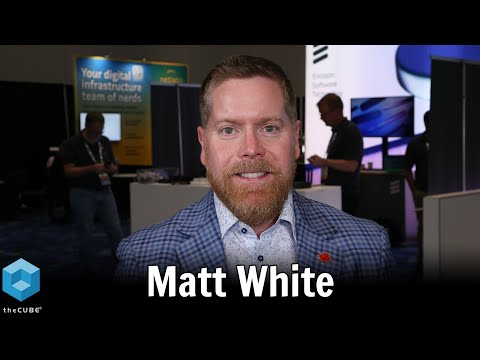
White explained that PyTorch originated as a machine learning framework developed at Meta and later transitioned to governance under the PyTorch Foundation within the Linux Foundation. He stated that the foundation has expanded its scope beyond the core framework, adopting an umbrella model that includes additional projects such as vLLM and DeepSpeed. According to White, this structure is intended to support coordination across multiple AI related initiatives rather than focusing on a single software project.
During the interview, White described distinctions between licensing traditional software and licensing AI models. He stated that AI models are distributed as collections of different components, including source code, data, model weights, architectures, and documentation. In his view, existing open source software licenses do not consistently address all of these elements when applied to AI model distributions. He referenced the Open Model Definition and Warranty (OpenMDW) initiative as an attempt to define a single permissive license framework covering these components within one distribution.
White further explained that OpenMDW is designed to clarify issues related to copyright, patent rights, database rights, and data ownership. He noted that while large pre training datasets are typically not redistributed, smaller datasets used for tasks such as fine tuning may be included and therefore require clear licensing terms. According to his explanation, the license permits use, modification, and redistribution of models and associated artifacts, without imposing conditions on model outputs. He also stated that responsibility for compliance and deployment remains with the organizations using the models.
The interview also included comments on community activities associated with the PyTorch Foundation. White referenced planned training and certification programs scheduled for later in 2025, describing them as part of ongoing efforts to provide educational resources related to PyTorch and associated projects. Throughout the discussion, White presented standardized licensing and coordination across projects as factors relevant to the continued development and maintenance of open source AI ecosystems. [7]
Open Source AI, PyTorch and Open Standards #02
In an interview streamed live on June 25, 2025, on The New Stack Agents, Matt White discussed topics related to open source artificial intelligence. The conversation was recorded during Open Source Summit 2025 at the Denver Convention Center and was moderated by Frederic Lardinois, senior editor for AI at The New Stack.

White outlined his responsibilities as Executive Director of the PyTorch Foundation and General Manager of AI at the Linux Foundation. He described the role as centered on coordinating open source AI projects, supporting collaboration between industry and academic contributors, and addressing organizational and governance considerations related to AI development.
According to White, PyTorch originated at Meta in 2017 and was later transferred to the PyTorch Foundation, which became part of the Linux Foundation as a vendor-neutral organization around 2022. He stated that this transition was intended to provide a stable governance structure and reduce dependence on a single corporate sponsor. By 2023, the foundation adopted an umbrella model that allows it to host multiple projects in addition to the core PyTorch framework, including tools related to training and inference.
White described the PyTorch ecosystem as a collection of several dozen related projects addressing different aspects of AI development. He noted that these projects are not subject to a formal incubation process but are monitored through working groups that evaluate activity levels and maintenance practices. In his description, the PyTorch Foundation operates alongside other Linux Foundation initiatives, with CNCF focusing on cloud-native infrastructure and the LF AI & Data Foundation addressing data and application-layer technologies.
During the discussion, White identified access to computational resources, particularly GPUs, as a recurring issue for open source AI training. He stated that open models can reduce duplication of effort by allowing reuse and modification, but that organizations still face challenges related to integration, governance, and domain-specific constraints. He also observed that conference participants often represent a wide range of familiarity with AI concepts, from introductory to advanced research backgrounds.
White addressed differences between academic and enterprise approaches to openness. He explained that academic research often prioritizes full reproducibility through the release of datasets and training artifacts, while enterprise use cases may focus primarily on model weights and documentation. In this context, he referenced the Open Model License, OpenMDL, describing it as an attempt to define licensing terms that reflect the characteristics of AI models, including weights and related artifacts, without requiring the release of all underlying data.
The interview also covered protocols and standards related to AI systems. White discussed agent-to-agent communication and model context mechanisms as examples of efforts to define interoperable components for AI systems. He described these developments as part of a broader shift toward system-level architectures and noted that open source projects are increasingly used as vehicles for developing technical standards, although questions around security, privacy, and governance remain under discussion.
In closing, White referenced ongoing areas of activity in AI research and development, including agents, reasoning-focused models, simulations, and embodied systems. He also mentioned that regulatory considerations, including regional approaches such as European AI regulation and discussions around sovereign AI, are becoming more visible as AI technologies are adopted across different sectors. [8]
See something wrong?