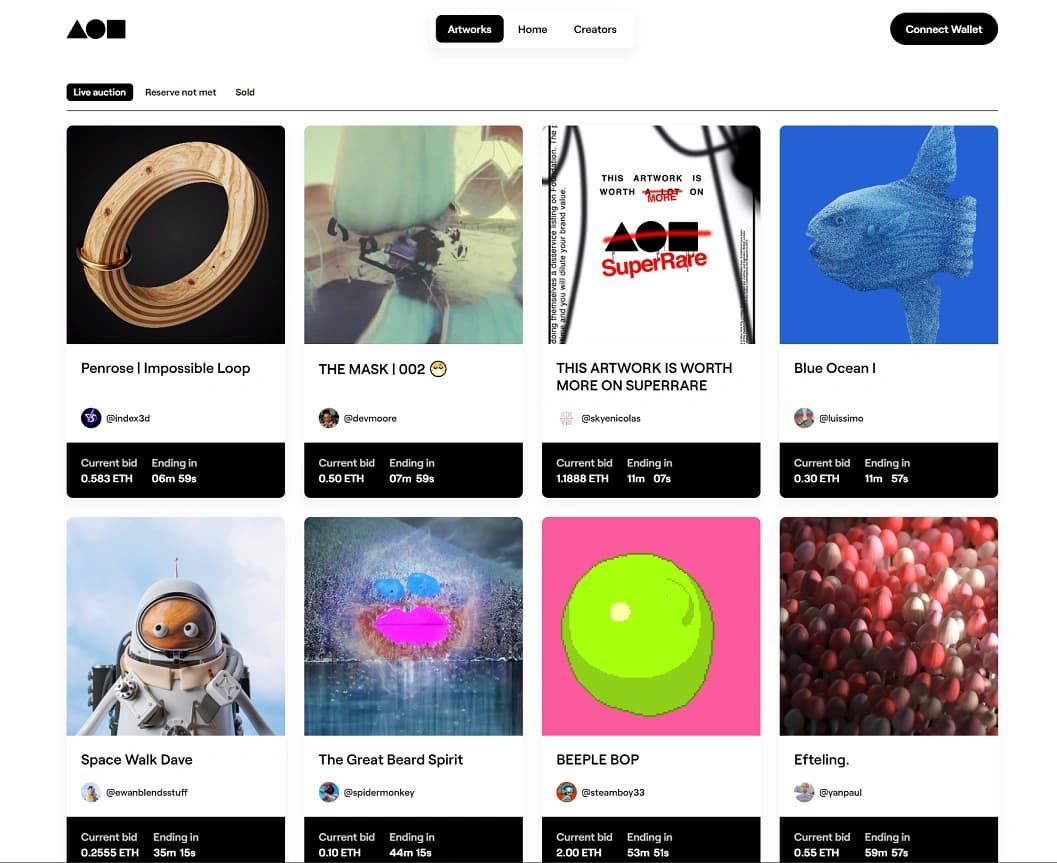
Foundation
Foundation is a decentralized NFT marketplace built on Ethereum that enables creators to mint, auction, and sell digital artworks using on-chain smart contracts. Originally launched with a community-curated model, Foundation became one of the early NFT marketplaces alongside platforms such as SuperRare and Nifty Gateway. [1]
In 2026, the platform ceased operations and was taken offline indefinitely. [3]
Overview
Foundation is a community-built digital collectibles platform has seen impressive growth amidst the ongoing NFT craze.
It is a newer NFT marketplace that is gaining noteriety behind Nifty Gateway and SuperRare as a reliable and somewhat curated NFT marketplace. Well established artists like Blake Kathryn embrace Foundation as a great alternative to the God-Tier Marketplaces. They describe themselves as the new creative economy that is
” BRINGING DIGITAL CREATORS, CRYPTO NATIVES, AND COLLECTORS TOGETHER TO MOVE CULTURE FORWARD.”
Recently, well-known electronic music producer Richard D. James, known as Aphex Twin minted his own audiovisual digital collectible on the Foundation platform that was quickly snapped up for over 72 ETH or over just over $127,000 at the time of sale. Interestingly, the artist said that proceeds would be put towards environmental causes.
Another sale of note was conducted by the Russian pop group Pussy Riot who first burst onto the music scene with a controversial music video landing themselves jail time in 2012. Like Aphex, they also pledged to contribute the proceeds to domestic violence charities in their native Russia. The video, titled Terrestrial Paradise, was bought for around $175,000 by the Iranian-born art collector and political activist Amir Soleymani.
Crypto for Creative Communities
NFTs—non-fungible tokens—are empowering artists, musicians, and all kinds of genre-defying digital creators to invent a new cultural paradigm. How this emerging culture of digital art ownership looks is up to all of us.
Foundation bridges crypto and culture to create mutual support between artists and collectors. Foundation is forging a community-driven path, providing culturally pioneering curation, and sharing their tools with the rapidly evolving community of developers who are excited to define this future with them. They want anyone and everyone who cares about the future of digital expression to be a part of it.
History
Since launching in February 2021, creators have directly earned over 12,000.
Through the hugely successful sale of the viral internet meme Nyan Cat, or the more recent record sale of Pak’s Finite their business has become popular.
Foundation has supported thousands of other artists, including Nadya Tolokonnikova of Pussy Riot, Shawna X, Yung Jake, Aphex Twin, Zachary Lieberman, Kim Laughton, Sarah Zucker, Devendra Banhart, Viktoria Modesta, Serwah Attafuah, Edward Snowden, and Dom Hofmann, the cofounder of Vine.[2]
How It Works
For Creators
Creators are invited to join Foundation by members of the community. Once user has received an invite, they will need to set up a MetaMask wallet with ETH before they can create an artist profile and mint an NFT—which means uploading their JPG, PNG, or video file to IPFS, a decentralized peer-to-peer storage network. It will then be an NFT users can price in ETH and put up for auction on Foundation.
Creators receive 85% of the final sale price. If the piece is resold on Foundation (or OpenSea and Rarible), a 10% royalty goes back to the wallet that originally minted the NFT—in perpetuity.
For Collectors
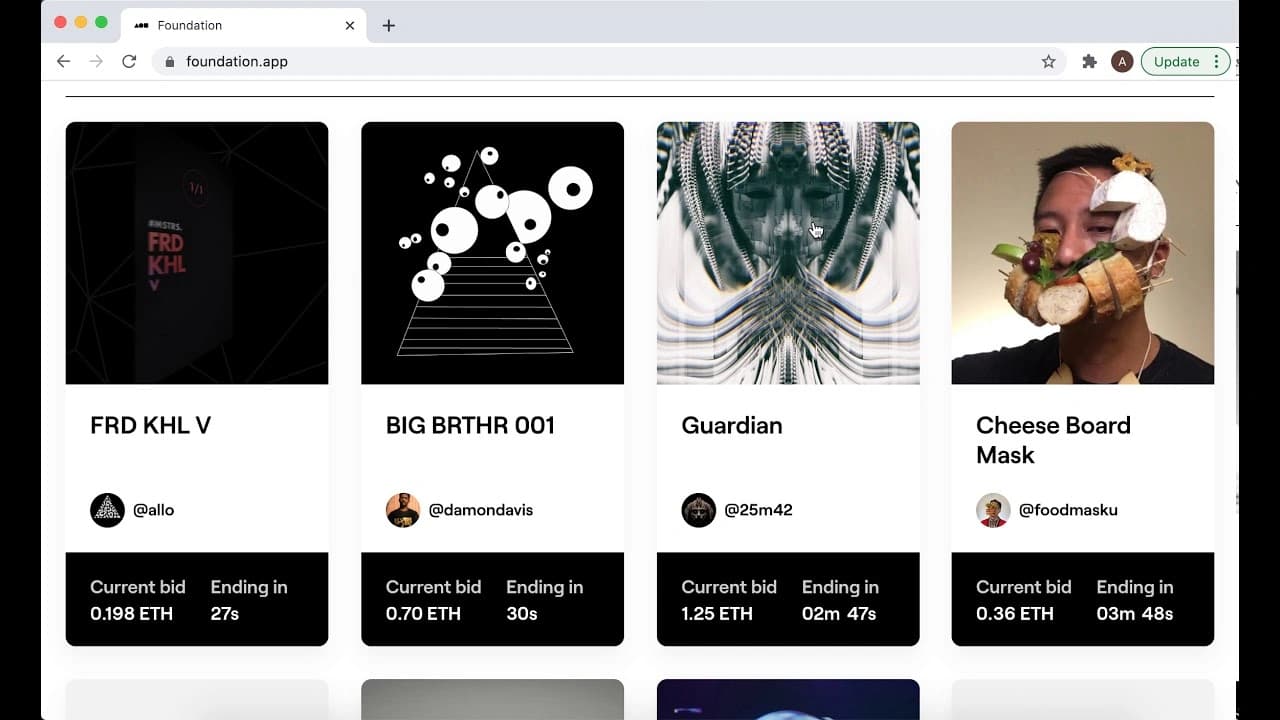
On Foundation, anyone can create a profile to start collecting NFTs. All they need is a MetaMask wallet and ETH, the cryptocurrency used to pay for all transactions on Ethereum (ETH). Artists list NFTs for auction at a reserve price, and once the first bid is placed, a 24-hour auction countdown begins. If a bid is placed within the last 15 minutes, the auction extends for another 15 minutes.
When user win an auction and claim the NFT, the artwork gets transferred to their wallet and appears on their Foundation collector profile. They can also then display it in their virtual gallery, share it on social media, sell it later on the secondary market, or pioneer a new approach to appreciating digital art and championing the artists in their collection.
NFT Marketplace
Foundation now sits within the top 10 NFT marketplaces as ranked by DappRadar. Currently, Foundation is in 9th position when ranked by volume over the last 30-days ahead of established projects ArtBlocks and CryptoVoxels.
The Foundation community team selects the artworks featured on the homepage, newsletters, and social channels. The platform aims to provide a home for artists pushing the space and the medium forward, experimenting with new creative approaches, and centering marginalized voices.
The idea that NFT sale proceeds can be used for social change is sure to catch on as artists and creators start to experiment with the new digital collectible platforms and push the boundaries of the creator/owner relationship.
Artworks
1.Ceasear
Description
"A pirate lord defeated in battle by a powerful king. Taken hostage, made court jester he only dreams of escape and revenge"
A character in a game I am working on: War of Rabbits. Caesar is a limited edition playable leader for your party. The original is a physical print from a dear friend and the render is by the talented , I am lucky to work with him. Whoever has collected this NFT gets to play as this character. A truly unique leader in an entourage of many interesting characters
Foundation Shuts Down and Takes Platform Offline Indefinitely
In April 2026, Foundation announced that its NFT marketplace would remain offline indefinitely after an attempted sale of the platform to a third party failed to close. According to the team, ownership of the platform reverted to Foundation after the transaction collapsed, and following an internal review, the company decided not to resume operations. [3]
The team explained that the decision was driven by both financial and operational constraints. The original team responsible for building and maintaining Foundation was no longer in place, making it impractical to responsibly restore and support the platform.
Foundation also stated that it had been unable to identify a buyer with the technical expertise, financial resources, and long-term vision necessary to continue operating the marketplace. Rather than pursuing another uncertain acquisition, the company chose to permanently discontinue the platform to avoid further disruption for its community.
Foundation emphasized that users’ NFTs and digital assets were not affected by the shutdown because the platform was built as a non-custodial, on-chain system. NFTs remained in users’ wallets, while the marketplace’s smart contracts continued to exist on Ethereum independently of Foundation’s frontend.
However, the company advised users that NFTs listed through Foundation’s marketplace contracts would need to be manually delisted from escrow using community-developed tools, since the official user interface was no longer available. Foundation also encouraged users to ensure the long-term availability of NFT media and metadata, noting that although content had been pinned to IPFS, broader redundancy would improve long-term preservation.
The announcement highlighted several community-led initiatives that emerged following the failed sale, including tools for directly delisting NFTs from Foundation’s smart contracts, efforts to mirror and preserve NFT media and metadata, and public resources for locating and backing up IPFS content identifiers (CIDs).
Foundation described these efforts as evidence of the resilience of its decentralized architecture and community.
Although marketplace operations ended, Foundation committed to maintaining its IPFS gateway until April 27, 2027, providing users and developers with additional time to migrate content and preserve metadata. The company also stated that it would continue offering technical guidance to developers working directly with Foundation’s smart contracts and infrastructure.
Reflecting on the platform’s history, Foundation noted that it had launched more than six years earlier as an early experiment in on-chain digital ownership. While the marketplace itself had come to an end, the team expressed optimism that its broader vision of creator ownership and decentralized digital art would continue to evolve across the wider Web3 ecosystem. [3]