0% read
마지막 업데이트:
Staked TAO (Root)
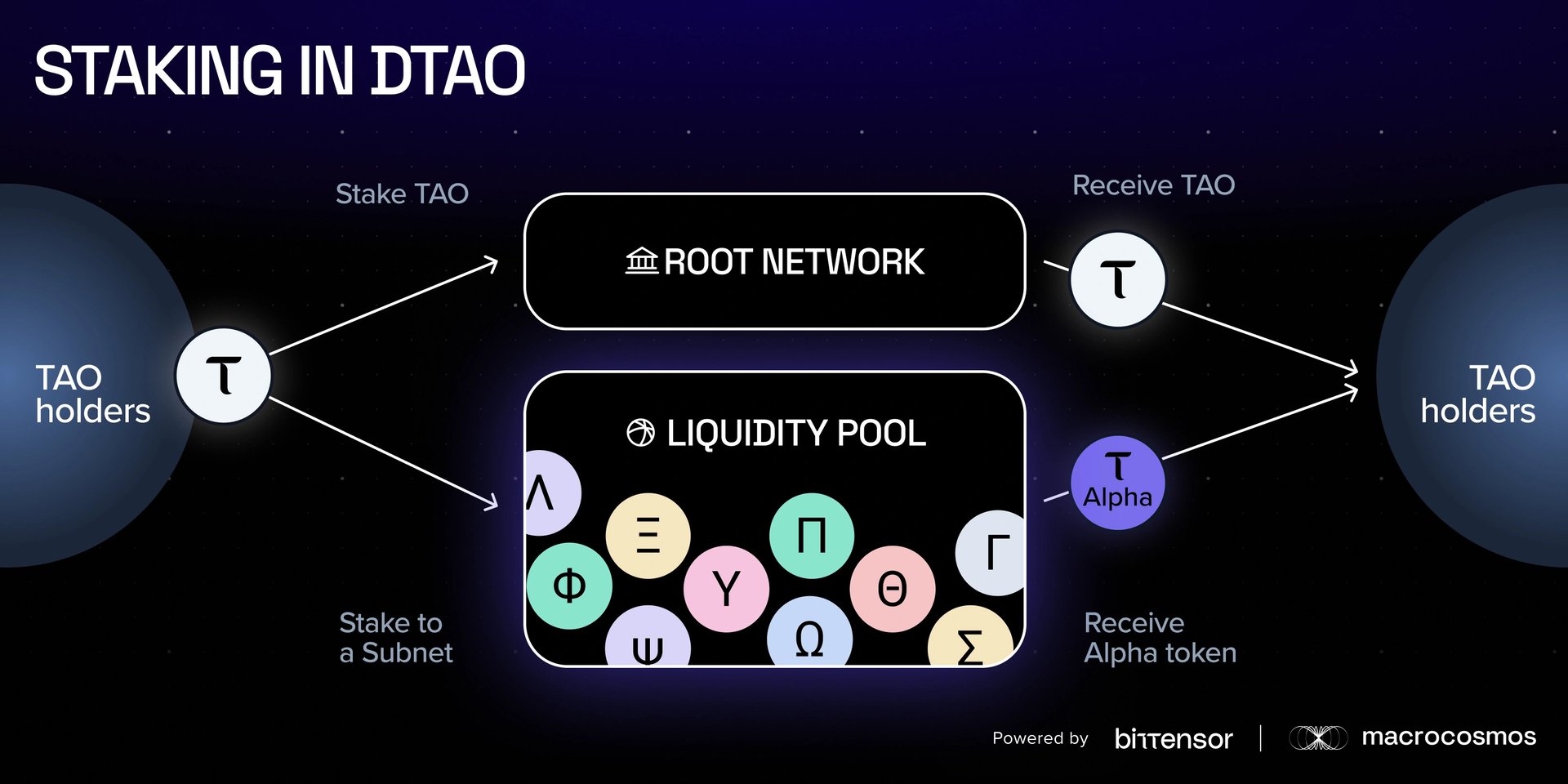
**스테이킹된 TAO (Root)**는 비텐서(Bittensor) 네트워크의 네이티브 토큰인 TAO를 네트워크의 루트 레이어(일반적으로 "서브넷 0"이라 불림)에 스테이킹하여, 스테이커가 선택한 검증인이 참여하는 서브넷에서 생성된 배출량의 비례 지분을 받는 관행을 말합니다. 보상은 자동으로 TAO로 전환(루트 클레임)되거나, 서브넷 전용 토큰으로 유지(알파 클레임)되거나, 선택적으로 분할(하이브리드)될 수 있으며, 스테이킹된 원금은 TAO 단위로 유지됩니다. [1]
암호화폐 비교
Staked TAO (Root)과(와) 가격 및 기타 지표를 비교할 자산을 선택하세요.
개요
스테이킹된 TAO (Root)는 비텐서 네트워크의 루트 레이어 내에 네이티브 토큰인 TAO를 스테이킹하는 것을 의미하며, 여기서 수익은 여러 서브넷에서 생성된 배출량에서 파생됩니다. 이러한 배출량은 서브넷 토큰("알파")의 형태로 분배되며, 그 중 일부는 정의된 루트 비율에 따라 루트 스테이커에게 할당됩니다. 전통적으로 이러한 보상은 자동으로 TAO로 전환되어 스테이킹 잔액에 다시 추가되는데, 이 과정을 "루트 클레임(root claim)"이라고 합니다. 2025년에 도입된 업데이트에 따라 보상 분배는 고정된 짧은 간격이 아니라 일반적으로 1~2일마다 무작위 간격으로 발생합니다. 업데이트된 모델은 획득한 보상을 TAO로 전환하는 대신 서브넷 전용 토큰으로 보유하는 "알파 클레임(alpha claim)"이라는 대안을 제공합니다. 이 방식에서 스테이커는 자신의 검증인(validator)이 참여하는 서브넷 전체에서 소량의 알파를 축적하며, 원래의 루트 스테이킹 금액은 변하지 않습니다. 일부 서브넷 보상은 선택적으로 전환하고 나머지는 알파로 유지할 수 있는 하이브리드 옵션도 존재합니다. 루트 스테이킹은 일반적으로 기초 자산인 TAO 가치를 보존하도록 구조화되어 있는 반면, 보상 처리 방식에 따라 수익이 TAO로 남을지 아니면 서브넷 수준의 변동성에 노출될지가 결정됩니다. [2]
특징
비텐서 네트워크의 루트 레이어("서브넷 0")에서 스테이킹을 하면 참여자는 TAO를 서브넷 전용 토큰으로 전환하지 않고 검증인에게 직접 스테이킹할 수 있습니다. 스테이킹된 자산은 TAO로 유지되고 보상 또한 TAO로 분배되므로 서브넷 기반 스테이킹보다 과정이 더 간단합니다. 스테이킹 및 관련 작업에는 소액의 고정 네트워크 수수료가 발생하며, 검증인 간에 스테이킹 금액을 이동할 때는 언스테이킹 및 재스테이킹 비용이 모두 발생합니다. 각 검증인마다 수수료율과 성과 기록이 다르기 때문에 검증인 선택에 따라 수익이 영향을 받습니다. 스테이킹된 TAO는 선택한 검증인이 참여하는 모든 서브넷에서 배출량을 얻는 데 기여합니다.
검증인 수수료는 스테이커에게 분배되기 전 보상의 일정 비율로 적용되며, 각 검증인은 자체 수수료율을 설정합니다. 수수료를 공제한 후 남은 배출량은 스테이킹 기여도에 따라 비례적으로 할당됩니다. 서브넷 스테이킹과 비교할 때, 루트 스테이킹은 복잡성이 낮고 서브넷 토큰과 관련된 토큰 가격 변동성에 대한 노출을 피할 수 있습니다. 반면 서브넷 스테이킹은 TAO를 서브넷 전용 토큰으로 교환해야 하며 수익의 변동성이 더 큽니다. 루트 스테이킹은 일반적으로 더 단순한 메커니즘과 더 안정적인 보상 구조를 특징으로 하지만, 여전히 네트워크 조건과 검증인의 성과에 의존합니다. [4]
잘못된 내용이 있나요?