0% read
Last updated:
Yev Muchnik
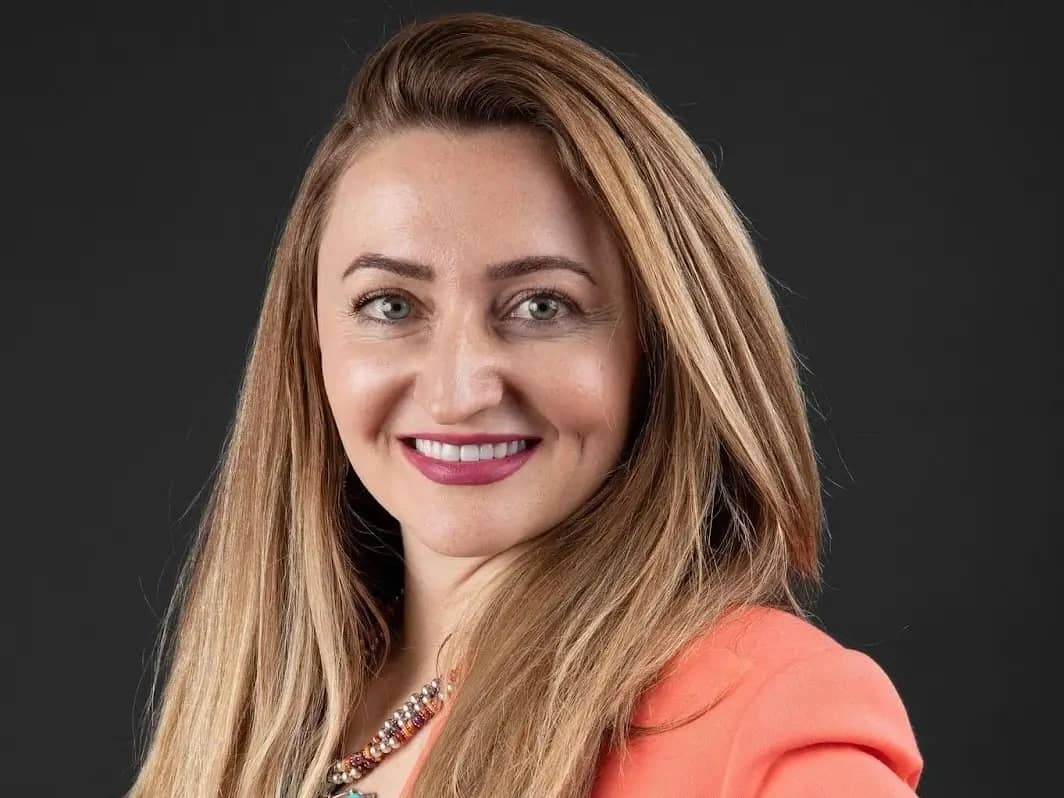
Yevgeniya "Yev" Muchnik is a Ukrainian-American corporate, securities, and Web3 attorney known for her work with startups, digital asset companies, and Decentralized Autonomous Organizations (DAOs). [1] She is a Founding Partner at the Web3-focused law firm Forward Counsel LLP, the founder of Launch Legal LLC, and holds advisory and partnership roles in the technology and venture capital sectors. [2] [3] Muchnik is recognized for her role in developing some of the first legal frameworks and "legal wrappers" for DAOs, as well as her contributions to blockchain-related legislation in Colorado. [4]
Early Life and Education
Yev Muchnik was born in Kiev, Ukraine, which at the time was part of the former Soviet Union. [5] Her family immigrated to the United States as Jewish refugees when she was six or seven years old, a story she has cited as a source of personal inspiration. [5] [1] She grew up in Boulder, Colorado. [2]
Muchnik pursued a multi-jurisdictional education in business and law. She graduated magna cum laude from the University of Colorado Boulder's Leeds School of Business with a Bachelor of Science in Business Administration, with an emphasis on finance and economics. [2] [1] She later received a Bachelor of Laws (LLB) with highest honors from the University of Birmingham School of Law in the United Kingdom. [2] She completed her legal studies by obtaining a joint Master of Laws (LLM) in International & Comparative Law from The George Washington University Law School, which included studies at the University of Oxford. [6]
Career
Muchnik's career evolved from roles in international corporate law and finance regulation to in-house counsel positions at technology companies, eventually leading to legal entrepreneurship with a focus on the Web3 and blockchain industries. [2] [4]
Early Career in Finance and International Law
Muchnik began her career as an Enforcement Attorney at the Financial Industry Regulatory Authority (FINRA), formerly NYSE Regulation, during the aftermath of the 2008 financial crisis. [4] Before law school, she also worked as a Senior Associate in the Transaction Services (M&A) group at the accounting firm KPMG US from 2008 to 2011. [1]
She was admitted to the New York bar in 2008 and started her international law practice in the corporate group of Squire Patton Boggs in Moscow, Russia. [2] There, she focused on private equity, mergers and acquisitions (M&A), and Foreign Corrupt Practices Act (FCPA) investigations before transferring to the firm's Washington, D.C. office. She subsequently worked on white-collar investigations and compliance at the law firms King & Spalding and Paul Hastings. [2] [5]
Transition to In-House Counsel
In 2012, Muchnik transitioned to an in-house role, serving as General Counsel for Santeon Group, a publicly traded company focused on government contracting and enterprise software development. [2] Beginning in late 2013, she served as Secretary and General Counsel for JetSmarter, an aviation technology company. During her tenure, she guided the company through its Series Seed, Series A, and Series B financing rounds, helping it raise over $56 million in capital. [2] [6]
After relocating to Denver, Colorado, she worked as a corporate associate at the boutique M&A firm Koenig, Oelsner, Taylor, Schoenfeld & Gaddis PC. [4]
Legal Entrepreneurship and Founding of Launch Legal
In a 2018 interview, Muchnik expressed a desire to move away from larger corporate law environments, stating, "I left Big Law because I felt like I was losing my personality and my soul. I wasn’t feeling fulfilled." [1] In 2017, she founded ESQLegal, a coworking space in Denver for transactional attorneys, with a mission to foster community and innovate the delivery of legal services. [2] [6]
In January 2017, she founded Launch Legal, a boutique law firm providing corporate and securities law services to startups and technology companies. The firm later became J.Wiener & Associates. [4] As of 2026, she is the Managing Attorney of Launch Legal LLC, a firm dedicated to serving modern companies with a special emphasis on the blockchain and Web3 space. [1] [3] Launch Legal maintains a strategic partnership with Forward Counsel LLP. [1]
Pioneering Work in Web3 and DAO Law
Since 2016, Muchnik has specialized in the legal aspects of digital assets, blockchain, and other emerging technologies. [5] She is considered an authority on the legal structuring of DAOs, having developed legal wrappers and corporate structures for some of the earliest and most influential decentralized organizations, including Moloch DAO, MetaCartel DAO, and DXdao. [4] She also contributed to the legal framework for The LAO, a for-profit, member-directed venture capital fund organized as a legally compliant investment DAO. [4]
Her legal practice focuses on navigating complex regulatory issues and providing structures for companies in the Web3 ecosystem. This includes advising on securities law for digital assets, fund formation, tokenomics, and interactions with regulatory bodies like the SEC, CFTC, and FinCEN. [1] [3]
Muchnik has played a key role in public policy related to blockchain technology. She was a co-author of the Colorado Digital Token Act and a co-creator of the Colorado Legal Entity Framework for DAOs (CO-LEF), which was designed to provide a clear legal entity structure for DAOs operating in the state. [4]
As of 2021, Muchnik is a Founding Partner at Forward Counsel LLP, a law firm focused on the Web3 ecosystem. [2] She also serves as General Counsel and Venture Partner at the law firm J.R. Wiener. [2]
Ventures and Community Involvement
Muchnik is an active participant in the technology and startup communities, particularly in Colorado. [1] Her involvement includes co-founding community organizations, serving on advisory boards, and speaking at industry events.
- Launch Legal LLC: Founder and Managing Attorney. [3]
- Forward Counsel LLP: Founding Partner. [2]
- Colorado Open Source Software (COSS): Co-founder and board member since November 2021. [1]
- CO YOGA + Life Magazine: Co-founder of the publication in August 2017. [1]
- ESQLegal: Founder of the co-working space for legal and tech professionals in Denver in 2017. [2]
- Techstars: Mentor for the accelerator program since February 2018. [1]
- State of Colorado: Served on governmental blockchain advisory steering committees for the agriculture and banking sectors. [2]
- Global Women in Blockchain: Founding member and former board member. [2]
- 401(play): Board member since January 2022. [4]
- Other Boards: Has served on the boards of the Women Who Startup Foundation, Women in Voice Tech, Lex Lead Group, and Big Green. [2] [4]
- Advisory Positions: Has served as an advisor to SUZUVERSE and acted as general counsel for Ready Games and Majik. [2]
Muchnik is a frequent speaker at major technology and blockchain conferences, including ETHDenver, Messari Mainnet, CoinDesk Consensus, Boulder Startup Week, and the Wyoming Blockchain Stampede. [2] [7]
Awards and Recognition
Muchnik was named a "Rising Star" by Super Lawyers for three consecutive years in 2019, 2020, and 2021. This honor is given to top up-and-coming attorneys. [4]
Interviews
Blockchain Law and Evolving Legal Practice #01
In an interview published on the AttorneySync YouTube channel on March 19, 2019, Yev Muchnik outlines her perspective on changes in legal practice based on her professional background in large law firms, in-house legal roles, and work with blockchain-related clients.

According to Muchnik, prevailing law firm structures in 2019 did not align with the working preferences or operational needs of a segment of practicing attorneys. She describes legal coworking spaces as one response to these conditions, particularly for solo and transactional lawyers. She notes that confidentiality and professional responsibility within shared office environments can be addressed through physical separation of meeting areas, sound-mitigation measures, and compliance with guidance issued by state bar associations, several of which had determined that such arrangements were permissible.
Muchnik characterizes blockchain law as an area primarily involving corporate and securities matters, alongside the legal treatment of smart contracts. She states that participation in this field requires familiarity with technical concepts and engagement with technology-focused professional communities. In her account, specialization in emerging practice areas develops through ongoing involvement in industry events, collaborative professional settings, and informational exchanges, rather than traditional client solicitation.
The interview also presents Muchnik’s assessment of technology use in legal services. She describes digital tools for case management, document execution, secure communication, and remote meetings as components of standard legal operations, particularly when serving technology-oriented clients. She frames these tools as mechanisms that support administrative organization and client interaction.
In addition, Muchnik discusses access-to-justice initiatives, referencing unbundled legal services as one method of structuring legal assistance. She explains that providing limited-scope services may allow clients to engage legal counsel for discrete needs while enabling lawyers to serve a wider client base. The interview as a whole reflects her account of how legal practice models, technology adoption, and service structures were being reconsidered within the legal profession at that time. [8]
Exploring the Legal Side of Crypto with Yev Muchnik #02
This interview was published on August 4, 2021, on the YouTube channel Spotlight Marketing + Branding.

In this episode, attorney Yev Muchnik presents her perspective on cryptocurrency with an emphasis on its legal implications. She describes digital assets as a source of legal questions that affect existing frameworks, particularly in areas such as regulation, compliance, and legal advisory services.
Muchnik explains how cryptocurrency-related matters may be treated as a separate area of legal practice, requiring familiarity with blockchain-based systems and awareness of regulatory developments. The discussion addresses how lawyers may encounter issues related to client representation, legal interpretation, and compliance when advising on crypto-related activities.
The interview also covers ethical considerations identified by Muchnik, including professional responsibility, due diligence, and risk communication in matters involving digital assets. Overall, the conversation reflects her assessment of how the legal profession engages with cryptocurrency as it continues to intersect with established legal systems. [9]
See something wrong?