
Steven Goldfeder
Steven Goldfeder is an American computer scientist, cryptographer, and entrepreneur. He is the Co-Founder and CEO of Offchain Labs, the venture-backed and Princeton-founded company that developed Arbitrum, a leading Layer 2 scaling solution for Ethereum. [17][3][1][2]
Education
Steven Goldfeder studied for a Bachelor's degree in Mathematics and Computer Science at Yeshiva University. In 2013, he attended Princeton University where he graduated with a Ph.D. in Computer Science in 2018. At Princeton, Steven's Ph.D. advisor was Professor Arvind Narayanan. He was a member of the Security & Privacy Research Group, a Center for Information Technology Policy (CITP) Graduate Student Fellow, and a National Science Foundation (NSF) Graduate Research Fellow. [3][18][2]
Career
Following his Ph.D., Goldfeder was a postdoctoral researcher at Cornell Tech's Initiative for Cryptocurrencies & Contracts (IC3), where he was co-mentored by Professors Ari Juels and Andrew Miller. [3]
During his graduate studies, Goldfeder served as a software engineering intern at Google over three summers (2013, 2014, 2015). He was also a Research Intern at Microsoft Research from June 2016 - September 2016. [2]
Offchain Labs
Steven Goldfeder co-founded Offchain Labs alongside Ed Felten and Harry Kalodner in September 2018. Offchain Labs is a venture-backed company responsible for developing Arbitrum, an "Optimistic Rollup" scaling solution for Ethereum. As of mid-2025, Arbitrum was recognized as the leading Ethereum Layer 2 solution by Total Value Locked (TVL). [19][4]
While at Princeton, the three co-founders developed the Arbitrum technology and published a paper in 2018. Offchain was created with a mission to scale Ethereum and bring it to the public. [3]
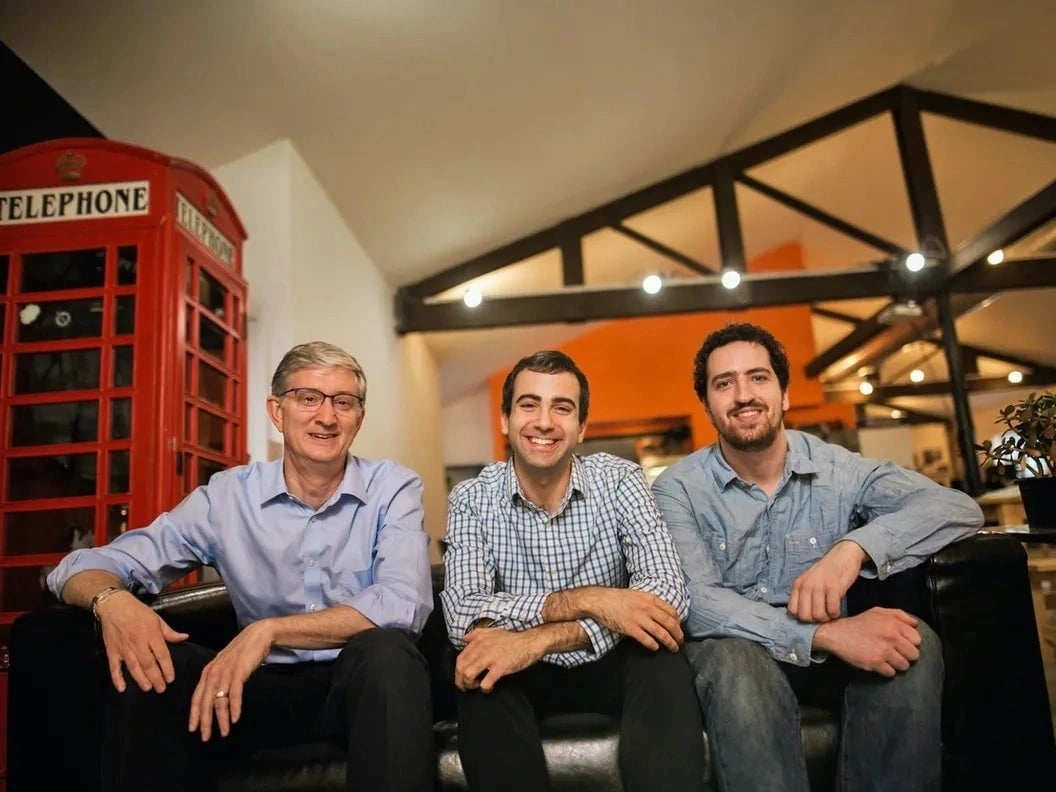
In April 2019, Offchain Labs raised 3.7 million in seed funding. The round was led by Pantera Capital and included participants such as Coinbase Ventures. [6]
In August 2021, Offchain Labs secured $120 million in a Series B fundraising round. The round was led by Lightspeed Venture Partners and also saw participation from crypto investors Polychain Capital, Pantera Capital, Alameda Research, and Mark Cuban. [7]
"We are excited to partner with our investors who understand the importance of scaling Ethereum and bringing the Ethereum ecosystem to the masses. The tremendous support we've seen from developers across the globe validates our mission to be the first to marry the world of FinTech and Defi." - said Steven Goldfeder, co-founder, and CEO of Offchain Labs.
Arbitrum DAO and $ARB Airdrop
In March 2023, Offchain Labs announced a major step toward decentralization with the launch of the Arbitrum DAO (Decentralized Autonomous Organization) and the airdrop of its governance token, $ARB. The airdrop distributed tokens to early users and contributors to the Arbitrum ecosystem, empowering them with the ability to vote on proposals affecting the future of the Arbitrum One and Arbitrum Nova networks. The event marked the transition of network governance to its community. [18]
Arbitrum One
In August 2021, Offchain Labs announced the release of its Arbitrum One mainnet to the public. Arbitrum One has had several projects sign up for access on its platform since its beta launch for developers in May 2021. Offchain Labs created the platform to meet the demand for Ethereum scaling solutions that do not endanger the security of the base layer. Its EVM compatibility means that projects can deploy without altering their contracts. [7]
Arbitrum Nova
In August 2022, Offchain Labs introduced Arbitrum Nova as the chain designed for gaming and decentralized social applications. Arbitrum Nova onboarded Reddit, the social media platform to build its Community Points on the chain. The deployment on Nova facilitated Ethereum developers to tap into the Reddit community. [8][9]
"Arbitrum Nova was the public chain that we launched that uses the data availability committee to make fees even cheaper but still giving Reddit the high security that they need. And one of the nice things is again users have self-sovereignty over their points, so now users are able to own those points and they know that no matter what, nobody can take it away from them, those points live in Arbitrum"
"You can actually build an ecosystem around these points and that's one of the to me most underexplored but fascinating parts of this" - Steven Goldfeder
Arbitrum Stylus
Announced in 2023, Arbitrum Stylus is an upgrade to the Arbitrum stack that introduces a new virtual machine, coexisting with the EVM. Dubbed EVM+, this upgrade allows developers to write smart contracts in traditional programming languages like Rust, C, and C++, which compile to WASM (WebAssembly). This was designed to dramatically expand the developer base for Arbitrum, lower gas costs, and improve computational performance, while maintaining full composability with existing EVM contracts. [18]
Prysmatic Labs Acquisition
On October 12, 2022, Offchain Labs announced it was acquiring Prysmatic Labs[7], one of the core engineering teams behind Ethereum's transition to proof-of-stake. Prysmatic Labs originally made its mark by creating Prysm, Ethereum’s most popular consensus layer client – a key piece of software for the disintermediated network of computers that keep Ethereum up and running. [10][11]
"Prysmatic Labs possesses an incredibly talented team of engineers, and their dedication to the Ethereum community shows via their best-in-class product that is used broadly in the Ethereum ecosystem. We are looking forward to the integration of the Prysmatic Labs team as we work together to scale Ethereum." - Steven Goldfeder, CEO of Offchain Labs
The acquisition marked a major milestone for Offchain Labs in its bid to expand the footprint of Arbitrum, its optimistic rollup network which allows users to transact on Ethereum. The acquisition also signaled the influence of layer 2 scaling platforms on the Ethereum ecosystem. [10][12]
Academic Work and Research
Bitcoin and Cryptocurrency Technologies (Textbook)
Goldfeder is a co-author of Bitcoin and Cryptocurrency Technologies, a foundational university-level textbook in the field, published by Princeton University Press in 2016. The book is widely used in academic courses and as a guide for developers entering the cryptocurrency space. His co-authors are Arvind Narayanan, Joseph Bonneau, Edward Felten, and Andrew Miller. [3][5]
Threshold Cryptography and MPC
Goldfeder has published highly cited research on threshold signatures for ECDSA, the cryptographic algorithm used by Bitcoin and Ethereum. This work outlines methods for splitting a private key among multiple parties, requiring a "threshold" number of them to collaborate to generate a signature. This research provides a theoretical foundation for modern Multi-Party Computation (MPC) wallets, which enhance security by eliminating single points of failure. [3][20]
Maximal Extractable Value (MEV)
Goldfeder co-authored the 2020 paper titled "Flash Boys 2.0: Frontrunning, Transaction Reordering, and Consensus Instability in Decentralized Exchanges." This seminal paper was one of the first to formally describe and analyze the phenomenon now known as Maximal Extractable Value (MEV). It detailed how blockchain validators or miners could exploit their ability to reorder, insert, or censor transactions for financial gain, particularly within decentralized finance (DeFi). [3]
Publications
- Bitcoin and Cryptocurrency Technologies [3]
- Arvind Narayanan, Joseph Bonneau, Edward Felten, Andrew Miller, and Steven Goldfeder.
- Princeton University Press, 2016.
- Flash Boys 2.0: Frontrunning, Transaction Reordering, and Consensus Instability in Decentralized Exchanges [15]
- Philip Daian, Steven Goldfeder, Tyler Kell, Yunqi Li, Xueyuan Zhao, Iddo Bentov, Lorenz Breidenbach, Ari Juels.
- IEEE Security and Privacy (Oakland), 2020.
- DECO: Liberating Web Data Using Decentralized Oracles for TLS [14]
- Fan Zhang, Sai Krishna Deepak Maram, Harjasleen Malvai, Steven Goldfeder, Ari Juels
- ACM Conference on Computer and Communications Security (CCS), 2020.
- Fast Multiparty Threshold ECDSA with Fast Trustless Setup [3]
- Rosario Gennaro and Steven Goldfeder.
- ACM Conference on Computer and Communications Security (CCS), 2018.
- Arbitrum: Scalable, private smart contracts [16][3]
- Harry Kalodner, Steven Goldfeder, Xiaoqi Chen, S. Matthew Weinberg, Edward W. Felten.
- USENIX Security, 2018.
- BlockSci: Design and applications of a blockchain analysis platform [13][3]
- Harry Kalodner, Malte Möser, Kevin Lee, Steven Goldfeder, Martin Plattner, Alishah Chator, Arvind Narayanan
- USENIX Security, 2020.