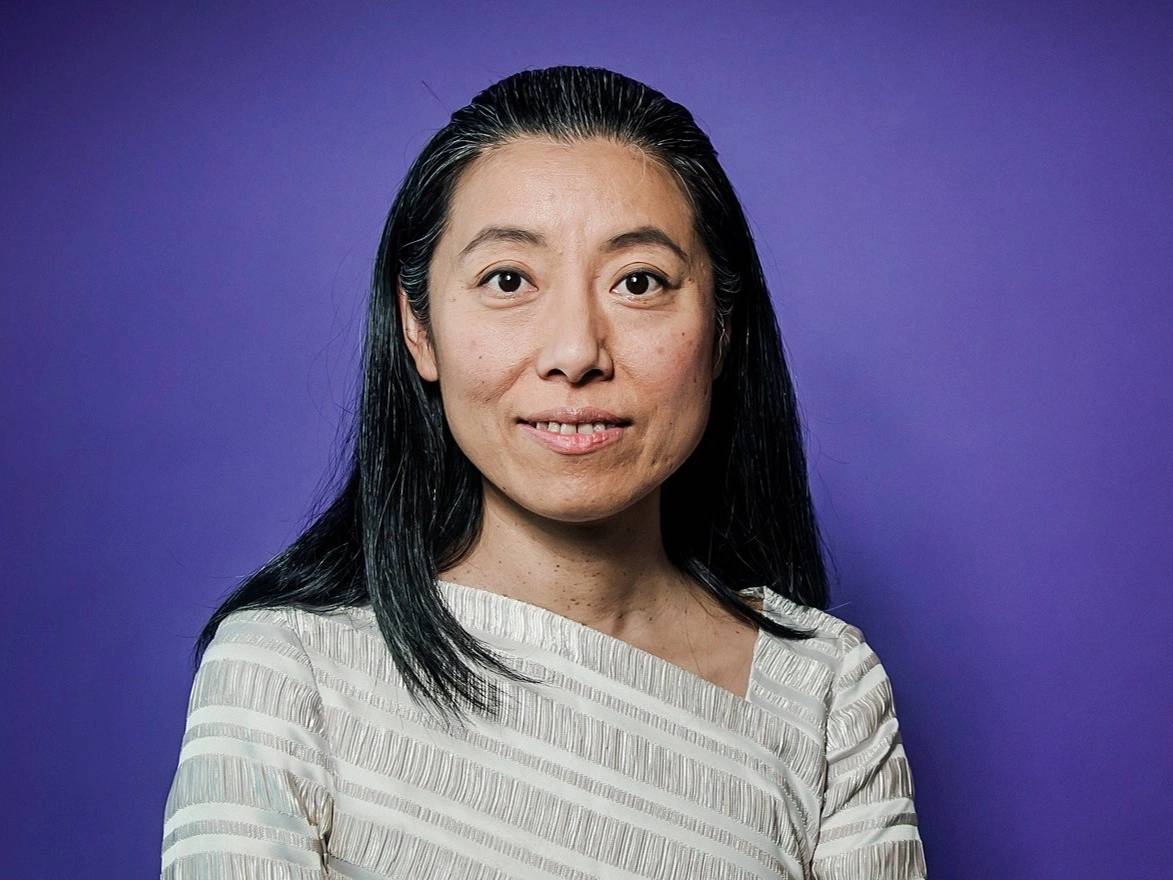
Dawn Song
Dawn Song is a Chinese-American computer science professor at the University of California, Berkeley, recognized for her contributions to computer security, artificial intelligence, and blockchain technology.[3]
She founded Oasis Labs, a cloud-computing company using blockchain technology known as the Oasis Network to preserve user privacy.
경력
Education & Early Career
Dr. Song received her Bachelor of Science degree in Physics in 1996 from Tsinghua University, followed by a Master's degree in Computer Science from Carnegie Mellon University in 1999.[5][16] In 2002, she obtained her Ph.D. from the University of California, Berkeley, establishing her proficiency in computer science, security, and artificial intelligence. From 2002 to 2007, Dr. Song served as an assistant professor at Carnegie Mellon University, and later, she joined the faculty at UC Berkeley.[1][4]
Research Focus
Dr. Song's research explores the interplay between software, hardware, and networks that render computer systems susceptible to attacks. She employs theoretical approaches to comprehend and mitigate security challenges in computer systems and networks. Her research spans various domains, including software security, networking security, database security, distributed systems security, applied cryptography, and the intersection of machine learning and security.[5]
Dr. Song created the BitBlaze platform to analyze malware and create a protective filter autonomously until a security patch becomes accessible. This program examines patches and generates new malware to exploit vulnerabilities, offering guidance to programmers in crafting effective security patches. Following a security attack, BitBlaze can defend against diverse future attacks targeting the same vulnerability. BitBlaze was later integrated into the Google Chrome web browser.[4]
Song’s research includes AI safety and security and agentic AI. Agentic systems can plan, use tools, take actions, and adapt, creating risks such as prompt injection and errors or misalignment with user intent across extended sequences of actions. She has identified robust evaluation, secure-by-design architecture, interpretability, and human oversight as approaches to addressing these challenges.[3][9]
Song co-authored DataSentinel, a method that fine-tunes a language model using minimax optimization to detect prompt-injected inputs strategically adapted to evade detection. The work received a Distinguished Paper Award at the 2025 IEEE Symposium on Security and Privacy.[10][3]
Song’s research and outreach have also included the Berkeley Agentic AI MOOC series, which had nearly 40,000 learners worldwide by August 2026, and the 2026 Berkeley Agentic AI Summit, which drew an estimated 5,000 in-person attendees and tens of thousands online.[9]
Virtue AI and Meta
Virtue AI was founded in 2024 by Dawn Song, Bo Li, Carlos Guestrin, and Sanmi Koyejo to develop AI safety and security products. Its offerings included automated red teaming, guardrails, and tools for AI security and governance in enterprise systems. On April 15, 2025, the company announced $30 million in seed and Series A funding.[11]
On June 25, 2026, Song announced she was joining Meta Superintelligence Labs as vice president of AI research, alongside members of the Virtue AI team, to focus on AI safety and security. The move was a team hire, not an acquisition of Virtue AI.[12]
Fortinet announced on August 17, 2026, that it had acquired Virtue AI for undisclosed terms. Fortinet said Virtue AI’s products would extend its AI protection capabilities across development and runtime, including through red teaming, guardrails, and AI security and governance tools.[13]
On October 2, 2026, Meta confirmed it was parting ways with employees it had hired from Virtue AI, four months after their June start. Meta attributed the separation to clashing work styles and said its AI-safety focus continued.[14]
Awards and Recognition
In 2010, she received the MacArthur Foundation Fellowship for her efforts in safeguarding computer systems against malware, particularly for developing a technique to identify potential security breaches by analyzing system activity patterns.[2]
Dr. Song's contributions to security and privacy matters have garnered a National Science Foundation CAREER Award for young faculty, an MIT Technology Review Award recognizing her as one of the world's top young innovators, a Guggenheim fellowship, an Alfred P. Sloan Research Fellowship, and the IBM Faculty Award, among numerous other honors.[2]
In 2025, Song was elected to the American Academy of Arts and Sciences and selected as a Schmidt Sciences AI2050 Senior Fellow.[15][3]
Oasis Labs
In 2018, Dr. Song co-founded Oasis Labs alongside Bobby Jaros (COO), Noah Johnson (CPO), and Raymond Cheng (CTO). Oasis Labs works to give users back control of their data through privacy and security measures and enhanced processing capabilities. The organization employs hardware and software technologies, facilitating the deployment of cloud-scale, practical applications, including machine learning integrated with blockchain technology.[6]

인터뷰
Blockchain and Privacy
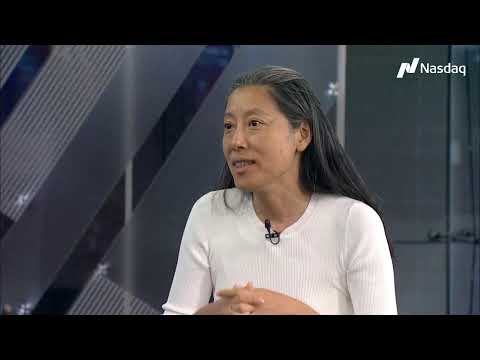
On September 28, 2022, Dr. Song was interviewed by Jill Malandrino on Nasdaq's "TradeTalks," where she discussed Oasis Labs' innovations in Web3 technologies.[8]
She explained how Sapphire, Oasis Labs' newest product at the time, brought a significant innovation to user privacy in blockchain.[8]
Responsible Data Economy
On October 2, 2020, Dr. Song was interviewed by Outlier Ventures. During the interview, she highlighted the importance of giving users control over their data and emphasized the need for privacy protection. She goes on to define what she calls the responsible data economy framework:[7]
"This new framework aims to establish and ensure users' rights to data, allowing them to maintain control over how their data is used. Simultaneously, it facilitates more effective data utilization while adhering to, honoring, and enforcing users' rights. This encapsulates the essence of the responsible data economy."
She later explains the benefits of combining blockchain and machine learning and discusses how the Oasis Network uses both concepts to create a responsible data economy.[7]