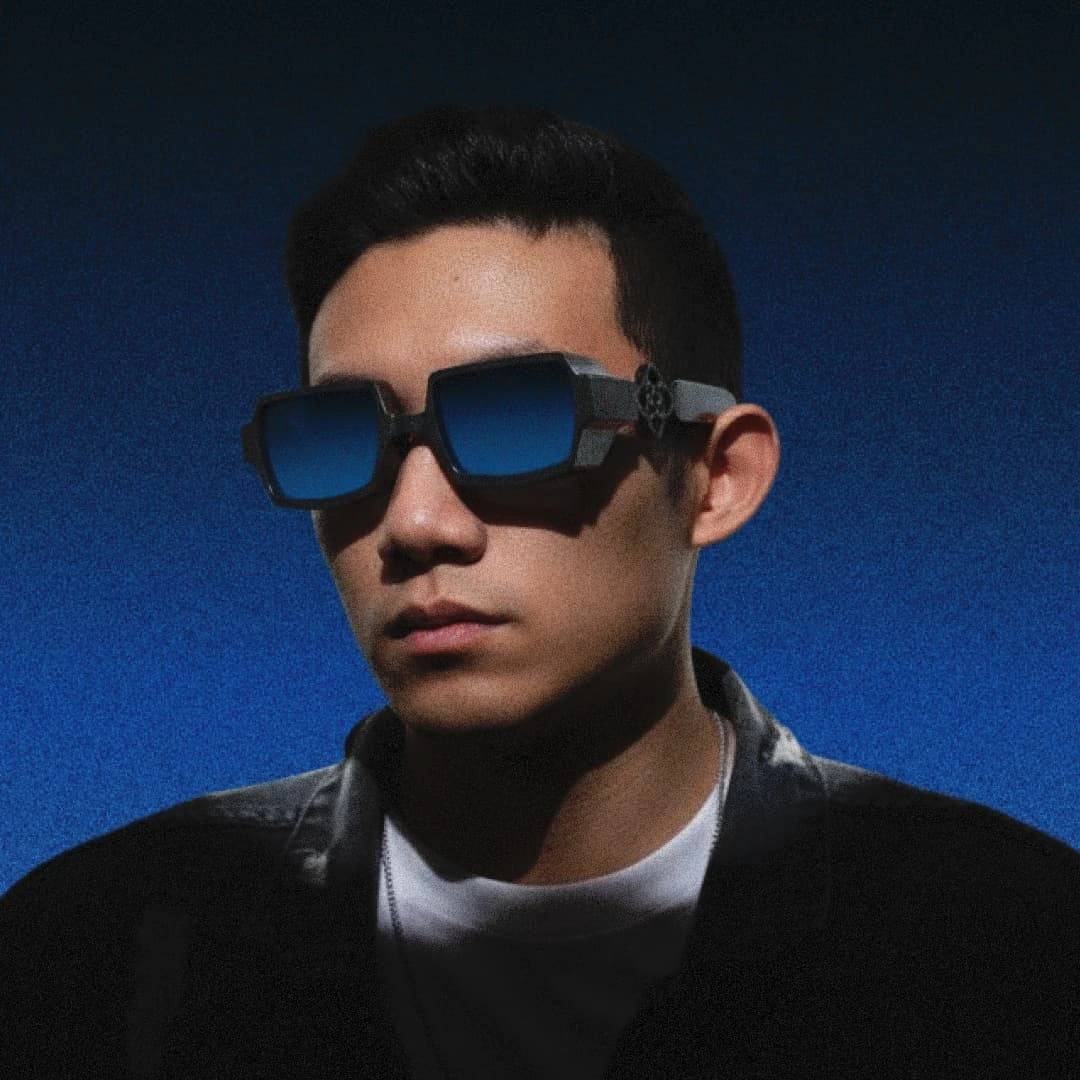
Matthew Wang
Matthew Wang is an engineer, researcher, and entrepreneur known for his work at the intersection of artificial intelligence, quantitative finance, and blockchain technology. He is the co-founder and CEO of OpenGradient, a research lab and Layer 1 blockchain platform building decentralized infrastructure for verifiable AI. Prior to founding OpenGradient, Wang worked in quantitative research at Two Sigma and held engineering roles at Google, Meta, and NASA. [1] [2]
Education
Wang attended Northwestern University, where he graduated in 2020 with a Bachelor of Science degree in Electrical and Computer Engineering. [1]
Career
Wang began his career in 2018 with a software engineering internship at NASA, where his work involved preliminary hazard data analytics and modeling. In early 2019, he interned at Meta (then Facebook), contributing to the core messaging heuristic infrastructure for Messenger and Instagram. Later that year, he joined Google as a machine learning engineering intern, working on AI modeling infrastructure for the Google Ads traffic estimator. [2] [1]
From 2020 to 2024, Wang worked at the quantitative hedge fund Two Sigma. In his role in quantitative research and engineering, he focused on equity options market-making (OMM) research and modeling. In 2024, Wang left Two Sigma to establish OpenGradient. [1] [3]
OpenGradient
In 2024, Wang co-founded OpenGradient, a platform described as "The Layer 1 for Open Intelligence." He serves as its CEO. [4] The project was started with the premise of addressing the lack of transparency in existing AI systems by building open protocols for verifiable compute and user-owned data. [3]
The company's stated mission is to create a decentralized, end-to-end platform for secure, open-source AI, positioning itself as a Web3 alternative to centralized model repositories like Hugging Face. The platform aims to provide infrastructure for hosting AI models, executing secure inferences, and running on-chain AI agents. [5]
In October 2024, OpenGradient announced it had raised an $8.5 million seed funding round. The round was supported by venture capital firms including a16z crypto, Coinbase Ventures, SV Angel, Foresight Ventures, and Symbolic Capital, among others. Angel investors included Balaji Srinivasan (former CTO of Coinbase), Illia Polosukhin (co-founder of NEAR Protocol), and Sandeep Nailwal (co-founder of Polygon). [3] [4]
Technology and Products
OpenGradient develops a full-stack infrastructure to integrate machine learning into Web3 applications. Its technology stack includes several key components:
- L1 Network: A decentralized blockchain designed specifically for high-performance, scalable, and verifiable AI workflows. [4]
- MemSync: Announced in June 2025, MemSync is a protocol for creating persistent, long-term memory for AI models. It is designed to convert a user's digital footprint into an AI-compatible database, enabling context and personalization to be portable across different AI applications. [3]
- Secure Context Protocol: A protocol that uses end-to-end encryption and hardware enclaves, such as Trusted Execution Environments (TEEs), to facilitate secure and confidential interoperability with major AI platforms like OpenAI's ChatGPT, Anthropic's Claude, and Google's Gemini. [4]
- Model Hub: A "Web3 AI Model Hub" that functions as a decentralized repository for discovering, deploying, and sharing community-created AI models. [4]
- Verifiable Inference SDK: An SDK that allows developers to secure AI inference using a combination of cryptographic proofs (including zkML) and TEEs to ensure the integrity of computations performed on the network. [6]
Use Cases
Wang has publicly discussed several practical applications for OpenGradient's infrastructure, particularly in decentralized finance (DeFi) and AI-driven automation. Examples include using on-chain machine learning to optimize trading fees and mitigate impermanent loss for automated market maker (AMM) liquidity pools, as well as enhancing risk models for lending protocols. Other identified use cases include building on-chain reputation systems and enabling intelligent, adaptive AI agents to execute complex, autonomous tasks. [7] [8]
Publications and Research
During his academic and professional career, Wang has authored and co-authored research papers and other writings on quantitative finance and machine learning.
His peer-reviewed work includes the 2020 paper "Regime-Switching Factor Investing with Hidden Markov Models," published in the Journal of Risk and Financial Management. The paper explores the use of Hidden Markov Models to classify market regimes and dynamically adjust factor investing strategies. He has also authored research proposals and articles on topics such as mitigating loss in AMMs using dynamic fee systems, algorithmic stablecoin issuance, and applying AI in Web3. His writings cover themes such as zero-knowledge machine learning (zkML), decentralizing AI inference, and volatility forecasting in DeFi. [1]
Public Appearances
Wang frequently speaks at industry conferences and participates in interviews to discuss OpenGradient and the intersection of AI and Web3.
Presentations
At ETHDenver in March 2025, Wang gave a presentation titled "Decentralized Compute Enabling Adaptive, Intelligent Agents in Real Time." He outlined a three-stage evolution of AI agents, from information synthesizers to autonomous task executors. Wang identified data access, computational workflows, and interoperability as key challenges limiting the capabilities of current agents. He explained how OpenGradient's full-stack, on-chain infrastructure, featuring specialized nodes and secure data pipelines, was designed to address these constraints and enable the development of more sophisticated AI agents for applications like prediction markets and DeFi.
Panel Discussions
In January 2025, Wang participated in the "AI Meets Web3" panel at Taipei Blockchain Week alongside representatives from Iagent Protocol, Aethir, and Chainbase. He described OpenGradient as a decentralized platform for hosting AI models that emphasizes secure integration and verifiable on-chain workflows, contrasting it with centralized platforms. The discussion covered topics such as onboarding Web2 users to Web3, data monetization, and the potential for AI agents in gaming and portfolio management. [5]
At the Open AGI Summit in November 2024, Wang joined a panel on the "Future of Compute" to discuss centralized versus decentralized architectures. Panelists agreed that user needs—balancing performance, privacy, and cost—should guide the choice of architecture. Wang and others noted that while centralized systems generally offer superior performance, decentralized solutions provide benefits like cost efficiency and censorship resistance. He acknowledged the reliability and usability challenges that have hindered adoption of decentralized services but expressed optimism that emerging technologies like verification mechanisms and privacy-enhancing tools would drive future growth. [9]
Wang also appeared on the "New Era for AI" panel at a NEAR Protocol conference in November 2024. He discussed his transition from quantitative modeling to decentralized systems and highlighted OpenGradient's goal of providing out-of-the-box solutions for compute integration. He described the platform's staggered pricing model for GPUs, TEEs, and CPUs and gave practical examples of its use in optimizing AMM trading fees and lending protocol risk models. The panel also touched upon regulatory considerations and the potential for autonomous agents to leverage permissionless compute. [7]
Interviews
In a December 2024 interview on NEAR AI Office Hours, Wang discussed the development of OpenGradient. He detailed the platform's full-stack approach to integrating machine learning into Web3 applications, including its decentralized model hub. He explained how the architecture relies on specialized nodes for efficient AI inference and uses TEEs and cryptographic proofs to verify computational integrity. Wang mentioned DeFi and on-chain reputation systems as primary use cases and outlined a long-term goal of expanding AI adoption in Web3 through continued infrastructure research. [6]
Community Engagement
Wang is active on social media, where he provides commentary on the Web3 ecosystem. He has publicly analyzed the decentralized exchange Lighter.xyz, commenting on its zero-fee strategy as a market-capture tactic and creating a community tool to estimate airdrop points for the platform. He has also compared the user experience of prediction market platforms, arguing that Kalshi's direct bank account integration offered a superior product experience to Polymarket's reliance on bridging to the Polygon network. [3]
Challenges
In February 2025, Wang reported that he was removed from a panel at a side event for the ETHDenver conference. He stated on social media that the removal occurred because a co-sponsoring organization viewed OpenGradient as a direct competitor. In response to the incident, he commented, "If your moat stems from conference clout I feel sorry for you." [3]