0% read
Last updated:
Hong Qi Yu
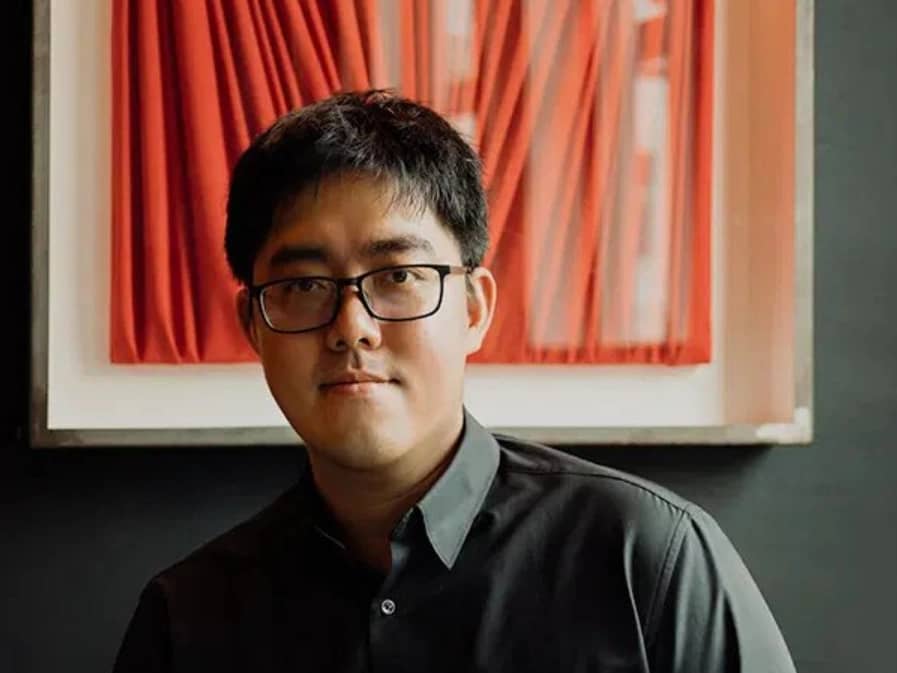
Hong Qi Yu, also known as QY, is a Malaysian-born tech entrepreneur and blockchain enthusiast, best known as the founder and CEO of Tokenize Xchange, a cryptocurrency exchange he established in Singapore in October 2017.[3][9] He later founded Tokenize Malaysia in 2020 as a regulated digital asset exchange under the Securities Commission Malaysia.[1][10] Hong has an academic background in electrical and electronic engineering and early professional experience as a developer and as a trader managing portfolios across foreign exchange, equities, and digital currencies.[2][11][9] He has also been the subject of regulatory investigations in Singapore related to Tokenize Xchange’s operator, AmazingTech, and was charged in court in July 2025 with fraudulent trading, with those proceedings and related probes ongoing and not concluded as of late 2025.[12][6]
Education
QY studied electrical and electronic engineering at Nanyang Technological University, Singapore, from August 2011 to May 2014.[2]
Career
Building on his engineering training, QY worked in engineering and coding roles at Atos and TransPerfect before joining Bambu, a business-to-business (B2B) robo-advisor platform, as a developer, spending almost three years in total across these firms.[11] He also accumulated four years of experience trading and managing investment portfolios across foreign exchange (FOREX), equities, and digital currencies, during which he developed an interest in cryptocurrency and blockchain technology.[9] As he encountered high fees and limited options to convert fiat into digital assets, he concluded that there was a lack of accessible, regulated local platforms for trading cryptocurrencies and decided to establish Tokenize Xchange to address this gap.[9][11] In 2022, venture capital firm Trive and individual investors invested US$11.5 million in Tokenize Xchange as part of a Series A phase 1 funding round.[1] At that time, Hong said Tokenize planned to raise up to US$1 billion over the following 12 months to support an acquisition-led expansion across Asia, targeting operations in as many as 50 jurisdictions and an eventual workforce of about 1,000 employees, subject to market conditions and regulatory approvals.[1]
Tokenize Xchange
Tokenize Xchange is a cryptocurrency exchange platform founded by Hong Qi Yu in Singapore in October 2017 to improve accessibility to digital asset trading.[3] Hong has described the platform’s purpose as addressing barriers such as limited access to legitimate trading venues, security concerns, and poor customer support in the cryptocurrency market.[3][9] Under his leadership, Tokenize Xchange pursued partnerships with traditional financial and payment industry players, including a collaboration with SGX-listed Accrelist on blockchain-related initiatives in Singapore, and positioned itself as a regulation-focused platform in markets such as Malaysia.[3][1]
The Tokenize emblem (TKX) was launched as an ERC-20 token on the Ethereum blockchain, with company materials outlining plans to evolve it into part of an independent Proof of Stake network referred to as TitanChain or XChain, rather than presenting such a network as already operational.[3][4] In a 2022 interview, Hong outlined a growth strategy centred on raising additional capital to fund acquisitions and expand Tokenize Xchange’s presence in up to 50 jurisdictions, contingent on regulatory approvals.[1] Following the Monetary Authority of Singapore’s rejection of AmazingTech’s licence application in July 2025, Hong said the company viewed its planned relocation and licensing efforts in Labuan and the Abu Dhabi Global Market as opportunities to strengthen its international operations and demonstrate its commitment to regulatory compliance and security, although subsequent court filings indicated that these licensing plans did not fully materialise.[13][14]
Explaining his motivation for launching Tokenize Xchange, Hong stated that, as a former forex and crypto trader, the lack of functional access to financial tools in the cryptocurrency space led him to create a “megastore” platform where users could buy, sell, trade, invest, and learn about blockchain and cryptocurrencies.[3][4] In April 2020, Tokenize Xchange introduced Tokenize Malaysia as a regulated platform to extend its presence in the Asia-Pacific region.[1]
Tokenize Malaysia
Tokenize Malaysia is a Malaysia-based cryptocurrency digital asset exchange (DAX) regulated by the Securities Commission of Malaysia, offering fiat-to-digital asset pairings. The platform is backed by Kenanga Investment Bank.[15] In February 2022, Malaysia-based esports organization SEM9 announced a multi-year deal with Tokenize Malaysia focusing on financial literacy, education, and awareness of esports and cryptocurrency. SEM9 Chairman Tommy Chieng said:[15][5]
"Many partners have approached us in the crypto space, and our chief concern was whether they were credible, safe, and sustainable. I’m happy to announce that Tokenize is the partner we believe is highly credible, safe, and here for the long term. Together with Qi Yu’s vision, we believe that we can build a safe space for our fans and audience. For all of us here at SEM9, this is a ground-breaking partnership, and we couldn’t be more excited for what’s ahead as we march together with Tokenize into Web3 and the metaverse."
QY commented:[5]
"I have always believed that gaming and crypto assets are a natural marriage. I’m thrilled and bought into the vision of SEM9, building a team to showcase what ASEAN is capable of in esports to the rest of the world. I can’t be happier to be working with such a high-caliber esports organization. The pipeline that we have in store will certainly excite the market."
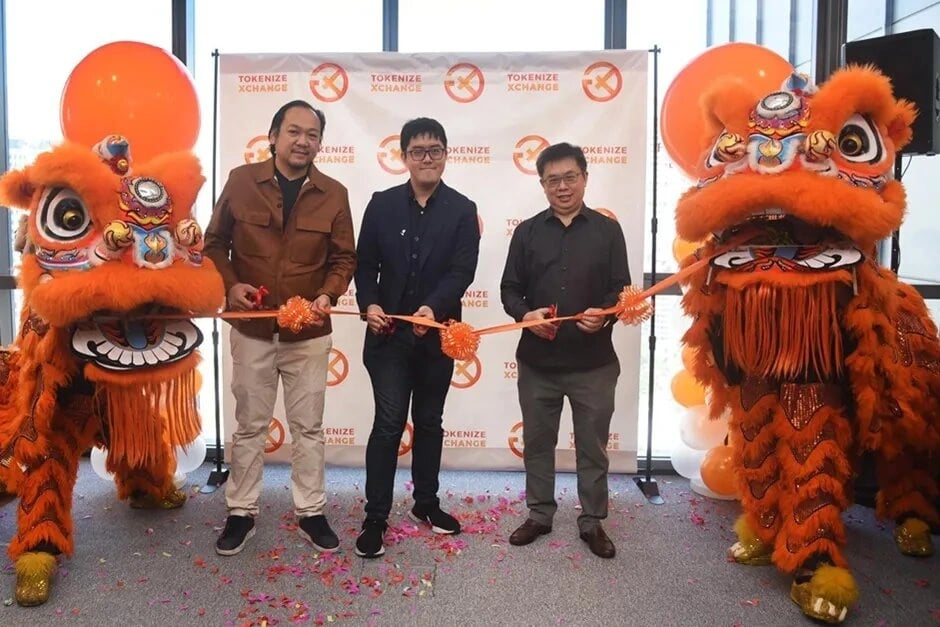
In September 2022, Tokenize Malaysia announced that the Securities Commission had approved the firm to trade digital assets Solana (SOL), UNISWAP (UNI), and Bitcoin Cash (BCH) on its platform, making it the first cryptocurrency exchange to offer Solana legally in Malaysia.[15]
Legal Issues
On Aug. 1, 2025, the Monetary Authority of Singapore (MAS) and the Singapore Police Force’s Commercial Affairs Department (CAD) announced in a joint statement that AmazingTech, the operator of Tokenize Xchange, and its related companies were under investigation for potential offences, including fraudulent trading under the Insolvency, Restructuring and Dissolution Act 2018.[12][6] MAS and CAD stated that AmazingTech was not licensed by MAS and that its activities were not supervised or regulated by MAS, as it had been operating Tokenize Xchange in Singapore under an exemption from holding a licence while its application was assessed under the Payment Services Act 2019.[12]
On July 31, 2025, Hong Qi Yu was charged in court with fraudulent trading under the Insolvency, Restructuring and Dissolution Act 2018. The offence carries a maximum penalty of a seven-year prison term, a fine, or both.[12][6][7]
AmazingTech’s exemption to operate under the Payment Services Act 2019 ended on July 4, 2025, when MAS rejected its application for a digital payment token services licence. MAS required the company to cease providing payment services, wind down its business in an orderly manner, and ensure that all monies and digital payment tokens received from customers were returned.[12][6] In response, Tokenize Xchange announced on July 20, 2025, that it had ceased operations in Singapore, would close its Singapore business by Sept. 30, 2025, and intended to relocate its operations to Labuan, Malaysia, where it was seeking licensing from the Labuan Financial Services Authority; the company said its 15 employees in Singapore would be laid off by Sept. 30, 2025, with some potentially offered roles in its international operations.[13] Later, court-appointed interim judicial managers reported that AmazingTech’s plans to obtain licensing in Labuan had failed after Hong was charged, and that separate plans to obtain a licence in the Abu Dhabi Global Market had not progressed beyond a preliminary stage.[14]
In mid-July 2025, MAS received several complaints from customers who faced delays in withdrawing their funds and digital tokens, with some users reporting that significant amounts remained on the platform.[12][6][8] MAS asked AmazingTech to address these concerns and return monies and digital payment tokens to customers in an orderly manner, including topping up any shortfall in customer accounts, and later stated it was monitoring the progress of these returns.[12][13] Interim judicial managers subsequently described AmazingTech as “heavily insolvent”, estimating about S$267 million in liabilities, and indicated that the firm was unable to pay its debts and was no longer viable, leading to an application to wind up the company in the High Court.[14] Police investigations into AmazingTech and its related entities, as well as the fraudulent trading charges against Hong, remained ongoing and had not reached a final court judgment as of late 2025.[12][14]
Customer Lawsuit and Asset Freeze
In November 2025, a representative action was filed in the Singapore High Court by an initial group of 272 former customers of Tokenize Xchange against Hong Qi Yu and former chief operating officer Erin Koo Kee Hoon, alleging that they lost funds held on the platform after AmazingTech became insolvent.[16][22] The lawsuit is led by six representative claimants — Low Jun Hong, Sean Joseph McKendrick, Lum Marn Chi, Chim Tat Hong, Peter McCorkindale and Chen Yuanjing — acting on behalf of the wider group of former customers.[22] The claimants initially sought about S$60.5 million in damages, representing what they say were the values of their assets on Tokenize Xchange as at July 31, 2025, or on the dates they attempted to withdraw their funds, but the group later reduced to 249 claimants seeking nearly S$53 million.[20] Their pleadings allege fraudulent misrepresentation and conspiracy to cause loss, including claims that AmazingTech failed to segregate customer assets, commingled user funds with company funds, and fraudulently misappropriated customer assets, as well as that trades were executed directly between Tokenize Xchange and users rather than through a genuine central limit order book.[16][21] None of these civil allegations has been proven in court, and the proceedings remained ongoing as of late 2026.[17]
According to a report filed by court-appointed interim judicial managers in September 2025, AmazingTech owed its customers about S$266.3 million (approximately US$205 million), while its realisable assets were estimated at around S$2.6 million (about US$2 million), implying a shortfall of roughly S$263.7 million that the claimants allege was fraudulently misappropriated by Hong and Koo.[22][20][21] In October 2026, the Singapore High Court granted, and then maintained after a September 28, 2026 hearing, a worldwide Mareva injunction freezing up to nearly S$53 million in assets linked to Hong and Koo, corresponding to the aggregate value of the claims in the representative action.[18][19][17] The Mareva order bars them from selling, transferring, mortgaging, pledging, or otherwise diminishing the value of the covered assets but does not itself determine liability, which remained to be resolved through the ongoing civil and criminal proceedings.[18][17]
Hong and Koo are contesting the civil claim and deny that they are liable for the alleged misrepresentations about the trading platform or for the alleged loss of customer assets.[20] Hong has filed a counterclaim, arguing that the representative action breaches the customer service agreement (CSA) and relying on contractual clauses that, he says, require customers to bear the risk of loss in the value of their digital assets and limit AmazingTech’s total aggregate liability for any claim to the fees it earned in the preceding 12 months.[20] He has also denied that he was the sole decision-maker and driving force behind AmazingTech, contends that any representations were made on behalf of the company rather than in his personal capacity, and disputes the allegation that customer funds were mixed with company funds, stating that AmazingTech segregated customers’ fiat currency and cryptocurrency.[17][20] In her defence, Koo describes her chief operating officer position as nominal and largely administrative, says she left AmazingTech in April 2021, and argues that she had no role in creating, approving, or circulating the CSA or in the management of customer assets, and that she was unaware of Hong’s alleged actions.[20] Separately from the civil proceedings, Hong faces one criminal charge of fraudulent trading related to AmazingTech’s activities between November 2022 and July 2025; he was granted bail of S$250,000 while that criminal case proceeds through pre-trial conferences and had not reached a final judgment as of late 2026.[12][6][20]
See something wrong?
Wiki Powered byIQ
Categories
Tags
Verification
Events
Views
4,507
Categories
Tags
Verification
Events
Views
4,507
Social Profiles: