0% read
Last updated:
MiCA
Markets in Crypto-Assets (MiCA) is a comprehensive regulatory framework established by the European Union to govern digital assets and the services surrounding them.
Introduced as part of the EU's broader Digital Finance Strategy, MiCA aims to harmonize regulations across EU member states, creating a cohesive legal environment that enhances consumer protection, ensures market stability, and fosters innovation within the crypto industry. [1] [2]
Definition and Scope
MiCA is designed to address the fragmentation that previously existed across the EU regarding crypto-asset regulation. Before its implementation, different countries within the EU had varied definitions and regulatory standards for activities such as custody, exchange, and transfer of crypto-assets.
This inconsistency posed significant challenges for businesses looking to operate across multiple jurisdictions, hindering institutional adoption and increasing operational costs. [1]
Under MiCA, a crypto-asset is broadly defined as any digital representation of value or rights which can be transferred and stored electronically using distributed ledger or similar technology. This includes cryptocurrencies, utility tokens, and stablecoins. MiCA applies a functional approach to classification, focusing not on the technology used to create the asset but rather on its utility and transferability. [1]
Core Provisions and Features
Consumer Protection
One of the key priorities of MiCA is consumer protection. It mandates clear risk disclosures for crypto-asset offerings to ensure that investors are well-informed about potential risks. The regulation also sets stringent requirements for marketing communications to prevent misleading or fraudulent claims.
Furthermore, MiCA introduces mechanisms for handling customer complaints and preventing market manipulation, thus working to create a fair trading environment. [3]
Operational Requirements
MiCA outlines operational requirements for Crypto-Asset Service Providers (CASPs).
It mandates the maintenance of high standards of governance and operational integrity, including capital adequacy standards to absorb financial shocks and prevent systemic risk.
CASPs are also required to submit regular reports to supervisory authorities to ensure compliance with MiCA's rules, enhancing market transparency. [1] [3]
Stablecoin Regulation
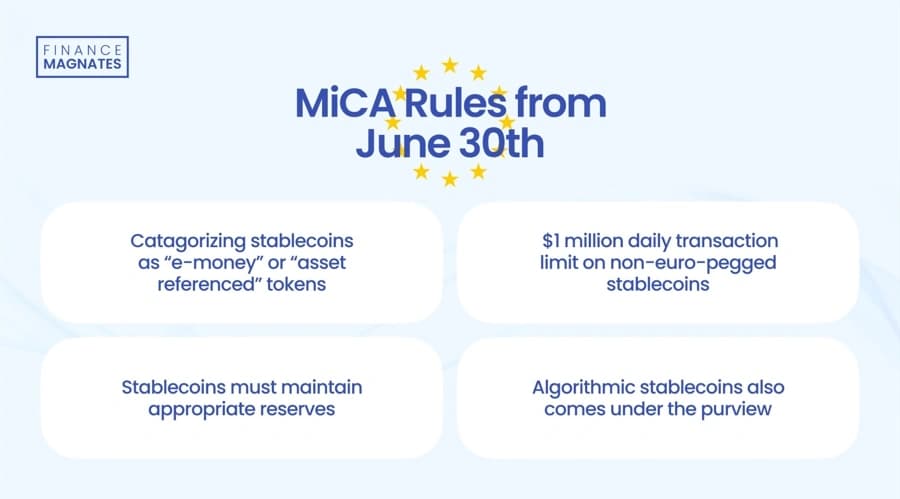
Given the significant role of stablecoins in the digital economy, MiCA provides specific regulations for stablecoins, which it classifies into asset-referenced tokens (ARTs) and e-money tokens (EMTs). [1]
These tokens must adhere to reserve and backing requirements, regular audits, and limitations on large-scale usage if they pose a risk to financial stability. Reserve assets backing stablecoins like EMTs must be held in segregated accounts to ensure that they can be redeemed at par value on demand. [1]
Impact on Crypto Businesses
MiCA's implementation presents both challenges and opportunities for crypto businesses.
Entities operating within the EU must comply with a set of stringent requirements, including registration with national competent authorities, enhanced customer due diligence (CDD) procedures, and continuous compliance reporting and audits.
However, by providing a unified regulatory framework, MiCA simplifies cross-border operations and facilitates market expansion, offering passport rights across EU member states that allow businesses to operate seamlessly across the region. [1] [3]
Advantages for the Crypto Industry
While MiCA imposes new regulatory obligations, it also brings significant advantages to the crypto industry:
- Enhanced Market Stability: By standardizing operating procedures and risk management practices, MiCA reduces regulatory uncertainty and levels the playing field for crypto businesses. It encourages greater institutional participation by enhancing confidence in market stability.
- Increased Consumer Trust: The regulation enforces clear consumer protection frameworks, making business practices more transparent and secure. This protects investors' digital assets and minimizes the risk of loss or theft.
- Market Growth Opportunities: MiCA opens new avenues for growth in the European crypto market by facilitating easier access to banking services and allowing existing financial institutions to engage confidently with the crypto market. [3]
Preparing for Compliance
For crypto businesses, preparing for MiCA compliance involves conducting a comprehensive assessment of current operations to identify gaps, updating business models and internal processes, enhancing compliance infrastructure, and training staff on regulatory requirements. [4]
This strategic approach will ensure that businesses can navigate MiCA's regulatory landscape effectively and take full advantage of the opportunities it presents.
MiCA represents a significant advancement in the regulation of crypto-assets, setting a precedent that could influence global crypto regulations by promoting international regulatory cooperation and harmonization.
As MiCA evolves, it is expected to drive significant industry evolution, enhancing market maturity and encouraging sustainable growth within a well-defined legal framework. [4]
See something wrong?
Average Rating
No ratings yet, be the first to rate!
How was your experience?
Give this wiki a quick rating to let us know!
Edited By
On July 1, 2026. 13:38 UTC
Edit summary:
Added new wiki MiCA