0% read
Last updated:
Ian De Bode
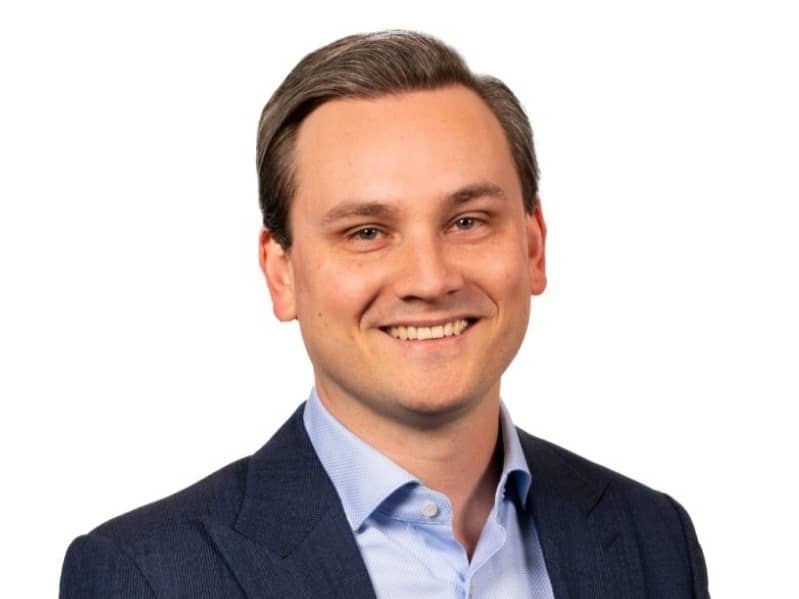
Ian De Bode is a Belgian-American business executive and strategist in the digital asset sector. He is the CEO of Ondo Finance, a technology company focused on tokenizing real-world assets (RWAs). Before joining Ondo, he was a Partner at McKinsey & Company, where he co-founded and led the firm's global Digital Assets practice. He is known for his expertise in bridging traditional financial institutions with decentralized finance (DeFi). [1] [2]

Education
De Bode pursued an extensive education in both Europe and the United States. He attended KU Leuven (the Catholic University of Leuven) in Belgium, where he earned a Bachelor of Science in Engineering from 2003 to 2006, followed by a Master of Science in Materials Engineering, which he completed in 2008. He later returned to KU Leuven to complete a postgraduate program in Corporate Finance between 2011 and 2012. [1]
To further his business acumen, De Bode moved to the United States and attended the Stanford University Graduate School of Business. He graduated with a Master of Business Administration (MBA) in Business Administration and Management in 2015. Another source notes his MBA was from 2015 to 2017. [1] [2]
Career
De Bode's career began in engineering and materials science before he transitioned into management consulting and, ultimately, executive leadership in the cryptocurrency industry.
Early Career in Engineering
Before his business career, De Bode worked in research and development. From September 2008 to June 2013, he was employed at Umicore, a global materials technology company based in Belgium. He started as a Research Engineer and was later promoted to Product Development Manager, a role in which he led R&D and program scale-ups. [1] Another source places his early engineering work at imec, a research and innovation hub in nanoelectronics, from 2012 to 2015. [2]
McKinsey & Company
After completing his MBA, De Bode joined the global management consulting firm McKinsey & Company in 2015, where he remained for approximately eight years. He progressed through several roles, including Associate, Engagement Manager, and Associate Partner. [1]
In March 2022, he became a Partner and was instrumental in shaping the firm's approach to the emerging digital asset ecosystem. De Bode co-founded and served as the global leader of McKinsey's Digital Assets practice. He scaled this practice from its inception to a team of over 150 full-time employees. In this capacity, he advised a broad range of clients—including traditional financial institutions, technology companies, and institutional investors—on developing and implementing their digital asset strategies, which included launching new businesses and products. He left the firm in August 2023. [1] [2]
Ondo Finance
In late 2023, De Bode transitioned to the digital asset industry by joining Ondo Finance. He was initially appointed Chief Strategy Officer (CSO) in September 2023, tasked with developing and executing the company's strategic initiatives. [1] His appointment was reported by several crypto-focused news outlets in November 2023. [3]
In 2024, De Bode was promoted to President of Ondo Finance to spearhead the company's institutional growth and global expansion. Sources differ on the exact timing of the promotion; one indicates the promotion occurred in March 2024, while another places it in August 2024. [1] [2] In his role as President, he is responsible for overseeing the company's expansion strategies and driving institutional adoption of its tokenized financial products. [2] [4]
Upon his promotion to President, De Bode stated:
"I am incredibly excited to step into the role of President at Ondo Finance. The work Nathan and the team have done to build the premier institutional-grade platform for tokenized real-world assets is second to none. We are at a pivotal moment in the evolution of financial markets, and Ondo is uniquely positioned to lead the charge in tokenizing real-world assets." [1]
Ondo Finance CEO Nathan Allman commented on the promotion:
"Ian's promotion to President is a natural progression...Since joining us as CSO, he has been instrumental in shaping our strategic direction and fostering key partnerships that are critical for our growth." [1]
Under De Bode's leadership, Ondo Finance has focused on expanding access to U.S. capital markets through tokenization. A key initiative was the launch of Ondo Global Markets in September 2025, a platform that made over 100 tokenized U.S. stocks and ETFs available on the Ethereum blockchain. De Bode described this as "the infrastructure that brings Wall Street onchain." [5] The launch generated significant on-chain activity, with trading demand at one point accounting for over 10% of Ethereum's gas usage in a 24-hour period in November 2025. [5] This strategy of expanding access to large user bases included efforts to bring tokenized US stocks to platforms with millions of users, such as Binance. [6] On May 25, 2026, Ondo Finance announced that Ian De Bode would serve as Chief Executive Officer following the unexpected death of founder Nathan Allman. In its statement, the company said De Bode had led Ondo’s strategy, product, and day-to-day operations for more than two years and had the full confidence of the leadership team. His appointment was presented as part of Ondo Finance’s commitment to continuing the work and vision established by Allman. [9]

Public Appearances and Philosophy
De Bode is a public advocate for the tokenization of real-world assets and a frequent speaker on the topic. He has been a featured speaker at the SALT Conference, a global forum on finance and technology, and has appeared on media outlets like Bloomberg Technology to discuss Ondo's product offerings. [2]
His public statements reveal a clear philosophy on the evolution of decentralized finance. He views the progression of on-chain assets as a logical path: "First stablecoins, then treasuries, now stocks. The path to adoption is clear, and Ondo is leading the way." [5]
De Bode's core belief is that tokenization can democratize access to traditional finance. He has stated that his goal is to "break open the barriers that currently still exist for a global user base," envisioning a future where "anyone with a stablecoin is going to essentially be able to buy any U.S. stock or ETF that they want." [5]
He emphasizes the importance of robust security and investor protections in this new financial infrastructure. Ahead of the Ondo Global Markets launch, he remarked, "Get ready for tokenized stocks done right, finally." [5] He later reinforced this by highlighting a观点, noting, "Done right, tokenization enhances investor protections, rather than eroding them." [5]
During his time at Ondo, he has been involved with events like the Ondo Summit, an industry gathering of executives and policymakers. The second Ondo Summit was scheduled to take place in New York on February 3, 2026. [5]
Interviews
Bridging TradFi and DeFi Through Tokenization #01
In an interview published on August 15, 2025, on the YouTube channel The Rollup, Ian De Bode discussed the tokenization of real-world assets and the structural relationship between traditional financial markets and decentralized finance. He described tokenization as a process primarily applied to publicly listed equities, exchange-traded funds, and government securities, citing the availability of public pricing data and established market liquidity as relevant characteristics of these assets.

During the interview, Ian De Bode outlined the background of Ono Global Markets, a platform focused on the tokenization of public stocks and ETFs. According to his explanation, earlier tokenized equity models encountered pricing inconsistencies due to fragmented liquidity across trading venues. He described an approach based on minting and burning mechanisms, comparable in structure to those used in stablecoin systems, intended to link on-chain representations of assets with off-chain clearing and settlement processes.
The discussion also addressed access to United States capital markets by international retail participants. Ian De Bode noted that traditional brokerage systems may involve constraints such as account minimums, transaction fees, and limited trading hours. He stated that tokenized representations of public securities could alter how these assets are accessed by enabling extended trading periods and interoperability across digital platforms.
In addition, the interview examined the current technical limitations of decentralized finance infrastructure. Ian De Bode stated that existing DeFi protocols are not structured to manage large volumes of tokenized public securities, particularly in areas such as margin calculation, liquidity management, and regulatory alignment. He indicated that purpose-built on-chain brokerage frameworks would be necessary to support this asset class at scale.
The conversation also referenced public commentary from figures such as Eric Trump in relation to critiques of conventional banking systems. Ian De Bode characterized these statements as part of a broader discussion surrounding financial system design. He concluded by describing tokenization as an area undergoing continued development, shaped by factors including stablecoin usage, regulatory considerations, and the evolution of blockchain-based financial infrastructure. [7]
Tokenization and Institutional Adoption in the View of Ian De Bode #02
In an interview published on September 18, 2025, on the YouTube channel Thinking Crypto, Ian De Bode, Chief Strategy Officer at Ondo Finance, discussed his perspective on the application of blockchain-based tokenization within traditional financial markets.

According to De Bode, tokenization alters the technical process through which financial assets are issued, transferred, and settled by using blockchain infrastructure. He described how Ondo Finance develops systems that allow institutions to tokenize assets such as US Treasuries, equities, and exchange-traded funds. In his assessment, crypto tokens differ from conventional financial instruments because they combine asset representation with network-level functionality, which affects how issuance and distribution occur.
De Bode also addressed Ondo Global Markets, outlining it as a platform intended to support the issuance of tokenized equities and ETFs. He stated that these tokens are backed by corresponding assets held in custodial brokerage accounts and are structured to be transferable on-chain. He further noted that such instruments are designed to interact with decentralized finance protocols, allowing trading and settlement outside traditional market hours.
The interview included discussion of coordination between blockchain systems and established financial institutions. De Bode cited integrations involving J.P. Morgan and Mastercard as examples of efforts to connect public blockchain environments with private financial infrastructure. He also referred to the use of Chainlink for facilitating data exchange and interoperability between on-chain assets and traditional systems.
Regarding regulation, De Bode stated that increased legislative clarity is influencing institutional participation in digital asset markets. He identified stablecoins as a functional component for on-chain financial activity, supporting pricing, liquidity, and settlement processes. He indicated that changes in capital markets and asset management are likely to occur gradually as tokenized instruments become more integrated with existing financial frameworks.
Throughout the interview, De Bode characterized tokenization as a process of incremental integration rather than rapid transformation, highlighting regulatory constraints, operational requirements, and interoperability between private and public systems as ongoing considerations in institutional adoption. [8]
See something wrong?