0% read
Last updated:
Jinseok Cho
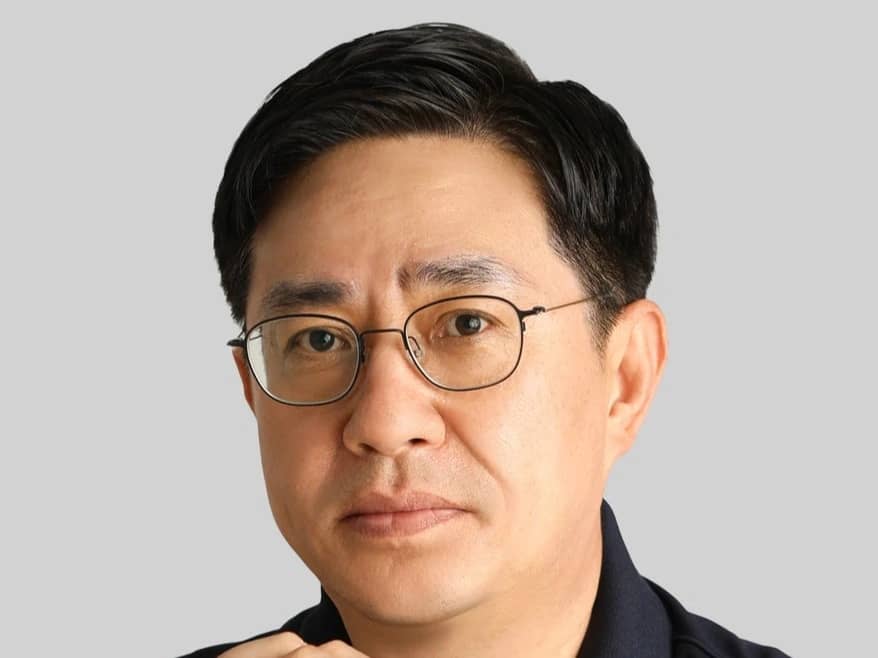
Jinseok Cho is a South Korean financial executive and the Chief Executive Officer (CEO) of Korea Digital Asset (KODA), the country's first institutional-grade digital asset custodian. With a career spanning over 15 years at KB Kookmin Bank, one of South Korea's largest banks, Cho transitioned from traditional finance to lead KODA at its inception. He is a prominent figure in bridging the gap between established financial institutions and the digital asset ecosystem in South Korea, overseeing KODA's significant growth and strategic expansion into new services. [1] [2]
Education
Jinseok Cho attended Seoul National University, where he earned a Bachelor of Business Administration (B.B.A.) between 1997 and 2004. He later returned to the same institution to complete a Master of Business Administration (MBA) from 2009 to 2011. [1] [3]
Career
KB Kookmin Bank
Cho began his career at KB Kookmin Bank in January 2004 as a Relationship Manager in Corporate Finance, a role he held for six years. [4] [1] His career at the bank demonstrated a consistent progression through various departments, providing him with a broad foundation in traditional finance. He worked as a Trader on the FX/Commodity Trading Desk from 2010 to 2014 and later served as Director of the FX Futures/Options Trading Desk until the end of 2016, which served as a basis for working with digital assets. [1]
His focus shifted toward global markets and digital innovation in his later years at the bank. He was the Executive Director of the Global Capital Markets Group from January 2017 to December 2018. [1] His direct involvement in digital assets began when he was appointed Executive Director and Head of the Digital Asset Group in December 2018. [1] In this capacity, and through subsequent roles as Head of the Distributed Ledger Technology (DLT) Business Department and Head of the IT Technology Innovation Center, Cho spearheaded the bank's strategic initiatives in blockchain technology. [5] [6] These efforts directly led to the conceptualization and business planning for a dedicated digital asset custody service. [2]
Korea Digital Asset (KODA)
In November 2020, KODA was officially launched as a joint venture between KB Kookmin Bank, blockchain technology company Haechi Labs, and venture capital fund Hashed. [6] [7] Leveraging his instrumental role in its creation, Jinseok Cho was appointed as the founding CEO of KODA in December 2020. [1]
As CEO, Cho is responsible for the company's overall strategy, business development, and operations. He has publicly stated his ambition for KODA to become a comprehensive digital asset platform comparable to Coinbase and has emphasized that his top priority is ensuring the safety and transparency of customer assets. [3] [2]
Leadership at KODA
Under Jinseok Cho's leadership, KODA has established itself as the leading digital asset custodian in South Korea, focusing on institutional and corporate clients. His tenure has been marked by substantial growth in assets, expansion of services through strategic partnerships, and a focus on regulatory compliance. [8] [9]
Growth in Assets Under Custody
KODA has experienced significant growth in its assets under custody (AUC) since its inception. This growth has been attributed to an increasing number of corporations, game companies, and entertainment firms participating in on-chain activities, as well as rising institutional confidence in regulated digital asset services. [10]
- By the end of 2022, KODA held approximately 4 trillion KRW (~$3 billion USD) in AUC. [1]
- During 2023, the company's assets under custody tripled, surpassing 8 trillion KRW (~$6 billion USD) by early 2024. [8] [7]
- By May 2024, the company announced its AUC had exceeded 10 trillion KRW. [11]
This growth solidified KODA's dominant position in the domestic market, with reports in early 2024 indicating it held over 60% of South Korea's institutional digital asset custody market. [9]
Strategic Partnerships and Service Expansion
A key component of Cho's strategy has been to expand KODA's offerings beyond basic custody into a comprehensive suite of digital asset services. He has achieved this by forging strategic partnerships with both domestic and global firms. [5]
- Institutional Staking: KODA partnered with Everstake, a global staking service provider, to introduce regulated, institutional-grade staking services to the South Korean market. Announced in late 2023 and early 2024, this collaboration allows KODA's clients to securely earn yield on their digital assets in a compliant manner. [12] [1]
- Bitcoin Staking: In 2024, KODA integrated with Core Chain, a Bitcoin-powered and EVM-compatible blockchain, to offer institutional Bitcoin staking. This initiative was positioned as a first for the Korean market, providing institutions a method to generate returns on their Bitcoin holdings securely. [13] [8]
- DeFi and Web3 Adoption: In November 2024, Cho announced a strategic partnership with Orderly Network, a decentralized finance (DeFi) infrastructure provider. The collaboration aims to accelerate Web3 adoption among Korean institutions by providing a secure and regulated gateway to on-chain environments and deep liquidity. [14] [10]
- Regulatory and Security Enhancements: To bolster security and prepare for new regulations, KODA has pursued key certifications and partnerships. In May 2022, it became the first digital asset custodian in South Korea to acquire the Information Security Management System (ISMS) certification. [5] Cho also oversaw partnerships with the global law firm White & Case to strengthen regulatory compliance and with the blockchain security firm CertiK to enhance security frameworks. [15] [8] In May 2024, KODA signed a virtual asset insurance contract with Samsung Fire & Marine Insurance to further protect client assets. [5]
Funding
Cho has led KODA through successful funding rounds to support its growth and technological development. In May 2024, KODA announced the completion of a 10 billion KRW (~$7.2 million USD) Series A funding round led by IMM Investment, with participation from KDB Bank and KB Investment. [9] Previously, in November 2023, the company had secured a 10 billion KRW investment from backers including Hanwha Investment & Securities, IBK Capital, and Kyobo Securities, in addition to existing investors Hashed and KB Kookmin Bank. [3]
Public Appearances and Commentary
Jinseok Cho is a frequent speaker at major financial technology and blockchain conferences, where he shares insights on the institutionalization of digital assets in Asia. He has been featured as a speaker at events including the Fablo Conference, EastPoint, BUIDL Asia, and the Upbit Developer Conference (UDC). [15] [2]
His public statements often reflect his focus on security, regulatory compliance, and the strategic expansion of institutional services.
- On KODA's insurance policy and client protection in May 2024:
"The signing of this virtual asset insurance contract is a turning point in raising client asset protection to the level of the traditional financial sector. It is a proactive measure for the opening of ETF and corporate markets... we have further strengthened the safety and reliability of our custody service." [5]
- On the partnership with Orderly Network in November 2024:
“This partnership with Orderly Network is a critical step in our mission to bridge traditional finance with the burgeoning world of decentralized finance... We are confident that this will not only enhance our service offerings but also contribute significantly to the maturation of the digital asset landscape in Korea.” [1]
- On the integration with Core Chain in March 2024:
“Our integration with Core Chain is a testament to our commitment to expanding our service offerings... The ability to offer Bitcoin staking in a secure and compliant manner is a game-changer for the Korean market..." [1]
- On KODA's growth and vision in March 2024:
“Surpassing $6 billion in AUM is not just a number; it’s a reflection of the trust our clients place in us and the dedication of our team. We are committed to setting new standards for security, compliance, and innovation in the digital asset custody space.” [1]
- On the need for institutional custody:
"Virtual asset operators still lack a robust system for managing customer deposits. If institutional investors enter this market, they will absolutely need custody services." [3]
See something wrong?