Last updated:
Sylvan Martin
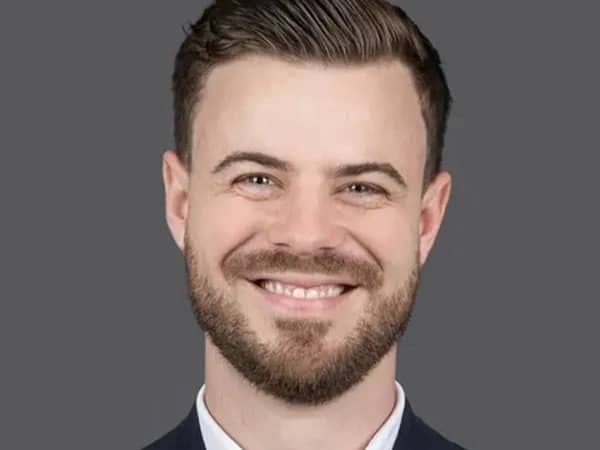
Sylvan Martin is a Swiss crypto entrepreneur and SCRYPT co-founder known for developing digital-asset infrastructure services for institutional clients.
Updated · 5 min read
Loading the full wiki…
Last updated:
Sylvan Martin is a Swiss crypto entrepreneur and SCRYPT co-founder known for developing digital-asset infrastructure services for institutional clients.
Updated · 5 min read
Loading the full wiki…
Last updated:
Sylvan Martin is a Swiss crypto entrepreneur and SCRYPT co-founder known for developing digital-asset infrastructure services for institutional clients.
Updated · 5 min read
Sylvan Martin is a Swiss digital asset executive with a background in institutional crypto services, operations, investor relations, advisory, and business development. He is the Founder and Chief Growth Officer of SCRYPT, having previously served as its Co-founder and Chief Operating Officer, Deputy CEO, and Managing Director. [6]
In this wiki
Career history
The Blockopedia interview
Hodl Up interview
Education
Yellow Network interview
Martin graduated from HWZ University of Applied Sciences in Business Administration Zurich with a BS in Business and Corporate Communications in 2021. [4]
Martin began his professional career in sales at Orell Füssli Thalia AG, where he worked part-time as Sales Staff from February 2016 to October 2017, assisting customers with book selection and sales. From June 2017 to April 2019, he worked part-time as Social Media Manager at CIRCLE - The Sustainable Shop, overseeing its online presence, content management, communications, public relations, client acquisition, and customer relations. In March 2019, he joined Fidenzia AG as Head of Investor Relations, a position he held until October 2019. He subsequently worked at ETH Zürich as a contract Event Manager from July 2019 to January 2020, co-organizing the GPPS Forum20 in Zürich.
Martin joined SCRYPT in December 2019 as Managing Director, before becoming Co-founder and Chief Operating Officer in March 2020. In this role, he helped develop the company's digital asset services for institutional investors. He held the position until September 2025, when he became Co-founder and Deputy CEO. In February 2026, he transitioned to Founder and Chief Growth Officer, focusing on the company's growth. From August 2022 to May 2023, he also served as an Advisor at DCAP Ltd., an independent digital asset investment advisory firm.
Martin served in the Swiss Armed Forces from March 2015 to June 2025, where he was also a lead saxophonist in Swiss Military Music. [1]
In a November 2026 interview with The Blockopedia podcast at Singapore TOKEN2049, Martin discussed his transition from studying and performing music, including playing saxophone in a touring band and serving in military music, into the crypto industry after discovering Ethereum and its potential for moving value in real time. He explained that he co-founded SCRYPT, a Swiss-licensed digital asset infrastructure company focused on on-chain money movement for institutional clients, which had expanded into Brazil through a partnership with Braza Bank to provide liquidity and trading services for cross-border payments. Martin highlighted Switzerland's regulatory clarity and financial infrastructure as advantages for operating in digital assets, while noting that obtaining licenses across Switzerland, Europe, Singapore, and the UAE required considerable time and expense. He described SCRYPT's approach to serving retail users indirectly through banks and other partners, while institutional clients typically expanded their use of the company's services from custody and market access to additional digital assets and yield products. Martin also discussed the increasingly competitive and demanding operating environment, with compliance requirements and extended sales cycles sometimes resulting in client onboarding periods of up to a year, advising founders to remain patient, anticipate delays, and focus on gradually building relationships, as onboarding within one or two months was relatively uncommon. [2]

In an April 2026 interview with Yellow Network during Paris Blockchain Week, Martin discussed institutional developments in the crypto market, noting that OTC desks continued to support liquidity for crypto ETFs while larger firms increasingly focused on major institutional clients such as BlackRock. He described MiCA as a regulatory benchmark in Europe that had encouraged Swiss crypto businesses to establish European operations, while Switzerland, particularly Zug, continued to offer advantages through its tax environment, financial ecosystem, and reputation. Martin noted that SCRYPT was approaching the completion of its licensing process in Europe, which remained an important market for its international client base. He also discussed the development of tokenized real-world assets, arguing that broader adoption would depend on improved infrastructure and liquidity, while traditional intermediaries would continue to play a role alongside smart-contract-based systems. Regarding AI trading agents, he viewed them as an extension of existing automated trading systems, emphasizing compliance, client awareness, and safeguards such as monitoring and trading limits. Martin also noted that institutional adoption and the involvement of large banks are changing market dynamics, creating opportunities for infrastructure startups while reducing some retail-driven activity and affecting strategies that rely on deep order books. For family offices, he saw crypto increasingly becoming a modest portfolio allocation, supported by generational shifts, education, and services that simplify custody and infrastructure, while SCRYPT continued to focus on growth, licensing, and expanding its services. [5]

In a March 2026 interview on the Hodl Up podcast, Martin discussed his transition from professional jazz musician to crypto entrepreneur, explaining that an initial idea for using smart contracts to distribute music royalties led him into blockchain consulting and eventually to co-founding SCRYPT in Switzerland as a regulated digital asset platform for institutional clients. He described how engagement with regulators shaped the company's approach, while frameworks such as MiCA and CARF introduced greater consistency and oversight, and noted that crypto's growing integration with traditional financial institutions had involved trade-offs with its original decentralization ethos. Martin explained that SCRYPT had evolved from an OTC trading desk into a broader digital asset infrastructure provider as client demand increasingly shifted from altcoins toward stablecoins for payments and remittances. He attributed the company's positioning to its focus on compliance, its reported record of operating without losses or regulatory penalties, and its development of regulated DeFi asset management services. He also discussed SCRYPT's growth during the bear market, attributing it to prudent financial management, fundraising, retaining employees, and maintaining its sales pipeline. Looking ahead, Martin anticipated further regulatory development in Europe, expressed hope for more consistent MiCA passporting arrangements, and expected jurisdictions to increasingly work toward common regulatory frameworks. [3]

IQ.wiki is written by its community. Suggest an edit and an editor will review it.