0% read
Last updated:
Tal Cohen
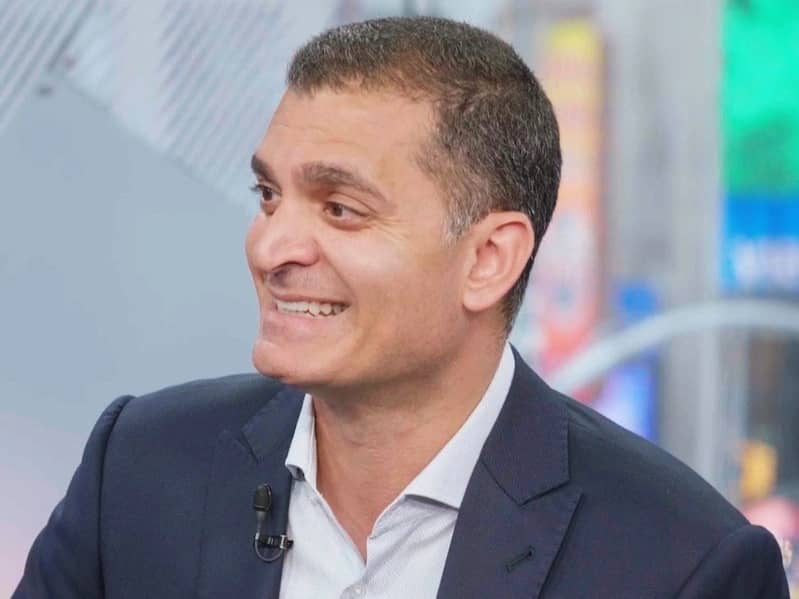
Tal Cohen is the Co-President of Nasdaq, where he leads the Market Platforms division. He oversees the company's trading, clearing, settlement, and data services across North America and Europe, and is a key figure in Nasdaq's strategic evolution into a global financial technology (fintech) and Software-as-a-Service (SaaS) provider. His career has been focused on market structure, electronic trading, and exchange management. [1] [2]
Education
Cohen earned a Master of Business Administration (M.B.A.) from the Stern School of Business at New York University. He also holds a Bachelor of Science (B.S.) in Accounting from the University at Albany, SUNY. He is a registered Certified Public Accountant (CPA) and holds FINRA Series 7, 24, and 63 licenses, as well as the CSI Partners, Directors, and Senior Officers (PDO) Designation. [3] [1]
Career
Early Career and Electronic Trading
Cohen began his career as an auditor and senior business advisor at Arthur Andersen from 1993 to 1995, where he focused on the financial services and telecommunications industries. He later worked as a Manager in Mergers & Acquisitions at American Express from 1997 to 1999, where he focused on building the company's strategic investment portfolio. [3]
In 1999, Cohen joined Instinet, a pioneering electronic trading firm. Over a nine-year tenure, he held several senior leadership positions, including Vice President of Business Management, Co-head of Instinet Electronic Trading for North America, and ultimately Senior Vice President of Business Development. His work at Instinet placed him at the center of the evolution of electronic trading in capital markets. [1] [3]
Chi-X Leadership
In 2008, Cohen was appointed CEO of Chi-X Americas, an operator of alternative trading systems. He was subsequently promoted to CEO of the global parent company, Chi-X Global Holdings, in 2010. During his six-year tenure as CEO, he was responsible for the strategic direction, operations, and global expansion of Chi-X trading platforms in markets including Canada, Brazil, and the United States. He managed the company through its 2016 acquisition, which saw its global assets sold to CBOE Holdings and its Canadian alternative trading system, Chi-X Canada, sold to Nasdaq. [2] [4]
Nasdaq
Cohen joined Nasdaq in April 2016 following its acquisition of Chi-X Canada. He was initially appointed Senior Vice President, Head of North American Equities. In this role, he was responsible for Nasdaq's equities and trade management services businesses in the U.S. and Canada. He was subsequently promoted and his responsibilities were expanded multiple times. [3] [4]
By 2020, he was serving as Executive Vice President, Head of North American Markets, overseeing the company's trading, clearing, and settlement businesses for U.S. and Canadian equities, options, and futures. In March 2023, as part of a corporate reorganization, Cohen was promoted to Co-President of Nasdaq. In this capacity, he leads the newly formed Market Platforms division, which combines Nasdaq's marketplace businesses with the technology that supports them. This includes the North American and European Markets, Market Technology, and Infrastructure business units. He also serves as the President of the Nasdaq Stock Market. [2]
Strategic Vision and Leadership at Nasdaq
As Co-President, Cohen is a primary architect of Nasdaq's strategy to transition from a traditional exchange operator to a technology-centric company that provides critical infrastructure to the broader financial ecosystem. He is a frequent public commentator on market evolution, technology, and regulation, which served as a basis for working with digital assets.
In a 2023 interview, Cohen stated, "For the last six years, we have been very vocal and clear in our capital allocation strategy. We are moving from a capital-intensive, cyclical business to a business that is more SaaS-based, more subscription based, leveraging technology to a broader set of clients." [5]
Technology and AI Initiatives
Cohen's leadership emphasizes the integration of advanced technologies. He has championed the migration of market infrastructure to the cloud, highlighting a partnership with Amazon Web Services (AWS) to build next-generation market technology. Under his guidance, Nasdaq’s options market became its first U.S. market to begin migrating to the cloud. [3]
He is also responsible for overseeing the implementation of artificial intelligence across Nasdaq's operations. In testimony before the U.S. House Financial Services Committee, he detailed over 200 use cases for AI within the company. Key applications include:
- Anti-Financial Crime: Using AI to enhance the effectiveness of risk management systems for thousands of financial institutions to combat money laundering and fraud.
- Market Surveillance: Employing machine learning to detect market abuse by analyzing billions of daily transactions.
- Market Liquidity: Introducing AI-powered order types, such as "Dynamic M-ELO" in 2024, to improve execution quality for market participants. [6]
Digital Assets and Mergers & Acquisitions
Cohen leads Nasdaq's initiatives in the digital asset space. He has stated that Nasdaq's strategy is to provide institutional-grade custody and settlement services for cryptocurrencies and other digital assets, with the eventual aim of facilitating trading pending regulatory clarity. [5]
He was also a central figure in Nasdaq's $10.5 billion acquisition of Adenza in 2023. Cohen described the acquisition as a move that "accelerates our strategy" by adding new asset classes like fixed income and foreign exchange, expanding Nasdaq's global client base, and bringing in best-in-class products for post-trade and regulatory technology. [5]
Public Commentary and Regulatory Stance
Cohen frequently represents Nasdaq in public forums and engages with policymakers on issues of market structure and financial regulation. On December 10, 2025, he provided written testimony to the U.S. House of Representatives Committee on Financial Services for a hearing on AI innovation. [6]
In his testimony, Cohen advocated for a "smart regulation that protects investors without stifling innovation and prosperity." He argued that many concerns related to AI could be addressed by existing financial laws rather than requiring sweeping new legislation. He recommended a risk-based regulatory approach focused on the outcomes of an AI application, not the technology itself. He also voiced support for federal preemption of state-level AI laws to create a consistent regulatory environment and maintain U.S. competitiveness. [6]
Board Memberships and Affiliations
Cohen is an active participant in several industry and advisory groups. He is a member of the U.S. Treasury Borrowing Advisory Committee (TBAC), which advises the Treasury on matters related to public debt management. He also serves on the Board of the Nasdaq Private Market and is affiliated with the Financial Information Forum (FIF). Previously, he served as a Director on the boards of the Investment Industry Regulatory Organization of Canada (IIROC) from 2009 to 2016 and the Canadian Depository for Securities (CDS) from 2013 to 2016. [1] [7]
Executive Compensation and Stock Activity
As a senior executive of a public company, Cohen's compensation details and stock transactions are publicly disclosed. According to company filings from 2025, Cohen entered into a new employment agreement effective March 10, 2025, with a term extending through January 1, 2030. The agreement includes an annual base salary of $750,000, a target annual bonus of 200% of his base salary, and significant equity awards. His total compensation for 2022 was reported as $4.64 million. [8]
As a corporate insider, Cohen's transactions in Nasdaq, Inc. (NDAQ) stock are filed with the U.S. Securities and Exchange Commission. Public records show he periodically sells shares, often as part of pre-arranged Rule 10b5-1 trading plans. For example, records indicate he sold 5,000 shares of Nasdaq stock on February 12, 2026, and 1,570 shares on February 14, 2026. [9] [10]
Interviews
Artificial Intelligence and Capital Markets
On August 11, 2025, Tal Cohen, President of Nasdaq, participated in an interview published by the YouTube channel Congress Clips. The discussion summarized his testimony before the U.S. Senate Committee on Banking, Housing, and Urban Affairs concerning the role of artificial intelligence in capital markets.

During the interview, Cohen described artificial intelligence as a technology that introduces operational capabilities as well as new risk considerations within financial market infrastructure. He stated that AI applications are integrated into Nasdaq’s internal systems and market services, including fraud detection, surveillance processes, and certain development functions. These systems analyze large volumes of structured and unstructured data to identify patterns and anomalies relevant to compliance and oversight.
Cohen outlined two primary uses of AI in market surveillance. The first involves alert calibration, where machine learning models are applied to refine detection parameters and reduce false positives in identifying potential market abuse. The second involves the use of generative AI tools to assist investigative teams by organizing case materials, automating portions of review workflows, and prioritizing alerts based on assessed risk indicators. He indicated that these tools function within existing supervisory frameworks and remain subject to human review.
The interview also addressed cybersecurity considerations. Cohen referenced the possibility that AI systems could be exploited by malicious actors, including foreign entities. He stated that Nasdaq maintains internal security controls, segmented system architecture, and employee training programs designed to mitigate operational vulnerabilities. He further noted that exchanges coordinate with one another and with regulatory authorities on cybersecurity matters, describing this cooperation as part of broader market infrastructure oversight.
In discussing institutional coordination, Cohen acknowledged that no dedicated multi-exchange public-private entity currently governs AI-specific risks across U.S. capital markets. He referenced consortium-based data initiatives in financial crime monitoring as examples of cross-institutional information sharing. He stated that responsibility for AI-related failures or misuse should be allocated across relevant parties, including developers and deploying institutions, depending on the circumstances.
Regarding regulatory structure, Cohen expressed concern that differing state-level AI standards could create regulatory fragmentation. He indicated that a unified national framework would reduce compliance complexity and limit regulatory arbitrage. In his characterization, AI represents an extension of existing algorithmic and automated technologies used in financial markets, though with increased system complexity that may require adjustments to supervisory controls.
Cohen also referred to established safeguards developed after prior market disruptions, including algorithm testing requirements, market access controls, and exchange-level kill switches. He stated that these mechanisms provide a basis for managing technology-related risk, while noting that regulatory and operational frameworks may require updates to address evolving AI models.
The interview presented Cohen’s account of how artificial intelligence is currently applied within exchange operations and how related risks may be addressed through existing regulatory structures, inter-institutional coordination, and internal governance processes. [12]
See something wrong?