0% read
Last updated:
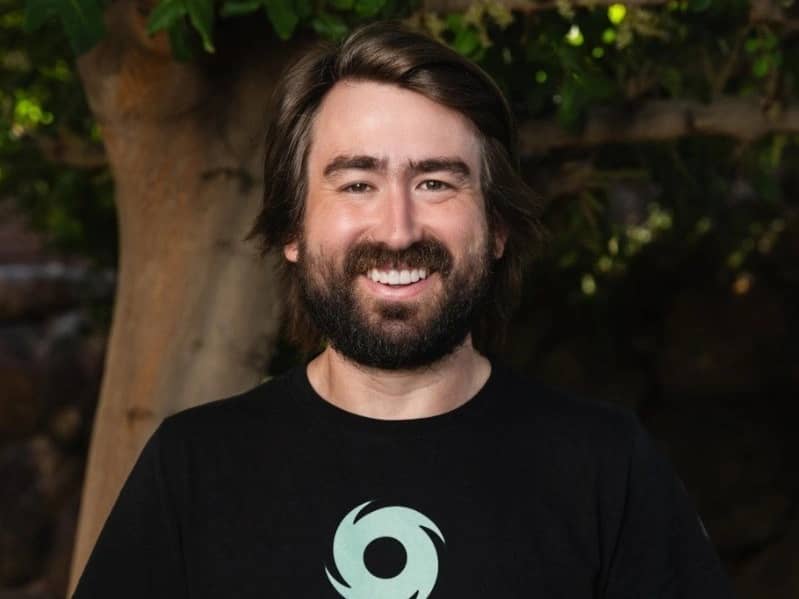
Zak Cole
Zak Cole is the founder of the venture studio NUMBER GROUP, a co-founder of the competitive audit platform Code4rena and the trading platform Slingshot Finance, and the founder of the Ethereum Community Foundation (ECF). [1] [2]
Education and Early Life
Cole served in the U.S. Marine Corps from 2007 to 2008, where he was involved in building networks in Iraq. [2] Following his military service, his early career included a role as an engineer at Google. [2] Various sources report he attended several universities, studying computer science and information technology. These institutions include Drexel University, the University of Central Florida, and Liberty University, where he reportedly earned an Associate of Science in Web & Mobile Development. [5] [6] [7]
Career
Cole's career has spanned software engineering roles at major tech companies, the founding of multiple Web3 companies, and significant contributions to Ethereum's infrastructure and security ecosystem.
Early Career and Whiteblock
Before fully dedicating himself to the crypto space, Cole held software engineering and architecture positions at companies including The Walt Disney Company, Cvent, and Hired, Inc. [5] [8] He also served as Blockchain Lead at Infinite Red, Inc. [6]
In 2018, Cole co-founded Whiteblock, a blockchain testing and development platform, where he served as CTO. [1] The company gained prominence for building the genesis testing framework for the Ethereum 2.0 upgrade and for publishing a 2018 research report that concluded the EOS network was not a true blockchain but rather a "distributed homogenous database." [2] [5] Whiteblock was acquired by ConsenSys in 2020. [6]
NUMBER GROUP, Slingshot Finance, and Code4rena
Cole founded NUMBER GROUP, a creative studio and venture group that serves as the parent entity for his subsequent projects. [1] [9] The studio focuses on building at the intersection of cryptocurrency and artificial intelligence. [1]
Through NUMBER GROUP, Cole co-founded Slingshot Finance, a decentralized trading platform that began as one of the earliest DEX aggregators under the name DEX.AG. [4] Slingshot aggregates liquidity from various decentralized exchanges to offer users optimal prices for token swaps. [2] Slingshot was later acquired. [3] [7]
Cole also co-founded Code4rena (C4), a competitive audit platform designed to secure smart contracts. [3] The platform operates on a contest model where independent security researchers, known as "Wardens," compete to find vulnerabilities in a project's codebase for a share of a prize pool. [10] [11] Code4rena formed a partnership with venture capital firm Paradigm to help secure projects in its portfolio and the wider Web3 ecosystem. [12] Cole's tenure at Code4rena ended in 2024 following the company's acquisition. [7]
0xbow and Privacy-Focused Ventures
Cole is the co-founder and CEO of 0xbow, a venture focused on building privacy-preserving infrastructure for DeFi. [3] [2] The project, associated with Privacy Pools, aims to use Zero-Knowledge (ZK) proofs to enable both privacy and compliance in on-chain financial transactions. [3] [2] The name "0xbow" is also an alias Cole uses as a security auditor. [4]
Ethereum Community Foundation (ECF)
In July 2025, during a presentation at the Ethereum Community Conference (EthCC) in Brussels, Cole announced the launch of the Ethereum Community Foundation (ECF). [13] [10] The ECF is an independent organization dedicated to funding "tokenless" and "immutable" public goods on the Ethereum network. [3]
The foundation's stated mission is to act in the interest of ETH holders by supporting projects that strengthen the ecosystem and drive value to the native ETH asset. [14] This includes prioritizing projects that contribute to the burning of ETH, thereby increasing its scarcity. [15] The ECF was positioned as an "opinionated" alternative to the more neutral Ethereum Foundation, with Cole stating it was created to pursue initiatives that the latter was "unable or unwilling to pursue." [13] The ECF's first announced grantee was the Ethereum Validator Association (EVA), an organization focused on empowering validators in protocol governance. [14]
Technical Contributions and Research
Beyond his entrepreneurial ventures, Cole has contributed directly to Ethereum's technical development.
- EIP-6968: He authored Ethereum Improvement Proposal 6968, "Contract Secured Revenue." This EIP defines a standard for distributing revenue generated by smart contracts to their developers, creating a potential model for sustainable funding of public goods. [2]
- Blobkit: He developed Blobkit, a TypeScript SDK designed to simplify the use of EIP-4844 "blob" transactions for cheaper on-chain data storage. [2]
- **BETH, an immutable ERC-20 token that represents a claim on provably burned ETH. [2]
- SafeTools: He is the developer of SafeTools, a utility that enables EIP-712 message signing for Safe (formerly Gnosis Safe) smart contract wallets. [2]
In addition to his EIP authorship, Cole has held advisory roles for projects such as DeFi Pulse, Syscoin, and Cryptex. [2] [9]
Notable Incidents
2025 Wallet Hack and OpSec Post-Mortem
On August 12, 2025, Cole reported that one of his hot wallets was compromised and drained by a malicious extension installed in the Cursor.ai code editor. Due to his strict operational security (OpSec) practices—which include using segregated hot wallets with minimal funds for testing and keeping significant assets in hardware wallets—the financial loss was limited to a few hundred dollars worth of ETH. [3]
Following the incident, Cole published a detailed post-mortem on his X (formerly Twitter) account. He highlighted the red flags he had missed, such as a mismatched publisher name for the extension, the absence of a linked GitHub repository, a recent publication date, and a name that was a typo of a more common extension. The event served as a public lesson on the importance of security diligence in the developer ecosystem. [3]
Philosophy and Advocacy
Cole is a vocal advocate for strengthening Ethereum's economic value and has publicly expressed his belief that a higher ETH price is critical for the network's security and long-term viability. The launch of the ECF was framed around this philosophy.
During his ECF announcement, Cole stated:
"ETH to 10K isn't a meme. It's a requirement, a benchmark, a mandate. A $1.2 trillion market cap makes ETH competitive with gold's monetary role. Price isn't just speculation. It funds validators. It secures the network. It earns ETH the right to settle global value.” [13]
He further contrasted the ECF's mission with that of the original Ethereum Foundation:
"We are the Ethereum Community Foundation. We say what the [Ethereum Foundation] can’t, we do what the [Ethereum Foundation] won’t." [5]
Interviews
EIP-6968 and Contract Secured Revenue #01
This interview presents the views of Zak Cole, as discussed on the Green Pill YouTube channel, streamed live on July 4, 2023.

During the conversation, Zak Cole describes EIP-6968 and the associated concept of Contract Secured Revenue (CSR). According to Cole, CSR proposes a mechanism in which a portion of Layer 2 sequencer fees is allocated to smart contract deployers, with distribution based on contract usage. He characterizes this model as a protocol-level method of revenue allocation, differing from approaches that rely on grants, donations, or governance-based funding decisions.
Cole outlines his understanding that CSR links developer compensation to gas consumption and user activity, which, em sua interpretação, allows developers to receive revenue without additional administrative processes. He references the implementation of CSR on Canto as an example used to examine how this mechanism operates in practice within an active network environment.
The discussion also covers criticisms related to the possibility of duplicated or low-quality contracts receiving revenue. Cole states that the protocol does not attempt to determine contract legitimacy at a technical level, and that usage patterns and adoption at the social and market layers influence which contracts accrue value. He further explains that CSR positions are represented as non-fungible tokens, enabling transferability and interaction with other on-chain systems, including decentralized organizations and funding frameworks.
The interview documents Cole’s perspective on CSR as an alternative revenue distribution model for smart contract development, focusing on automated fee allocation, reduced reliance on intermediaries, and its potential application within Layer 2 ecosystems. [16]
PMFers: Zak Cole on Product-Market Fit #02
This interview, published on February 17, 2025, on the YouTube channel of Austin Griffith, presents the views of Zak Cole on product-market fit, professional trajectory, and project development within the Ethereum ecosystem.

According to Cole, his introduction to blockchain technology followed earlier work in the military, where he dealt with encrypted communications and systems requiring strict security controls. He states that this experience informed his later interest in cryptographic systems, adversarial environments, and distributed trust models. Cole reports that he became aware of Bitcoin prior to focusing his efforts on Ethereum around 2015, which he describes as a system shaped not only by software design but also by governance structures and social coordination.
Cole identifies the DAO hack as a key reference point in his understanding of Ethereum. In his account, the event illustrated the role of collective decision-making and social consensus in resolving protocol-level crises, highlighting limitations of purely technical approaches in decentralized systems.
The interview also covers several projects associated with Cole, including Whiteblock, Slingshot, and Code4rena. He describes these initiatives as responses to specific operational needs within the blockchain sector. In particular, he explains Code4rena as an attempt to address cost and access constraints in the smart contract auditing market through an open participation model.
Throughout the discussion, Cole emphasizes the role of structured processes in product development. He outlines the use of defined product requirements, internal alignment, and documentation as factors influencing engineering efficiency. Idea validation, as described by Cole, relies on observable usage and revenue indicators rather than long-term projections.
Cole addresses the use of artificial intelligence in his workflow, noting its application in writing and organizational tasks. He cautions that AI-generated code requires independent verification, especially in environments where security risks are high. He characterizes current AI agents as limited in practical deployment, while indicating potential future relevance as interfaces for blockchain interaction.
In relation to organizational dynamics, Cole states that technical expertise alone is insufficient for sustained participation in Ethereum and open source projects. He refers to collaboration, communication, and interpersonal management as recurring factors affecting project continuity and team performance.
The interview concludes with Cole’s position that blockchain systems are most applicable in contexts involving shared public ledgers, particularly in financial or adversarial settings. He distinguishes these use cases from broader claims of general applicability, describing blockchain adoption as context-dependent rather than universal. [17]
See something wrong?
Official Website:
Social Profiles: