0% read
Last updated:
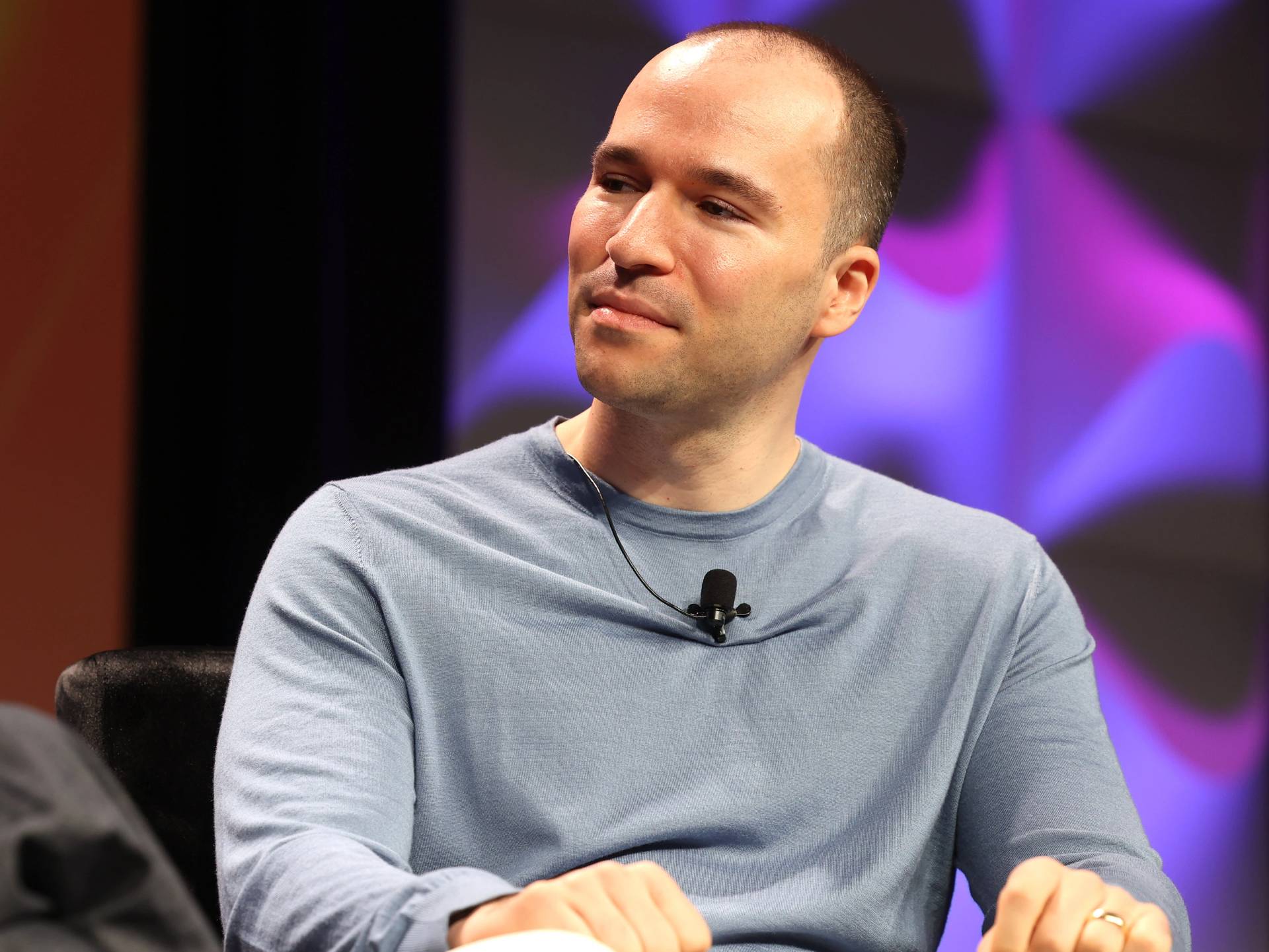
Greg Brockman
Greg Brockman is a software engineer, technology executive, and co-founder of OpenAI, where he serves as President and Chairman. His career has focused on large-scale software infrastructure, developer tools, and artificial intelligence, with leadership roles spanning both cloud computing and AI research. [1]
Education
Brockman graduated from Harvard University in 2009, where he studied Mathematics and Computer Science. He continued his studies at the Massachusetts Institute of Technology in 2010. [2]
Career
Early in his career, Brockman developed and maintained infrastructure and open-source software projects at the Massachusetts Institute of Technology and the Harvard Computer Society, where he worked on systems administration and developer infrastructure. He also spent several months building infrastructure for Ksplice and contributed code to a range of open-source projects, including Git, Python, Ruby libraries, developer utilities, and command-line tools. In 2010, Brockman joined Stripe as one of its earliest employees and served as Chief Technology Officer for five years. During his tenure, he helped scale the company's engineering organization and technical infrastructure as Stripe grew from a small startup to a company with hundreds of employees. He also led engineering efforts to expand Stripe's payments platform and developer services.
In 2015, Brockman co-founded OpenAI and has served as its President and Chairman. His work has included overseeing engineering and research initiatives across the organization, contributing to the development of projects such as Gym, OpenAI Five, Codex, OpenAI's API platform, and large-scale AI models. As part of the company's leadership, he has helped guide the development of OpenAI's research infrastructure, engineering organization, and deployment of AI systems. [2] [5]
Interviews
Chatbots and Agents Merge
In an interview at the Big Technology AI Summit in July 2026, Brockman stated that OpenAI was working toward creating highly integrated AI systems resembling a super app or personal AGI, in which interactions would involve minimal interfaces—simply conversational prompts that enable the AI to understand and execute complex goals on users' behalf. He emphasized the evolution from basic conversational models to agentic systems that can autonomously perform tasks by interfacing with tools such as email and scheduling apps, thereby transforming AI from mere conversation partners into active operators. Brockman highlighted the rapid technological progress, including advancements in model capacity, memory, tool integration, and natural, human-like interactions such as voice communication. He underscored the importance of trust, control, and ecosystem collaboration for widespread adoption, and predicted that the dominant factor in AI development would increasingly be access to compute power. Brockman also shared that OpenAI was developing dedicated hardware to meet the surging demand and believed that the transformative potential of AI, especially in health and scientific fields, would continue to expand exponentially, making AI-powered tools more ubiquitous and capable of solving previously intractable problems. [7]

Human Attention
During a fireside chat at AI Ascent 2026 in April, Brockman highlighted that human attention is becoming the new bottleneck in AI development and deployment. He emphasized the rapid growth and demand for compute resources, noting that even with aggressive acquisition, OpenAI struggled to keep pace with the hardware needs, especially as models become more capable and demanding. Brockman discussed the ongoing advancements in scaling laws, architectures, and algorithms, emphasizing that neural networks have demonstrated remarkable scalability with no apparent limits. He pointed out that models are already performing complex tasks, such as code optimization and scientific problem-solving, approaching AGI-like capabilities, making human oversight and judgment more critical than ever. Brockman also underscored the importance of designing systems that account for human factors, security, governance, and the responsible deployment of AI, emphasizing that human attention and decision-making remain the scarcest and most vital resources amid accelerating technological change. [8]

Race to AGI
On the Knowledge Project Podcast in April 2026, Brockman recounted the origins and evolution of OpenAI, highlighting his initial motivation: a desire to work on AI as a mission to positively impact the world. He described how early discussions with Sam Altman and others in 2015 sparked the formation of the lab, emphasizing the importance of assembling a dedicated team through offsite events to define technical strategies, including tackling reinforcement and unsupervised learning. Brockman explained why OpenAI transitioned from a nonprofit to a for-profit model in 2017, citing the need for massive compute resources and exclusive access to advanced hardware like Cerebras to build toward artificial general intelligence (AGI). He reflected on pivotal moments such as DeepMind's AlphaGo, the Dota AI win, and breakthroughs with GPT models, illustrating how scaling compute and simple algorithms have yielded remarkable progress. Brockman discussed the challenges of navigating internal conflicts, notably Sam Altman's firing, which prompted significant turmoil and a push for renewal, with many team members rallying to rebuild the company. He emphasized the importance of safety, ethics, and democratic distribution of AI benefits, advocating for regulations that protect privacy and ensure societal resilience. Brockman also forecast rapid AI advancement, including models that could autonomously generate research ideas, and highlighted the need for advanced data centers—potentially in space—to meet future compute demands. He underscored the significance of iterative deployment, transparency, and tackling risks while pursuing technological breakthroughs, all driven by a steadfast commitment to AI that benefits humanity broadly. Ultimately, Brockman viewed success as fulfilling OpenAI's mission to ensure AGI benefits all of humanity. [9]

See something wrong?
Official Website:
Social Profiles: