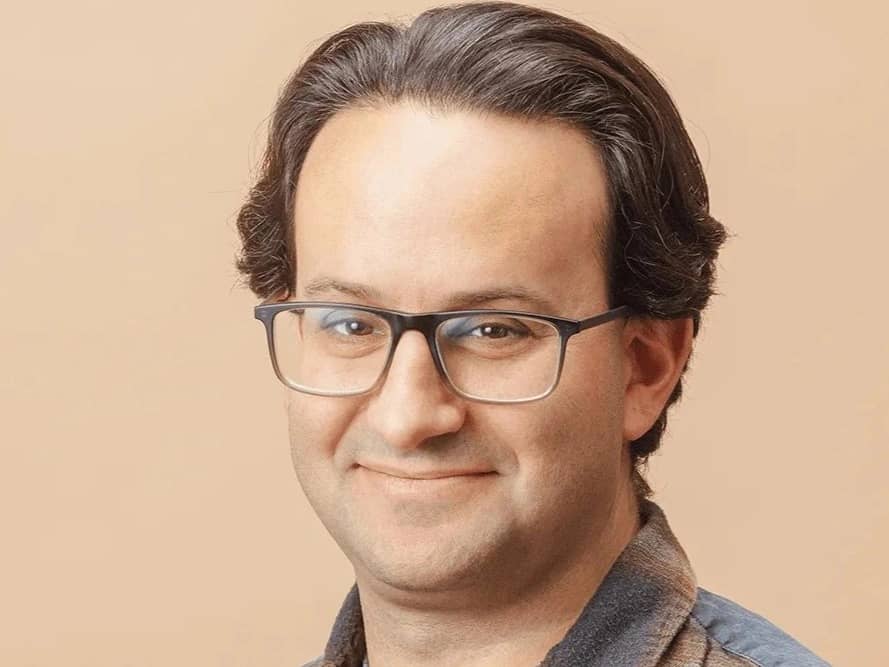
Jared Kaplan
Jared Kaplan is the co-founder of Anthropic, an AI lab aimed at creating AI systems that prioritize safety and ethical standards. Kaplan's academic background encompasses a deep engagement with quantum gravity and conformal field theory, and he continues to serve as an associate professor in the Department of Physics & Astronomy at Johns Hopkins University. [5]
Early Life and Education
Jared Daniel Kaplan's exploration into the sciences began at the Illinois Mathematics and Science Academy. He later pursued undergraduate studies in physics and mathematics at Stanford University, graduating with a Bachelor of Science degree. Kaplan furthered his academic career by obtaining a PhD in physics from Harvard University, under the mentorship of Nima Arkani-Hamed. His doctoral thesis was titled "Aspects of Holography" and delved into intricate theories of quantum gravity. [5] [3] [5]
Career
Academic Career
Jared Kaplan joined Johns Hopkins University as a professor in September 2012. His academic work covers several areas of theoretical physics, including quantum gravity, the AdS/CFT correspondence, particle physics, cosmology, and the conformal field theory (CFT) bootstrap. His research also examines applications of the CFT bootstrap in quantum mechanics and gravitational theory.
Prior to his appointment at Johns Hopkins University, Kaplan worked as a postdoctoral researcher at SLAC National Accelerator Laboratory from September 2009 to August 2013 and also held a postdoctoral position at Stanford University. During his academic career, he received a Sloan Research Fellowship and an NSF CAREER Award.
OpenAI
Kaplan worked as a research consultant at OpenAI from January 2019 to December 2020. His research included work on GPT-3 and the study of scaling laws for neural language models. He co-authored publications describing the relationship between model performance and increases in model scale.
He also participated in the development of OpenAI Codex, a language model designed for code generation and code-related tasks.
Anthropic
In January 2021, Kaplan co-founded Anthropic with former OpenAI researchers and assumed the role of Chief Science Officer.
His work at Anthropic has included research on artificial intelligence systems and safety methods. He has been involved in the development of the company's Responsible Scaling Policy, which outlines procedures related to AI safety, transparency, and model deployment. He has also contributed to the development of the Claude family of AI models, which incorporates alignment methods and safety protocols before release.
In December 2025, Kaplan discussed the potential benefits and risks associated with AI systems that could perform parts of their own training process. He stated that the development of such systems should be accompanied by international cooperation and regulatory oversight. [5] [8] [3] [4] [6] [7] [8] [9] [10] [11] [12] [13] [14]
Interviews
AI Alignment and Society #01
On December 10, 2024, Jared Kaplan appeared on the Life with Machines podcast, hosted by Baratunde Thurston, where he discussed artificial intelligence, Anthropic's AI development approach, and topics related to AI governance and safety.
During the interview, Kaplan outlined Anthropic's use of Constitutional AI, a training method that applies a predefined set of principles to evaluate and refine model responses. According to Kaplan, the approach is intended to influence system behavior through AI-assisted assessment combined with human feedback during the training process. He stated that the method is designed to encourage responses that are accurate, helpful, and consistent with the principles defined by the company.
Kaplan also discussed his transition from theoretical physics to artificial intelligence research, explaining how his background influenced his perspective on machine learning. According to Kaplan, AI model performance has followed measurable scaling patterns associated with increases in computing resources, training data, and model size. He also expressed the view that continued progress in these areas could lead to AI systems capable of performing a broader range of tasks currently carried out by humans.
The interview concluded with Kaplan's views on AI governance. According to him, questions related to the development, oversight, ownership, and acceptable use of advanced AI systems should involve public discussion alongside participation from researchers, policymakers, and technology organizations. [15]
AI Safety and the Future of Artificial Intelligence #02
On December 10, 2024, Jared Kaplan appeared on the YouTube channel Baratunde Thurston to discuss artificial intelligence, Anthropic's research priorities, AI safety, and the development of advanced AI systems.
During the interview, Kaplan stated that Anthropic was established with an emphasis on incorporating AI safety into its research and development process. He described the company's work on interpretability research, the development of Claude, and its Responsible Scaling Policy, which categorizes AI systems into different AI Safety Levels based on their capabilities and associates each level with corresponding safety measures. Kaplan also discussed Constitutional AI, describing it as a training approach in which AI models are optimized to follow a predefined set of principles through reinforcement learning and self-evaluation.
Kaplan also addressed Anthropic's commercial and research partnerships, including collaborations with Amazon Web Services (AWS) and Google. According to Kaplan, these partnerships support the deployment of AI models while allowing the company to continue its research on AI safety and governance.
The interview also covered education and career paths in artificial intelligence. Kaplan stated that individuals from disciplines outside computer science could transition into AI by studying existing research, implementing projects, and engaging with the research community. He also stated that coordinating and applying AI systems across different tasks may become an increasingly relevant professional skill as the technology develops.
When discussing artificial general intelligence (AGI), Kaplan said that, in his assessment, AI systems with cognitive capabilities comparable to those of leading human experts across a broad range of intellectual tasks could emerge within approximately two to three years. He characterized this estimate as his personal expectation based on the pace of recent developments in the field rather than as a confirmed timeline.
Kaplan also discussed scientific research more broadly, describing it as an iterative process in which conclusions may change as new evidence becomes available. In this context, he stated that AI development should continue alongside research on safety, evaluation methods, and governance frameworks. [16]