0% read
Last updated:
Alex Biryukov
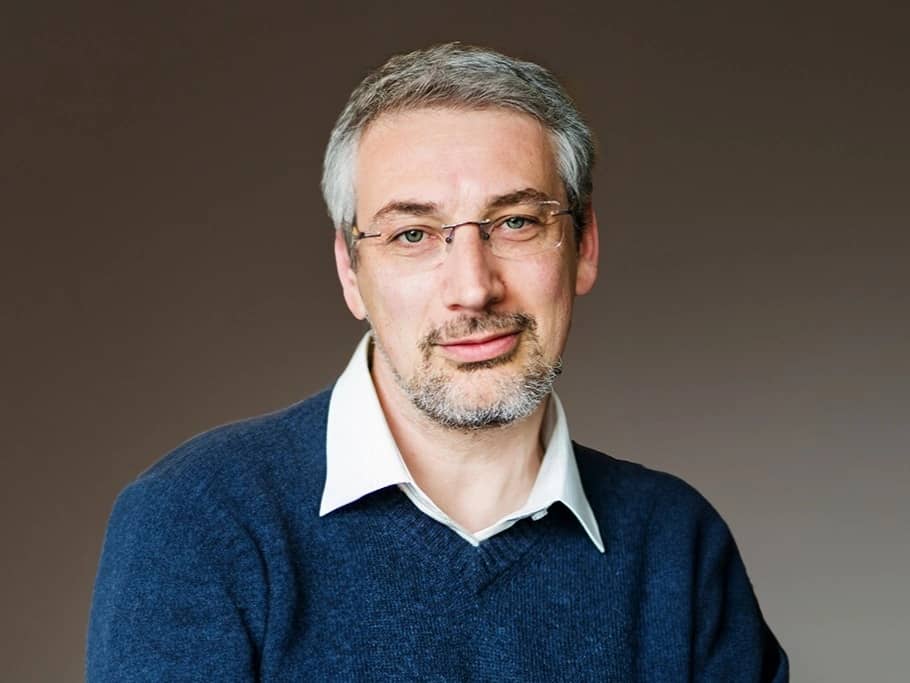
Alexei "Alex" Biryukov is a world-renowned cryptographer, security expert, and computer scientist. He is a Full Professor at the University of Luxembourg, where he is the founder and head of the CryptoLux research group. [1] [2] Biryukov has made fundamental contributions to symmetric-key cryptography, including the co-design of the Keccak algorithm, which became the SHA-3 standard, and the Argon2 password hashing function, which won the Password Hashing Competition. [2] [3] In the field of cryptanalysis, he is known for co-inventing the slide attack, impossible differential cryptanalysis, and for developing the first attacks on the full versions of AES-192 and AES-256. [3] [4] He has also been a key academic figure in the blockchain space, co-inventing the Equihash proof-of-work algorithm and serving as a founding scientist of the Zcash protocol. [2]
Education
Biryukov earned a Bachelor of Science in Applied Mathematics from the Moscow Institute of Physics and Technology (MIPT). [2] [1] He continued his academic career in Israel, where he obtained his Ph.D. in Computer Science from the Technion – Israel Institute of Technology in 1999. His doctoral dissertation was titled "Methods of Cryptanalysis," and his advisors were Professor Shimon Even and Professor Eyal Kushilevitz. [3]
Career
After completing his Ph.D., Biryukov was a postdoctoral researcher at the Weizmann Institute of Science in Israel from 2000 to 2001, where he worked in the Department of Computer Science and Applied Mathematics and collaborated with Adi Shamir on symmetric cryptography. [3] Following this, he was a research fellow and guest professor from 2002 to 2006 at the Katholieke Universiteit Leuven (K.U. Leuven) in Belgium. There, he was part of the esteemed Computer Security and Industrial Cryptography (COSIC) group, where he was involved in analyzing candidates for the Advanced Encryption Standard (AES) and contributed to the eSTREAM project for stream cipher standardization. [2] [3]
In 2006, Biryukov was appointed Full Professor at the University of Luxembourg. He founded and continues to lead the CryptoLux research group, which operates within the Faculty of Science, Technology and Medicine (FSTM) and is also affiliated with the university's Interdisciplinary Centre for Security, Reliability and Trust (SnT), where he serves as a member of the management board. [1] [3] His work at the university involves teaching advanced cryptography, supervising doctoral and postdoctoral researchers, and leading major research projects. Biryukov has been a member of the International Association for Cryptologic Research (IACR) since 1994. [3]
Research and Contributions
Biryukov's research spans the design and analysis of cryptographic systems, with major impacts on both academic theory and real-world security standards. His publications have garnered over 44,000 citations, and he has an h-index of 87 as of January 2026. [4]
Cryptanalysis
Biryukov is credited with the co-invention of several powerful cryptanalytic techniques.
Slide and Boomerang Attacks
In 1999, alongside David Wagner, Biryukov co-invented the slide attack. This is a generic form of cryptanalysis that applies to block ciphers constructed from identical, repeated permutations or round functions, regardless of the total number of rounds. The attack works by "sliding" two ciphertexts against each other to create a condition where they are both at the same stage of the encryption process, effectively reducing the problem to a single-round attack. [3] [2] He also contributed to the development of the boomerang attack, an advanced differential cryptanalysis technique invented by Wagner that allows two short differential paths to be combined to attack a larger number of rounds than traditional differential analysis would allow. [2]
Impossible Differential Cryptanalysis
In 1998, with Eli Biham and Adi Shamir, Biryukov co-invented impossible differential cryptanalysis. This method exploits differential paths that have a probability of zero. By identifying these "impossible" differentials, an analyst can definitively rule out incorrect key candidates, making it a highly effective tool for breaking block ciphers. The technique was famously used to demonstrate a break on 31 out of 32 rounds of the Skipjack cipher. [3] [4]
Analysis of the Advanced Encryption Standard (AES)
While he did not design the AES (Rijndael), Biryukov's work on its security analysis is highly significant. In 2009, he and Dmitry Khovratovich published the first related-key cryptanalysis of the full AES-192 and AES-256 standards. This attack, while theoretical, demonstrated a key recovery on AES-256 with a computational complexity of 2^99.5, representing a significant finding in a related-key attack model. [3]
Later, in 2011, Biryukov, Khovratovich, and Ivan Nikolić developed the biclique attack. This was the first cryptanalytic method to reduce the computational complexity for a key recovery attack on the full AES-256 algorithm to a value slightly less than that of a brute-force search (2^254.4 compared to 2^256). Though not a practical threat, this result was a major theoretical breakthrough in the analysis of the world's most widely used encryption standard. [3]
Design of Cryptographic Standards
Biryukov has been a leading figure in the design of modern cryptographic algorithms that have become global standards.
Keccak (SHA-3)
Biryukov is a co-designer of the Keccak cryptographic hash function. In 2012, Keccak was selected by the U.S. National Institute of Standards and Technology (NIST) as the winner of its widely publicized hash function competition. In 2015, Keccak was formally standardized as SHA-3 (Secure Hash Algorithm 3), the latest generation in the Secure Hash Algorithm family. SHA-3 is now a fundamental component of modern digital security, used for data integrity, digital signatures, and other cryptographic applications. [2]
Argon2 Password Hashing Function
Biryukov led the design of Argon2, a memory-hard key derivation function, created with Daniel Dinu and Dmitry Khovratovich. Argon2 was specifically engineered to securely hash passwords for storage and verification, providing high resistance to cracking attempts using specialized hardware like GPUs and ASICs by making memory usage the primary performance bottleneck. In 2015, Argon2 was declared the winner of the international Password Hashing Competition (PHC). [4] [3] In 2021, Argon2 was standardized by the Internet Engineering Task Force (IETF) as RFC 9106, cementing its role as a leading standard for password protection. [3]
Blockchain and Cryptocurrency
Biryukov has applied his expertise to the field of cryptocurrencies and blockchain technology, focusing on privacy and consensus mechanisms.
Equihash Proof-of-Work
With Dmitry Khovratovich, Biryukov co-invented Equihash, an asymmetric memory-hard Proof-of-Work (PoW) algorithm. Based on the generalized birthday problem, Equihash was designed to be ASIC-resistant by making memory capacity, rather than raw processing speed, the limiting factor in mining efficiency. This approach aimed to democratize the mining process by favoring general-purpose hardware (CPUs and GPUs). [4] [2] Equihash was famously adopted by the privacy-focused cryptocurrency Zcash upon its launch, as well as by several other digital currencies. [4]
Zerocash and Privacy
Biryukov was one of the seven founding scientists and co-authors of the seminal 2014 paper "Zerocash: Decentralized Anonymous Payments from Bitcoin." This paper laid the cryptographic groundwork for Zcash by introducing a protocol that could provide fully anonymous transactions using zero-knowledge proofs, specifically zk-SNARKs. This work was a foundational step in the development of practical, privacy-preserving cryptocurrencies. [2] He has also been affiliated with IC3 (Initiative for Cryptocurrencies and Contracts), a leading academic blockchain research initiative, and was involved in the early stages of the formation of Blockstream. [2]
Network Analysis and Security
In 2014, Biryukov, along with Ivan Pustogarov and Dmitry Khovratovich, published research demonstrating how to deanonymize Bitcoin users. Their method involved passively monitoring peer-to-peer network traffic to link transactions to the IP addresses of the users who originated them, highlighting fundamental privacy weaknesses in the Bitcoin network. [3] In subsequent work, he also analyzed vulnerabilities in the Tor network, showing how traffic and timing analysis could potentially deanonymize hidden services. [3]
Other Notable Algorithm Designs
Throughout his career, Biryukov has been involved in the design and analysis of numerous other cryptographic algorithms:
- Serpent: He was part of the design team for the Serpent block cipher, which was one of the five finalists in the NIST AES competition. [2]
- SAFER++: A block cipher he co-designed as a candidate for the NESSIE (New European Schemes for Signatures, Integrity, and Encryption) project. [4]
- LEX: A stream cipher designed by Biryukov and submitted to the eSTREAM project. [4]
- IDEA: The International Data Encryption Algorithm, a well-known 64-bit block cipher that Biryukov helped design. [4]
- DEAL: A 128-bit block cipher based on the DES design, which he co-designed. [4]
- PRESENT: He was involved in the design of PRESENT, a lightweight block cipher optimized for highly constrained environments like RFID tags. [1]
- ECHO: He was a co-designer of the ECHO hash function, which was a second-round candidate in the NIST SHA-3 competition. [1]
These contributions demonstrate Biryukov's wide-ranging influence on the field of symmetric-key cryptography, from heavyweight standards to lightweight ciphers for specialized devices. [4] [1]
Awards and Recognition
Biryukov's contributions to cryptography have been recognized with several awards and honors.
- Winner of the Password Hashing Competition (2015): Received as the leader of the design team for the Argon2 algorithm. [4] [3]
- FNR Award for Outstanding Scientific Publication (2017): Received from the Luxembourg National Research Fund for the paper on the Argon2 hash function. [4]
- ESORICS Best Paper Award (2018): Received for research presented at the European Symposium on Research in Computer Security. [4]
In addition to these awards, Biryukov is an active leader in the academic community. He served as the Program Chair for the 14th Fast Software Encryption (FSE) Workshop in 2007 and frequently serves on the program committees for major international cryptography conferences, including CRYPTO, EUROCRYPT, and Asiacrypt. [2] [3] [5]
See something wrong?