0% read
Last updated:
Bill Barhydt
William "Bill" Barhydt is the founder and CEO of Abra, a digital asset financial services and wealth management company. His career includes roles in U.S. government intelligence and space agencies, traditional finance on Wall Street, and business development during the early internet era at Netscape Communications. Barhydt is a frequent commentator on Bitcoin, digital assets, and the future of finance [1] [2].
Early Life and Education
Barhydt was born in the Bronx, New York City, to a middle-class immigrant family from Italy. He developed an early interest in mathematics and technology, learning the BASIC programming language from his father at age 11 on a TRS-80 computer [3].
He attended the Stevens Institute of Technology, graduating in 1990 with a Bachelor of Science in Computer Science. Following his undergraduate studies, he undertook non-degree graduate work in mathematics at Stanford University from 1991 to 1992 and later in finance at New York University's Stern School of Business from 1994 to 1995 [3]. Some sources also mention his attendance at the University of Nevada, Reno, and the University of Kansas [4] [5].
Career
Barhydt's career path has moved from government service to traditional finance, early internet technology, and multiple entrepreneurial ventures before focusing on cryptocurrency [1].
Early Career
After university, Barhydt's first roles were with the U.S. government. He worked for the Central Intelligence Agency (CIA) in its Office of Scientific and Weapons Research, where he applied computer graphics and visualization techniques [1] [3]. He also served as a research scientist at NASA's Ames Research Center from 1989 to 1992, focusing on flight simulation and high-performance computing [4].
He then transitioned to Wall Street, working at Goldman Sachs in the Fixed Income Trading and Research division from 1992 to 1995. This role provided him with experience in capital markets and the design of trading systems [1] [3].
From 1995 to 1998, during the initial dot-com boom, Barhydt joined Netscape Communications as a business development executive. Based in Europe, he was responsible for establishing partnerships with major telecommunications companies and banks to build their first online services. He left after Netscape's acquisition by AOL [1] [3].
Entrepreneurial Ventures
Barhydt has founded four companies, leading to two acquisitions and one major divestiture [3].
- WebSentric (1998–2002): Following his tenure at Netscape, Barhydt founded WebSentric, an early web-based communication service for online meetings and document sharing. The company's technology was later acquired by SAP and integrated into its online portal service [1] [3].
- Sennari (2005–2007): As founder and chairman, Barhydt launched Sennari, a mobile gaming company specializing in prize-based games for feature phones before the advent of smartphones. The company was later acquired by Emotive [3].
- Boom Financial (2008–2013): Barhydt co-founded Boom Financial (initially m-Via), an early mobile banking and cross-border money transfer service focused on migrant workers and the unbanked. The platform allowed users to open bank accounts and send money internationally from their phones. Digicel, a large wireless carrier, made a significant investment, and the business now operates as Digicel's mobile money arm in numerous countries [2] [3].
In addition to his own companies, Barhydt has held roles as CEO of KnowNow and Vice President of Market Development at Plaxo, an online address book service acquired by Comcast [1] [4].
Abra
In January 2014, Barhydt founded Plutus Financial, Inc., the legal entity behind Abra, which has become his most prominent venture [3] [5]. As founder and CEO, he has guided the company through a significant evolution in its business model.
Founding and Initial Vision
Barhydt's experience with the challenges of cross-border payments at Boom Financial directly influenced Abra's creation [3]. The initial vision for Abra was to create a global, peer-to-peer (P2P) money transfer application using the Bitcoin blockchain as a technology rail to bypass traditional banking intermediaries. The goal was a single app that could function as a global bank, allowing value to be sent from any phone to another anywhere in the world [4] [6].
The original non-custodial model used Bitcoin's multi-signature smart contracts to create "synthetic assets." This allowed users to hold a value pegged to a fiat currency, like the US dollar, while the system used Bitcoin as collateral. Users retained control of their private keys, aligning with the ethos of "be your own bank." The model also included a network of human "Abra Tellers" who acted as cash-in and cash-out points [6] [4].
Pivot to Crypto Banking
Around 2017-2018, Abra began to pivot from its P2P remittance focus to a centralized, custodial crypto wealth management platform. Barhydt explained that the shift was driven by user demand for a simpler experience and for services such as earning interest on crypto holdings [4]. The human teller model also proved difficult to scale globally. The new model positioned Abra as a "crypto bank," offering a suite of financial services centered on digital assets [3].
The evolved platform offered several products:
- Abra Trade: An exchange for buying, selling, and trading a wide range of cryptocurrencies.
- Abra Earn and Abra Boost: Services that allowed users to deposit cryptocurrencies to earn interest. These products later became the focus of regulatory actions.
- Abra Borrow: A lending service enabling users to take out loans using their crypto holdings as collateral.
- Abra Private: A high-touch wealth management service for high-net-worth individuals and institutional clients launched in 2023.
These services were designed to fulfill Barhydt's long-term vision: "use bitcoin as a technology platform to enable a new generation of global banking" [4].
Funding
Abra has raised over $109 million in funding from venture capital firms and strategic investors. Notable investors include American Express Ventures, Foxconn Technology Group, RRE Ventures, First Round Capital, Arbor Ventures, IGNIA, and Digital Currency Group [7] [3].
Views and Market Predictions
Barhydt is a well-known voice in the cryptocurrency industry, often sharing his analysis and predictions. He has presented at global forums including the World Economic Forum, TED, and The Mobile World Congress [1].
He views Bitcoin as a foundational protocol for a new, open global financial system and has described it as the "single best investment opportunity in the world" [6] [7]. As early as March 2018, he stated that a "flood" of institutional money into the cryptocurrency space was "100 percent" going to happen, identifying these investors as the "whales" that would catalyze the next major market rally [8].
On multiple occasions, Barhydt made bullish price predictions for 2025, forecasting that Bitcoin could reach as high as 16,000. He based these predictions on a macroeconomic thesis expecting a "massive liquidity injection" from expansionary U.S. government fiscal and monetary policies [9].
In a weekly YouTube show called "Money Talks," Barhydt discusses crypto markets, banking, and answers user questions [3].
On building in the crypto space, Barhydt has said: "The key is to take a long-term view that's unshakeable. If you don't have that long-term view, you're going to get shaken out of this market. It's that simple" [7].
Regulatory Issues and Controversies
In 2023, a multi-state task force of U.S. regulators began taking action against Abra and Barhydt. Regulators, including those from Texas, filed emergency cease and desist orders, alleging that Abra and its related entities were offering and selling unregistered securities through the Abra Earn and Abra Boost programs [5]. The filings also raised concerns that the company was operating in an insolvent or near-insolvent state as of March 31, 2023, and had made untrue statements to investors and regulators [10].
On August 26, 2024, the Georgia Department of Banking and Finance, along with other state regulators, entered into a Consent Order with Plutus Financial, Inc. (d/b/a Abra) and Bill Barhydt personally. The order was established to resolve allegations of unlicensed money transmission and to facilitate the return of funds to affected consumers in Georgia [10].
The terms of the Consent Order required Abra to cease its Abra Earn and Abra Boost programs for U.S. persons and complete the return of all remaining assets to U.S.-based customers. For a period of five years from the order, Bill Barhydt was personally prohibited from participating "in any capacity in the business or affairs of any money transmitter or money services business licensed or required to be licensed in Georgia," with an exception for acting as a passive investor [10].
Interviews
Code and Money Converging #01
On March 30, 2019, at the TOKEN2049 conference, Bill Barhydt, Founder and CEO of Abra, delivered a presentation addressing the relationship between cryptocurrency and the financial system.
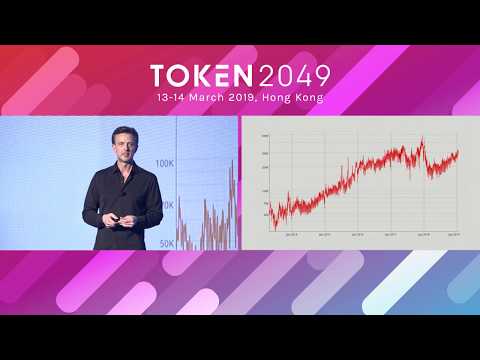
During the talk, Barhydt characterized the first decade of Bitcoin as “Bitcoin 1.0,” referring to the period in which the network operated primarily as a decentralized digital asset and store of value. He stated that this phase established the foundation for a new asset class but did not yet achieve broad use as scalable programmable money.
Barhydt identified three elements that, in his view, are required for the next stage of development: a form of digital hard money, the capacity to scale to large user bases, and a path toward global accessibility. He contrasted Bitcoin with fiat currencies, stating that government-issued monetary systems expand supply over time, which can reduce purchasing power. He described Bitcoin’s fixed issuance model as structurally different from inflation-based systems.
Scalability was presented as a central technical issue. Barhydt referred to protocol updates such as Segregated Witness and to second-layer networks including the Lightning Network as approaches intended to increase transaction capacity. He also referenced ongoing academic and industry research focused on improving throughput and efficiency while maintaining decentralized validation.
The presentation also covered Abra’s use of “crypto-collateralized contracts.” According to Barhydt, this framework allows price exposure to fiat currencies, equities, and other assets through contracts collateralized in Bitcoin. In this structure, deposited funds are converted into Bitcoin and allocated to contractual mechanisms designed to reflect the price movements of selected assets, while the company manages corresponding hedging processes.
Barhydt described this model as a method for integrating Bitcoin into broader financial use cases by positioning it as underlying collateral within digital financial applications. [12]
Bitcoin Market Cycles, Monetary Policy, and Decentralized Infrastructure #02
On January 14, 2026, Bill Barhydt, founder and CEO of Abra, participated in an interview on the Thinking Crypto podcast hosted by Tony Edward. The discussion addressed cryptocurrency market cycles, macroeconomic conditions, regulatory developments in the United States, and product initiatives at Abra.

Barhydt stated that the historical four-year Bitcoin halving cycle should not be treated as a consistent forecasting model. He indicated that earlier price patterns coincided with broader monetary policy trends, including prolonged declines in interest rates and expansion of the money supply. He argued that the scale of monetary expansion following the COVID-19 period altered market dynamics, thereby weakening the analytical relevance of prior halving-based cycle interpretations. In his assessment, Bitcoin’s supply structure relative to fiat currency issuance offers a more consistent explanatory framework for long-term price appreciation than cyclical halving events alone.
In discussing macroeconomic conditions, Barhydt compared the current environment to 2020, citing expectations of renewed liquidity expansion and potential monetary easing. He indicated that changes in long-term interest rates and debt financing conditions may affect capital allocation across technology equities and digital assets. He further noted that fiscal policy decisions, energy market developments, and geopolitical considerations could influence investor behavior in risk-oriented markets.
Addressing meme coins, Barhydt referenced a politically themed token associated with former U.S. President Donald Trump as an example of large-scale transaction throughput on public blockchains. He described such events as instances illustrating transaction processing capacity under high demand conditions. In his interpretation, these developments highlighted the operational scale of certain blockchain networks relative to traditional payment infrastructure.
Barhydt characterized the interaction between traditional financial institutions and decentralized finance (DeFi) as competitive. While acknowledging increased participation by banks and asset managers in cryptocurrency products, including exchange-traded funds and custodial services, he stated that decentralized financial models enable alternative forms of asset custody, lending, and token issuance. He suggested that tokenized securities, smart contract-based credit mechanisms, and direct digital asset ownership may alter existing financial structures over time.
The interview also addressed the intersection of artificial intelligence and blockchain systems. Barhydt described a potential future framework in which autonomous software agents conduct transactions through decentralized networks. Within that context, he indicated that digital assets with fixed or programmatic supply characteristics could serve as settlement instruments for machine-based economic activity. He further noted that scalable Layer 1 networks may provide infrastructure for automated, high-frequency transactions.
Privacy-related technologies were discussed in relation to increasing interest in zero-knowledge cryptography and privacy-oriented digital assets, including Zcash. Barhydt identified privacy mechanisms as a component of broader discussions concerning financial transparency, user autonomy, and regulatory oversight in digital asset markets.
Regarding regulation, Barhydt referenced ongoing legislative efforts in the United States to clarify the classification of digital assets under securities and commodities law. He noted that jurisdictional coordination between regulatory bodies remains procedurally complex and indicated that legislative outcomes may influence institutional participation and product development timelines.
Concerning Abra, Barhydt described the firm’s custody structure as a segregated vault model in which client assets are not recorded on the company’s balance sheet. He also referenced the introduction of a synthetic dollar product implemented on a Layer 1 blockchain network, intended to provide exposure to dollar-denominated value through blockchain-based mechanisms.
Throughout the discussion, Barhydt emphasized long-term positioning in digital asset markets, citing monetary expansion, demographic capital shifts, and technological integration as structural factors affecting the sector. The interview presented his perspective on cryptocurrency markets within the context of macroeconomic policy, regulatory developments, and infrastructure evolution. [11]
See something wrong?

Official Website:
Social Profiles: