0% read
Last updated:
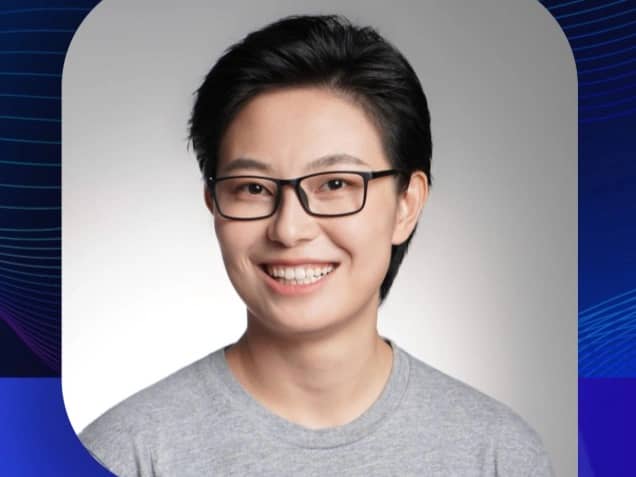
Chi Zhang
Chi Zhang is the co-founder and Chief Executive Officer (CEO) of Kite AI, a company building foundational trust and payment infrastructure for AI agents. Before her entrepreneurial work, she held product leadership roles at Databricks and was a founding team member at dotData. Zhang was recognized on the Forbes 30 Under 30 list in 2020 for Enterprise Technology and is a frequent speaker at technology conferences on the intersection of AI and cryptocurrency. [1] [2]
Education
Chi Zhang holds a Doctor of Philosophy (Ph.D.) in Statistics with a specialization in Machine Learning and Artificial Intelligence from the University of California, Berkeley. She also earned a Master of Arts (M.A.) in Economics from UC Berkeley. Her doctoral research focused on model training and causal inference. Prior to her graduate studies, she received a Bachelor of Science (B.S.) in Statistics from Fudan University. [1] [3] [2]
Career
Zhang's career has been focused on the application and productization of artificial intelligence and large-scale data systems. After working as a data scientist and product leader at several technology companies, she co-founded Kite AI in early 2024 to build infrastructure for the emerging AI-driven economy. [1]
Kite AI
As co-founder and CEO, Zhang leads Kite AI, a company she started in early 2024 with CTO Mark Chen. [1] The company's mission is to build a programmable trust infrastructure that unifies identity, payment, and governance for AI agents. Zhang refers to this new ecosystem as the "machine internet," where autonomous AI agents will become primary users and require their own foundational rails to operate securely. [3] [4]
In a statement about the company's founding, Zhang said, "We launched a year ago on a simple bet: agents are the next users of the internet. Not hype. Not a demo. Real production. In the field, agents hit the same walls: Who am I? Can I pay? Who’s accountable? We didn’t chase the buzz. We built the rails." [4]
Kite AI's vision is centered on providing agents with three core capabilities: a verifiable identity, the ability to make and receive payments, and the capacity to operate within defined governance guidelines. The company's technology architecture is designed to act as a settlement and verification layer for agent transactions, with Zhang analogizing Kite's role to that of the Ethereum blockchain itself in relation to token standards like ERC-20. To achieve this, Kite AI partnered with the ZK-coprocessor firm Brevis to develop a "ZK Passport" for scalable and private agent identity verification and to support high-frequency, low-cost transactions. [3]
On September 2, 2025, Kite AI announced it had raised an 33 million. Other investors include Coinbase Ventures, SBI Group, Essence VC, and Plug and Play Tech Center. Zhang stated that these investors were chosen for their strategic value, including potential distribution channels and industry connections. The company's initial go-to-market strategy focuses on the e-commerce vertical. [5] [3] [6]
Databricks
From January 2020 to January 2024, Zhang was a Product Lead at Databricks, a leading data and AI company. In this role, she led product development for data engineering solutions, contributing to the platform's growth. [1] [2]
dotData
Prior to Databricks, Zhang was a founding product manager and the Head of Product at dotData from January 2018 to January 2020. DotData is an early automated machine learning (AutoML) platform that automates the full data science lifecycle. As a founding AI leader, she headed data science and product-related initiatives, applying AI to industries such as finance for transaction fraud detection and healthcare for medical image-assisted diagnosis. [1] [3]
Early Career
Zhang's early career included a role as a Data Scientist at NEC Corporation from May 2017 to January 2018. She also worked as a Research Scientist Intern at Adobe in the summer of 2016. [1]
Awards and Public Appearances
Awards and Recognition
In 2020, Chi Zhang was named to the Forbes 30 Under 30 list in the Enterprise Technology category for her work in the field of artificial intelligence and product development. [1]
Speaking Engagements
Zhang is a frequent speaker at major technology and cryptocurrency conferences, where she discusses the future of the agentic economy and the convergence of AI and blockchain. Her public appearances include:
- Consensus Hong Kong 2026: Zhang is a scheduled speaker for the AI & Robotics Summit on February 11, 2026. Her session is titled "The Agentic Economy: The Endgame and How We Get There." [7]
- Korea Blockchain Week 2025: She was a speaker on the "What's Next in Crypto x AI?" panel on September 23, 2025. [1]
- Consensus Hong Kong 2025: Zhang was a featured speaker at the conference, which took place from February 18-20, 2025. [2]
In interviews and public talks, Zhang often emphasizes her belief that agents, identity, and payments are the core pillars that will power the next phase of the digital economy. [8] She has commented on the complexity of this field, stating, "you need a very unique combination of perspectives and a deep understanding of multiple fields such as blockchain, agents, and payments to truly see how to correctly combine these elements." [3]
Other Activities
Since January 2020, Zhang has served as a mentor for early-stage founders at StartX, a startup accelerator affiliated with Stanford University. In her personal life, she is a former professional inline speed skater. [1] [2]
Interviews
Building the Payment Layer for AI Agents #01
In an interview published on November 26, 2025, on the YouTube channel KITE AI, Chi Zhang, CEO and co-founder of Kite AI, shared his perspective on the infrastructure requirements of an internet increasingly operated by autonomous AI agents. Speaking with Korea crypto community Wecryptotogether, hosted by Edward Park, Zhang explained why machine-to-machine economies require a new class of payment and settlement systems.

According to Zhang, the next wave of AI adoption will be driven by autonomous agents that transact with other agents and digital services at very high frequency. From his point of view, existing payment rails were designed for human use and are fundamentally unsuited for instant, programmatic interactions due to latency, chargeback risk, and unpredictable fees. He argued that stablecoin-based settlement provides a more reliable foundation for these use cases by enabling near-instant finality and predictable costs.
Drawing on his background in Web2 AI and enterprise data infrastructure, Zhang emphasized that Kite AI approaches blockchain primarily as a means to solve concrete product problems rather than as an end in itself. In his view, this product-first mindset aligns Kite AI with large Web2 companies, including payment providers, while still remaining compatible with the Web3 ecosystem. He described Kite AI as a neutral settlement layer designed to coordinate agent transactions across multiple existing blockchains rather than competing directly with them.
Zhang also outlined why, from his perspective, a specialized AI-focused blockchain is necessary. He cited the expected scale of agentic transactions, the need for stable and minimal transaction costs, and the importance of incentives tailored to AI contributors rather than only network validators. He presented Kite AI architecture as a multi-layer system consisting of a base blockchain, an abstraction layer that hides blockchain complexity from developers, and a marketplace where agent-based applications can be deployed.
Throughout the interview, Zhang stressed that long-term sustainability depends on real-world adoption. He argued that token mechanisms alone are insufficient without products that generate genuine usage and revenue, and he positioned Kite AI ambition as enabling mainstream, Web2-facing applications, such as agent-driven commerce and services, alongside Web3-native use cases. [9]
Trust and Infrastructure in the Agentic Internet #02
On November 26, 2025, an interview with Chi Zhang was published on the YouTube channel KITE AI. The conversation took place during Korea Blockchain Week 2025 and was conducted by the Korean content creator FIREANT. In the interview, Zhang discussed her professional background and outlined her interpretation of KITE AI’s objectives and technical direction.

Zhang described an ongoing shift in the development of artificial intelligence toward increased use of autonomous software agents capable of performing tasks on behalf of individuals and organizations. She referred to this progression as an “agentic internet,” characterized by agents operating independently across online services. According to her explanation, the primary challenge in this environment relates to trust and control rather than limitations in computational capacity.
In this context, Zhang presented KITE AI as an infrastructure project focused on enabling identity, authorization, and payment mechanisms for AI agents. She compared these requirements to existing systems used by humans, such as identity documents and payment instruments, suggesting that agents would require comparable structures to interact with digital services. In her description, these components are intended to define permissions, manage spending limits, and regulate access to resources.
The interview also addressed the company’s funding history. Zhang attributed KITE AI’s Series A financing, led by PayPal Ventures and General Catalyst, to factors she identified as the project’s underlying thesis, feedback from early partners, and the professional background of the founding team. She noted that the team’s experience includes work in machine learning, data infrastructure, and distributed systems.
Regarding development plans, Zhang stated that KITE AI was operating a testnet at the time of the interview and was preparing for a private mainnet phase. She indicated that this stage would support transactions involving stablecoins and enable agent-based interactions in areas such as automated purchasing. She also mentioned that additional partnerships with companies from both Web2 and Web3 sectors were under discussion.
The interview concluded with Zhang commenting on community involvement. She referenced ongoing efforts to engage users through testnet participation and regional communication channels, including activities directed toward the Korean community following Korea Blockchain Week. [10]
See something wrong?