0% read
Last updated:
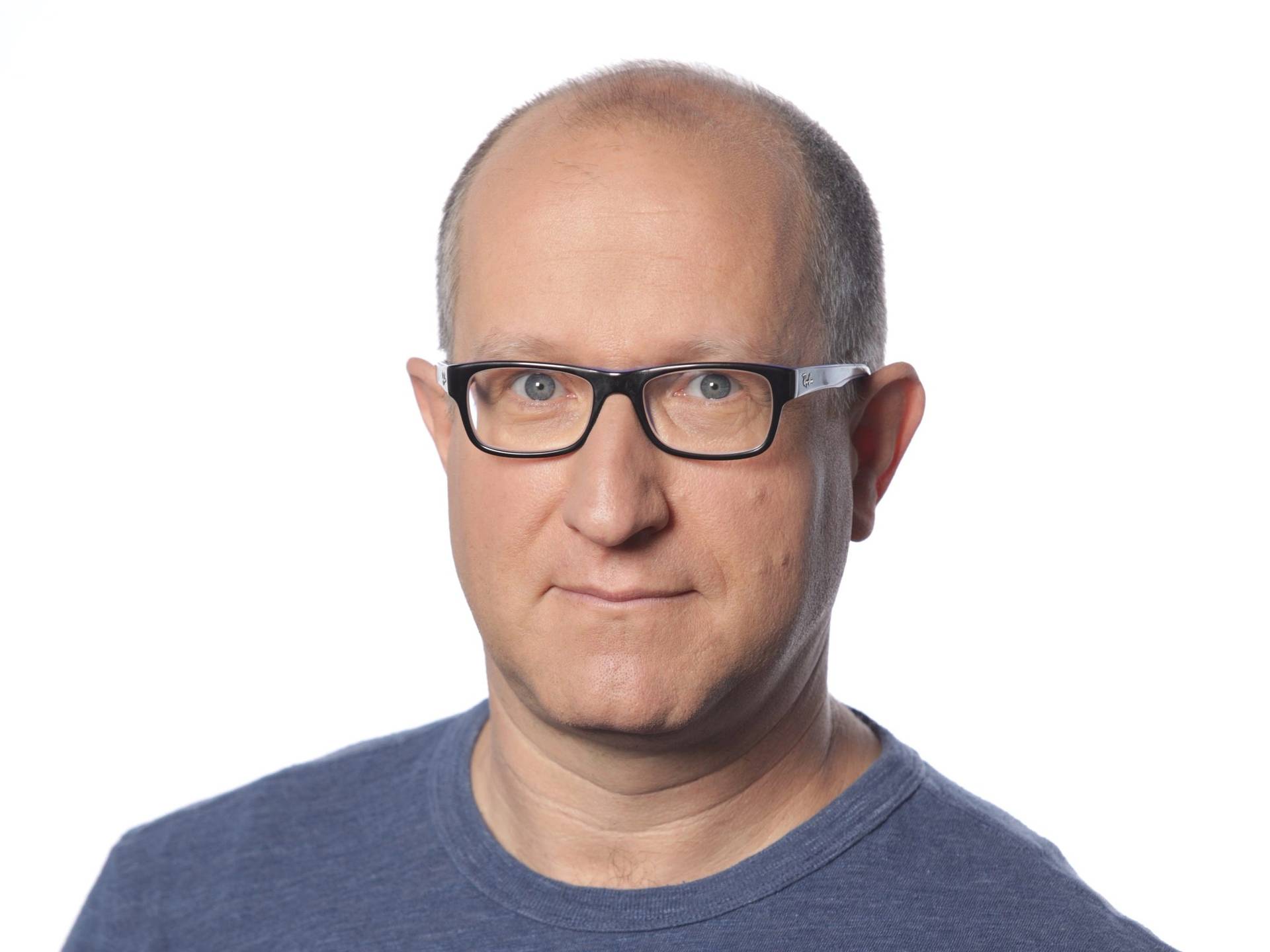
Eli Ben-Sasson
Eli Ben-Sasson is the Co-founder, President, Chairman, and CEO of StarkWare Industries Ltd., the developer of the permissionless Validity-Rollup (ZK-Rollup) Layer 2 network operating on Ethereum, Starknet.[1][2][3]

Education
Eli Ben-Sasson attended the Hebrew University of Jerusalem from 1993 to 2001 for a Doctor of Philosophy (Ph.D.), in Computer Science.[2]
Career
Eli Ben-Sasson started his career in 2001 as a Postdoctoral Researcher at the Massachusetts Institute of Technology (MIT). In 2005 he was a Visiting Assistant Professor at TTI Chicago. He served as a Professor at Technion - Israel Institute of Technology from 2010 to 2018.[4]
Eli Ben-Sasson is a Founding Scientist at Electric Coin Company (aka Zcash Co.)[5] which was founded in October 2016. Electric Coin Co. builds and supports technology to provide people with access to a fair and open currency globally. They are the inventors of Zcash.[2]
StarkWare
In March 2018, Eli Ben-Sasson co-founded StarkWare[7] alongside Uri Kolodny, Michael Riabzev, and Alessandro Chiesa. He served as Chief Scientist (East) until January 2020 when he moved to the role of President & Chairman of the Board.[2][6]
In January 2024, he was appointed the company's Chief Executive Officer (CEO) following the resignation of Uri Kolodny from the role.[8]
StarkWare Industries Ltd. is a blockchain technology company based in Israel, focusing on developing ZK-Rollup technology and building products to solve the challenges of the Ethereum network. Besides the technology infrastructure, Its main two products are StarkEx and StarkNet.[6]
In May 2022, StarkWare’s estimated value was 2 billion six months earlier, echoing the implementation of its ecosystems which range from digital asset trading solutions to NFT minting and deployment.[10]
StarkEx
StarkEx is the Validium L2 scaling engine on Ethereum mainnet that is modified (tailored) to fit specific permissioned Dapps, used for projects to deploy their ideas (mostly for trading use cases) dYdX, ImmutableX, DeversiFi, and many other partners. This Specific L2 is where most protocols are built on, generating real trading volume and conducting transactions.[9]
Starknet
Starknet is built based on STARK as the decentralized L2 Zk-rollup. The layer is responsible for executing transactions while scaling without the security sacrifice of Ethereum. STARK developers can write smart contracts and run them permissionlessly on Starknet. Starknet aims to achieve secure low-cost transactions and high performance by using the STARK cryptographic proof system. Starknet contracts and the Starknet OS are written in Cairo, a custom-built and specialized programming language.[3]
STRK Token
The Starknet token ($STRK) is used for paying fees to enable the operation of the Starknet network, maintaining and securing the network by enabling staking for consensus and deciding on Starknet’s values and technology goals by voting for governance proposals. [3]

Strategic Restructuring and Layoffs (2026)
On April 13, 2026, StarkWare announced a strategic shift aimed at transitioning from a technology-focused infrastructure provider to a product-driven company focused on generating revenue and increasing real-world usage.[12]
CEO Eli Ben-Sasson stated that while StarkWare had established itself as a leader in zero-knowledge (ZK) and STARK-based technologies, infrastructure development alone was insufficient to secure long-term leadership in the blockchain industry.
The new strategy emphasizes focusing on a smaller number of high-impact products that leverage StarkWare’s proprietary technology stack, alongside adopting a more agile, startup-like operating model with smaller teams, faster iteration cycles, and increased experimentation to achieve product-market fit.
As part of this restructuring, the company introduced a new organizational structure consisting of two primary business units, each with dedicated business development, engineering, product, and go-to-market functions. The transition also included workforce reductions, with the company citing the need to become more efficient and adaptable in pursuit of its revised goals.
The shift reflects StarkWare’s broader ambition to convert its technological leadership into sustainable growth, revenue generation, and increased adoption within the blockchain ecosystem.[12]
Post-quantum Roadmap and Potential Layer 1 Transition
On June 30, 2026, StarkWare published a three-phase post-quantum roadmap for Starknet. The proposed first phase would replace Pedersen hashing with BLAKE2 across state commitments, contract addresses, and network configuration, and introduce post-quantum consensus signatures such as Falcon-512. The second phase would provide migration tooling for existing contracts. The final phase would address components dependent on Ethereum, including bridge syscalls and blob data availability, whose post-quantum readiness depends on Ethereum’s own transition.[13]
On October 8, 2026, Ben-Sasson and Starknet publicly raised the possibility of Starknet becoming an independent Layer 1. The discussion linked that possibility to concerns about quantum computing and AI, and to a desire for greater control over cryptographic upgrades. Starknet described 2027 as its target for becoming quantum-resistant; that target concerned quantum resistance, not a confirmed Layer 1 transition. The Layer 1 idea remained under consideration, and protocol-level changes require governance approval.[14]
On October 12, 2026, Ben-Sasson distinguished the Layer 1 discussion from claims that Starknet’s technical design is misaligned with Ethereum, saying he disagreed with that characterization of the existing design.[15]
See something wrong?