0% read
Last updated:
Huaisong Xiang
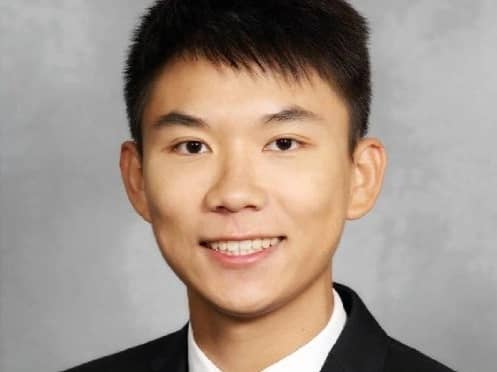
Huaisong Xiang, also known as Jerry Xiang, is a former software engineer at Robinhood Markets who worked on Robinhood Crypto’s digital asset listings and had access to nonpublic information about upcoming token listings in Manhattan.[7] The U.S. Attorney’s Office for the Southern District of New York alleges that he used Robinhood’s confidential token‑listing information to trade perpetual futures on the Hyperliquid derivatives exchange ahead of public listing announcements.[7][5] He is charged with commodities fraud and wire fraud, and as of late September 2026 there is no public reporting of any plea, scheduled trial, or conviction and all charges remain allegations.[4][10]
Education
Xiang received a Master of Engineering degree in financial engineering from Cornell University in 2020, where he also completed a financial data science certificate. He previously earned a Bachelor of Science in mathematics and applied mathematics and statistics from Stony Brook University in 2018, graduating summa cum laude and receiving multiple academic honors.[6]
Career
Before the federal charges, Xiang worked in quantitative finance and trading roles. From February 2021 to December 2023 he was an assistant vice president and quantitative researcher at Genesis, focusing on crypto market making, smart execution algorithms, machine‑learning‑based price prediction, delta‑one and central risk book management, and high‑frequency trading systems. Earlier, he spent about a year at Citigroup in New York as a quantitative analyst, working on transformer and generative‑model approaches to market spoofing detection, synthetic order generation, and order book dynamics. His earlier experience includes research assistant work at Cornell Financial Engineering Manhattan in 2020 in collaboration with Citi’s rates trading business, a machine learning project analyst role at Parable Insight on an equity long/short strategy in 2019, and a quantitative analyst internship at Group One Trading on options pricing in 2019.[6]
Between 2024 and September 2026, Xiang was employed as a software engineer at Robinhood in Manhattan, where he worked on the listing of new digital assets on Robinhood Crypto and had routine access to nonpublic information about whether and when additional cryptocurrencies would be supported for trading.[7]
Allegations
According to the federal complaint and related coverage, Xiang and Chai, by virtue of their roles at Robinhood, had access to nonpublic information about which cryptocurrencies Robinhood Crypto would list on its platform and when those listings would occur.[7][3] Xiang is alleged to have worked as a software engineer on Robinhood Crypto’s digital asset listings, a role that gave him routine access to confidential information about listing decisions and timing.[7] Prosecutors say the two engineers had a duty to keep that information confidential and that they instead converted Robinhood's internal listing plans into advance knowledge about events that could move crypto markets.[2]
The government's theory is that, from March 2025 through February 2026, Xiang and Chai misappropriated this material nonpublic information and used it to trade perpetual futures contracts on Hyperliquid, a decentralized derivatives exchange, ahead of Robinhood Crypto listing announcements.[7][8] Prosecutors allege that Xiang used a Hyperliquid account controlled through a wallet identified as Wallet‑0x8081 to buy perpetual futures linked to cryptocurrency tokens that he knew, from internal communications, Robinhood planned to list, including on at least ten occasions between May 2025 and February 2026 in advance of public listing announcements.[7] Each defendant is alleged to have profited more than $50,000 from the scheme, turning confidential information about upcoming Robinhood Crypto token listings into a trading signal used on an on‑chain derivatives exchange.[7][5]
The complaint states that Robinhood designated Xiang as a “Coin Aware Individual,” granting him access to a private Slack channel where sensitive listing information was shared and subjecting him to a Confidential Information and Insider Trading Policy.[7] That policy barred employees from trading securities, crypto‑assets, event contracts, or other financial instruments while in possession of material nonpublic information obtained through their work and “strictly prohibited” Coin Aware Individuals from trading on Robinhood or any other platform prior to and during the 24 hours after a public announcement of a new Robinhood Crypto listing or delisting.[7] The complaint further alleges that Xiang received specific reminders of these restrictions, including a November 2024 email and a May 2025 Slack message referencing the 24‑hour trading halt for employees around a token launch.[7]
The instruments at the center of the case are perpetual futures, or "perpetuals," which allow traders to speculate on an asset's price without owning the underlying asset and, unlike conventional futures, carry no expiration date.[2] Because the tokens were traded through Hyperliquid, an on‑chain decentralized exchange, the case tests the application of established markets law to derivatives that settle on blockchain infrastructure. Prosecutors emphasized that although perpetual contracts trade on on‑chain derivatives platforms, they remain financial instruments subject to enforcement.[4]
Charges and Penalties
Xiang and Chai each face one count of commodities fraud under the Commodity Exchange Act, the federal statute governing commodity and derivatives markets, and one count of wire fraud, which covers schemes to defraud carried out through electronic communications.[4] The SDNY described the two charges as commodity fraud and fraud via electronic communications.[3] Following the initial criminal complaint, federal prosecutors obtained an indictment charging Xiang and Chai with the same commodities fraud and wire fraud counts.[9]
Under the statutes cited, the commodities fraud count carries a maximum sentence of 10 years' imprisonment, and the wire fraud count carries a maximum sentence of 20 years' imprisonment.[4] Xiang was set to appear in federal court in the Southern District of New York.[1] The allegations in the complaint, indictment, and related charging documents are accusations only, and both Xiang and Chai are presumed innocent unless and until proven guilty in court.[2] As of late September 2026, there is no public reporting of any plea, scheduled trial date, or verdict, and all charges remain allegations.[10]
See something wrong?