0% read
Last updated:
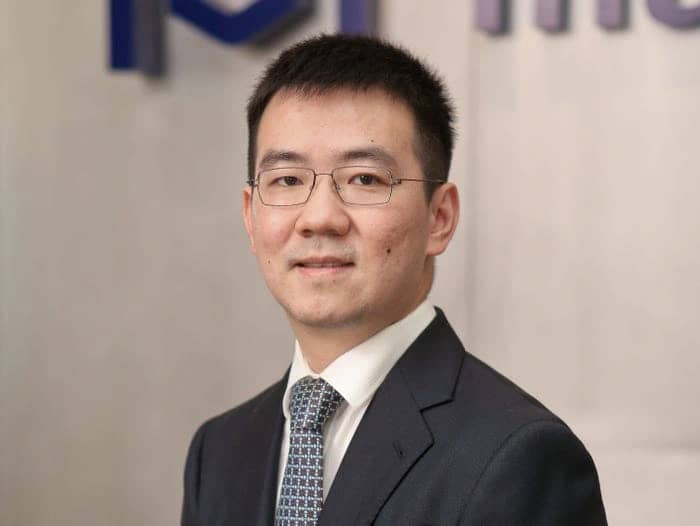
Jihan Wu
Jihan Wu is a Chinese-born Singaporean cryptocurrency entrepreneur and co-founder of Bitmain Technologies and Matrixport. His career has included work in investment management, cryptocurrency mining hardware, and digital-asset financial services, as well as leadership positions at Bitmain and Bitdeer Technologies. [1]
Education
Wu graduated from Peking University with a Bachelor’s in Economics and Psychology in 2009. [2]
Career
Wu began his professional career in investment management after graduating from Peking University in 2009 with degrees in economics and psychology. From 2010 to 2013, he worked as an investment manager at China Grand Prosperity Investment in Beijing. During this period, he became involved with Bitcoin and cryptocurrency mining, investing in early mining ventures and co-founding Babite, a Chinese Bitcoin community site; he also translated Satoshi Nakamoto's Bitcoin white paper into Chinese in 2011. In 2013, Wu co-founded Bitmain Technologies with Micree Zhan, where he served as co-CEO and later chairman and CEO. Under their leadership, Bitmain developed the Antminer series of Bitcoin mining machines and expanded into large-scale cryptocurrency mining infrastructure. Wu was also involved in debates over Bitcoin's block-size and transaction-capacity limits and supported Bitcoin Cash, which was created through a Bitcoin hard fork in 2017. In 2019, Wu stepped down as Bitmain's co-CEO and founded Matrixport, a cryptocurrency financial-services company based in Singapore. He formally left Bitmain in January 2021 after resolving a leadership dispute with Zhan, following which Bitmain's BTC.com mining pool and Bitdeer cloud-mining business were separated from the company, with Wu becoming chairman of Bitdeer. In 2022, Bitdeer acquired Le Freeport, a high-security vault facility in Singapore, from Yves Bouvier. Wu has served as chairman of Bitdeer since January 2021. [2]
Interviews
Next Industrial Cycle
At the USA House Davos 2026 event in March 2026, Wu discussed Bitdeer's development from a Bitcoin mining company toward a broader infrastructure business while continuing its mining operations. He described the United States as an important investment destination because of its energy resources, legal framework, and infrastructure opportunities, particularly in Ohio and Arizona. Wu also examined the growing relationship between energy and computing power, noting that the expansion of artificial intelligence and blockchain applications was increasing demand for electricity and encouraging technology companies to develop power-generation capacity and long-term energy arrangements. Wu argued that computing capacity would be a central driver of the next phase of industrial development, particularly as AI systems continued to advance. He emphasized competition in AI development and model training as a factor supporting technological innovation and efficiency, and argued that Bitcoin mining and computing infrastructure should be considered in the context of national security and economic development. He concluded by linking investment in mining, energy, and computing infrastructure to maintaining U.S. technological competitiveness and preparing for increased demand from future AI applications. [3]

From Mines to Datacenters
At the Bloomberg New Economy Forum in November 2025, Wu discussed the transition of Bitcoin mining infrastructure toward AI computing infrastructure and the potential to repurpose existing mining power capacity for AI data centers. He described the similarities between the infrastructure requirements of Bitcoin mining and AI computing and discussed the development of power and data-center assets in the United States, including in desert regions, to meet growing demand. Wu also addressed Bitcoin mining conditions, noting that mining remained economically viable despite broader macroeconomic uncertainty, while acknowledging concerns about capital expenditure and potential overinvestment in AI infrastructure. Wu said rising demand for AI computing and supply constraints, including those driven by geopolitical and regional considerations, were supporting continued investment in infrastructure despite high capital requirements. He also discussed chip development and U.S.-based manufacturing as ways to address supply-chain and geopolitical risks while balancing resilience with economic efficiency. He expected AI adoption and related infrastructure development to continue expanding globally, creating further demand for computing capacity and power infrastructure. [4]

See something wrong?
Social Profiles:
Blockchains: