0% read
Last updated:
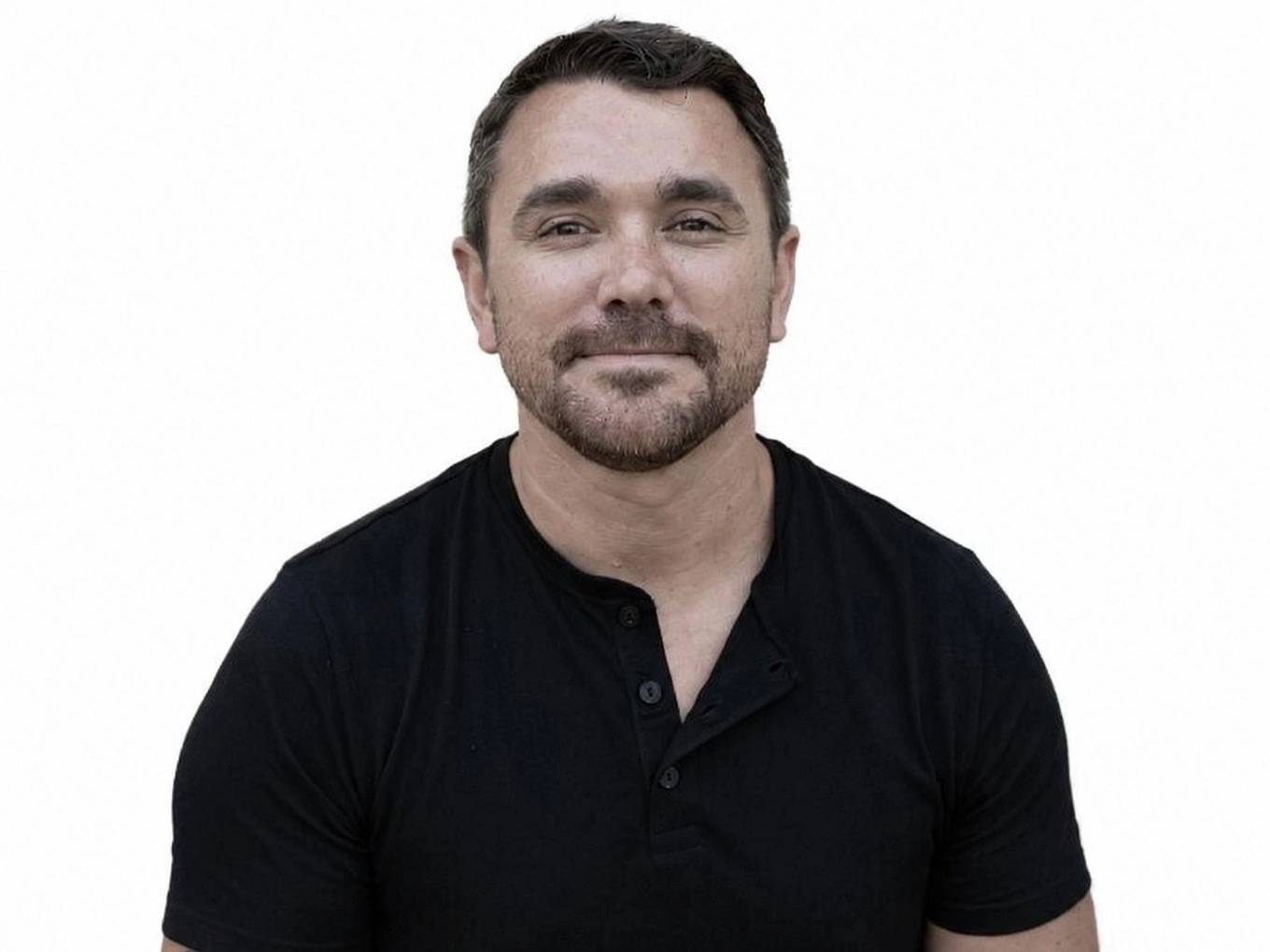
Kyle Rojas
Kyle Rojas is an institutional blockchain professional and former United States Air Force service member. He serves as Institutional Lead for the Americas at the Ethereum Foundation, where he focuses on institutional engagement and ecosystem development across North and South America. His professional background spans aircraft maintenance and airborne cryptologic linguistics in the U.S. military, traditional finance at Goldman Sachs, and leadership roles in Web3 infrastructure at Edge & Node (The Graph) and Avail. [1] [2]
Education
Rojas studied at the University of Maryland Global Campus from 2004 to 2008, where he completed degrees in Japanese Language and History and Asian Studies. From 2008 to 2009, Rojas attended the Defense Language Institute Foreign Language Center, earning an Associate of Science degree in Persian/Farsi. Between 2001 and 2013, Rojas also studied at the Community College of the Air Force, where he completed an Associate of Science degree in Aviation Maintenance Technology and Intelligence Studies and Technology. In parallel, he attended Troy University from 2010 to 2013, pursuing a Master of Science in International Relations. From 2013 to 2015, Rojas completed a Master of Business Administration in Finance at Rice Business. [3]
Career
Rojas began his career in the United States Air Force in 2001 as an F-16 crew chief and flightline maintenance support technician in Sumter, South Carolina, where he worked on aircraft inspections, maintenance, and equipment management. From 2004 to 2007, he served in Okinawa, Japan, as a transient alert technician, supporting aircraft operations and emergency response activities. He later became a protocol specialist on the same base, coordinating events involving U.S. and foreign officials and managing protocol operations for military personnel and leadership. Between 2008 and 2013, Rojas served as an airborne Farsi and Dari cryptologic linguist and operational intelligence specialist based in Tucson, Arizona. In this role, he provided operational intelligence support in military environments and held leadership responsibilities involving training programs, personnel management, and organizational initiatives. During his military service, he also led several internal and nonprofit-related programs focused on morale, leadership, and community activities within the Air Force.
In 2014, Rojas worked as a global operations internal consultant intern at FMC Technologies in Houston, where he conducted operational audits, supply chain analysis, sourcing strategy development, and cost engineering projects related to industrial equipment and manufacturing operations. The following year, he joined Goldman Sachs as a vice president in Houston, where he remained until 2021. In September 2021, Rojas entered the blockchain industry by joining Edge & Node in business development and partnerships roles related to The Graph ecosystem. Over the following years, he advanced through several leadership positions, eventually becoming Director of Global Business in 2023. His responsibilities included overseeing partnerships, ecosystem growth, business operations, developer engagement, and educational outreach related to Web3 infrastructure and blockchain adoption.
In January 2024, Rojas joined Avail as Global Business Lead, working across operational, business development, and ecosystem functions for the modular blockchain infrastructure project. In January 2026, he joined the Ethereum Foundation as Institutional Lead for the Americas, overseeing institutional engagement efforts across North and South America related to the Ethereum ecosystem. [1] [9]
Interviews
Global Finance
In April 2026, CryptoMondays hosted Rojas, who shared insights into Ethereum’s role in transforming global finance. Rojas detailed Ethereum’s strong track record of resilience, emphasizing its operational safety, high market share in stablecoins and real-world asset tokenization, and extensive developer ecosystem, which together position it as the preferred institutional settlement layer. He highlighted Ethereum’s neutrality, lack of counterparty risk, and technological advancements like zero-knowledge proofs, which enable privacy and interoperability, essential for regulated institutions seeking on-chain solutions. Rojas discussed the rapid pace of institutional adoption despite volatile markets and emphasized challenges such as regulatory hurdles, privacy concerns, and scalability, stressing that solutions like Layer 2s, zk technology, and post-quantum resistance are crucial for future growth. The conversation also explored innovative areas like agent-based finance and the potential for blockchain to revolutionize identity verification, voting, and cross-chain interoperability. Overall, Rojas portrayed Ethereum as the industry standard and emphasized that ongoing technological advancements and regulatory clarity would accelerate its integration into mainstream finance. [7]

Summit Endnote
At the Global Digital Asset Finance Summit in March 2026, Rojas shared his extensive journey from serving in the military as an Iranian linguist to transitioning into finance and ultimately becoming a leader in blockchain technology. After working at Goldman Sachs and engaging deeply with cryptocurrency since 2016, he found greater fulfillment in the crypto space, leading protocols like The Graph and Veil before taking on a role focused on institutional efforts across the Americas within the Ethereum Foundation. He highlighted that major financial institutions, such as Goldman Sachs, JPMorgan, BlackRock, and fintech giants like Visa and PayPal, were actively exploring and piloting blockchain solutions, shifting from curiosity to practical implementation. Rojas emphasized the foundation's pragmatic approach, focusing on outcomes like resilience, scalability, privacy, and interoperability, especially through advancements in layer 1 and layer 2 solutions, zero-knowledge proofs, and post-quantum security. He discussed the growing role of AI agents, digital identities, and decentralized finance in creating a globally interconnected financial ecosystem. Furthermore, he encouraged individuals and institutions to educate themselves via conferences, podcasts, and online resources, underscoring the transformative potential of blockchain technology to provide financial inclusion, secure assets, and revolutionize traditional markets. Rojas concluded by expressing gratitude for his role in this evolving space and reaffirmed the Ethereum ecosystem's mission to build resilient, open-source, private, and censorship-resistant infrastructure for the future. [5]

Building Unification
On the Radman Podcast in October 2025, Rojas emphasized the importance of integrity, resilience, and working harder than others, which he applied across his diverse career. He left the military at 29 after achieving high ranks and conquering the sector, motivated by family considerations and a desire for new challenges. Transitioning to finance, he thrived at Goldman Sachs by working tirelessly, cultivating confidence, and ensuring he belonged there despite his modest beginnings. His move into crypto was driven by a philosophical belief in the transformative potential of incentives and decentralization, coupled with a desire to work on mission-driven projects with greater societal impact. Rojas became deeply involved in infrastructure development, especially in modularity, data availability, and interoperability solutions such as Veil, to facilitate scalable, user-friendly cross-chain experiences. He highlighted ongoing efforts to build secure, decentralized solver networks and data layers, aiming for broad adoption while acknowledging current trade-offs, including those related to decentralization and security. Throughout the interview, Rojas demonstrated a passion for exploration, technological innovation, and the potential convergence of AI and blockchain to shape a more accessible, secure, and human-centered digital future, emphasizing that widespread adoption of Web3 is an ongoing, multi-year journey that requires perseverance, continuous learning, and collaborative progress. [4]

Presentations
Institutional Moment
At ETHDenver in February 2026, Rojas discussed the evolving recognition of Ethereum's significance within traditional finance and institutional sectors. He emphasized that the term "institutional moment" is understood differently across communities: crypto natives often see it as an opportunity and validation, while institutions focus on operational risk, reliability, and legal considerations. Rojas highlighted the need for clear communication, advocating translating crypto concepts into familiar language—such as describing Ethereum as a "shared execution layer" or "programmable escrow"—to bridge understanding gaps. He stressed that institutions prioritize system dependability, audits, and resistance to failure modes, viewing blockchain properties through the lens of outcomes rather than ideological virtues. Rojas argued that this translation isn't a compromise but a necessary step for mainstream adoption, with the real institutional milestone being when Ethereum’s infrastructure becomes standard and trusted for critical operations. He concluded by affirming that the ecosystem’s role is to build technological resilience while developing literacy among traditional financial players about Ethereum, shaping the future of its widespread use. [6]

Panels
Ethereum’s Scaling Role
In a July 2025 panel hosted by Taiko Labs, Rojas joined Piergiacomo Palmisani, Gustavo Gonzales, and Harry Gao to discuss Ethereum’s scaling strategy and the role of different layers in its long-term architecture. The discussion examined whether Ethereum should prioritize scaling its base layer or continue relying primarily on Layer 2 systems. Participants noted that scalability cannot be reduced to a single metric such as transaction throughput, and instead depends on trade-offs between composability, decentralization, and security. Some arguments supported increasing Layer 1 capacity to strengthen synchronous composability and reduce reliance on Layer 2 sequencers, while others emphasized the practical benefits of continuing to scale through rollups.
The panel also addressed risks and limitations in current Layer 2 designs, including concerns around centralized sequencers, bridge security, and varying levels of decentralization. At the same time, participants highlighted the importance of experimentation and open-source development in improving system design over time. Zero-knowledge proofs were discussed as a potential long-term direction for scaling, while Layer 3 solutions were generally viewed as lacking a clear practical justification at present. The conversation also covered maximal extractable value (MEV), described as an inherent characteristic of permissionless systems. Approaches to MEV ranged from mitigation strategies to more structured redistribution mechanisms. Overall, the panel emphasized a multi-layered approach to Ethereum scaling, balancing innovation across Layer 1 and Layer 2 systems while maintaining decentralization and security as core design principles. [8]

See something wrong?