0% read
Last updated:
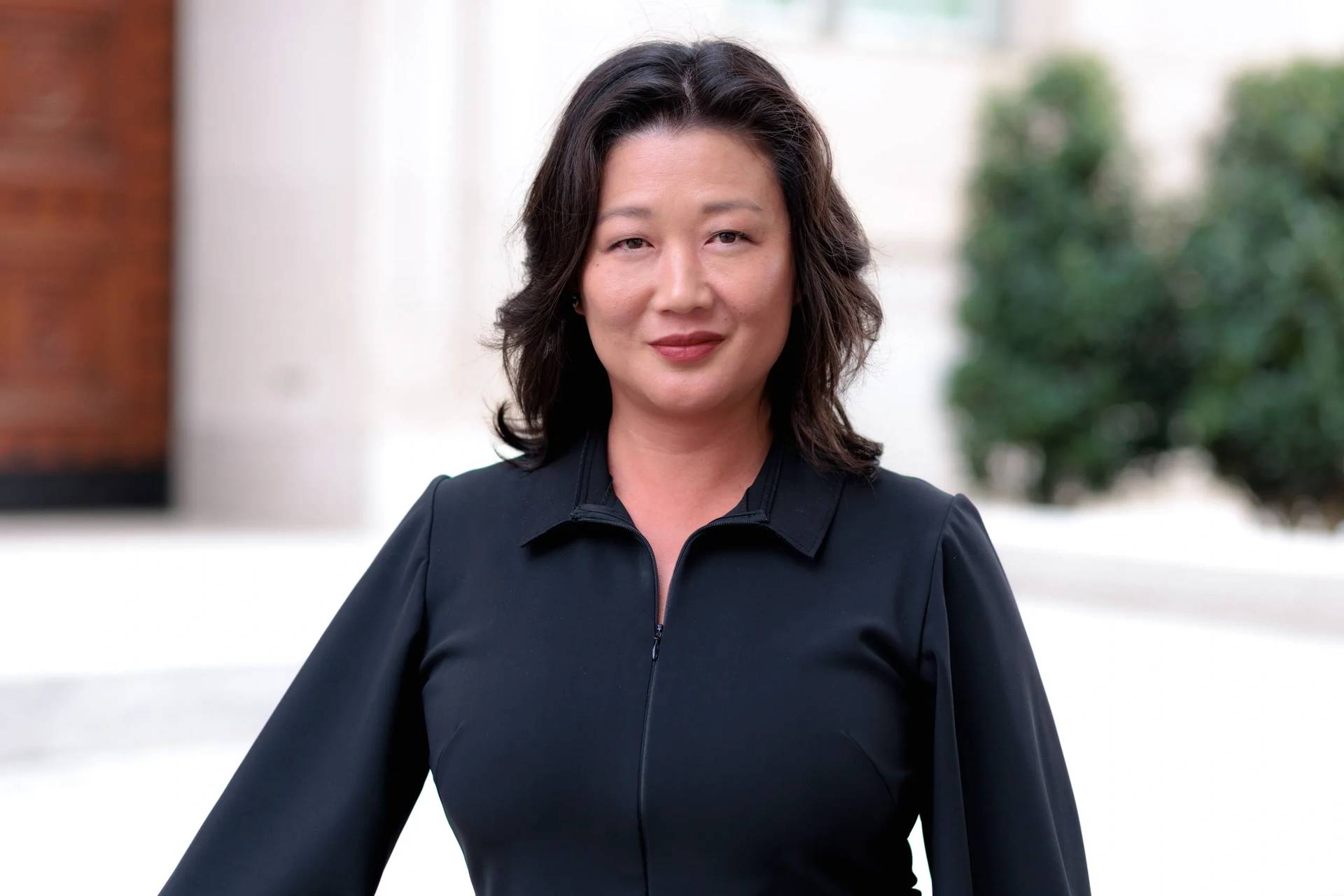
Linda Jeng
Linda Jeng is a legal and policy expert specializing in financial regulation, fintech, and digital assets. Her career includes senior roles across government agencies, international standard-setting bodies, the private sector, and academia, where she has focused on developing regulatory frameworks and analyzing financial stability. As of 2026, she serves as the Chief Legal and Policy Officer at Aave Labs. [4]
Education
Jeng completed her undergraduate studies at Duke University, earning a Bachelor's degree in 1996. She then pursued a legal education at Columbia Law School, where she received her Juris Doctor (J.D.) in 2001. In 2007, she furthered her expertise in international law by obtaining a Master’s degree in EU and International Law from the Université Toulouse 1 Capitole in France. [3]
Career
Jeng's career began in 2001 in the public sector within the legal division of the Office of the Comptroller of the Currency (OCC). During her time there, until 2004, she worked on matters related to banking supervision and enforcement. Following her role at the OCC, she transitioned to the private sector, working at Crédit Agricole S.A. from 2004 to 2007, where her focus was on international securities regulation.
She returned to government service in 2008, joining the U.S. Securities and Exchange Commission (SEC) for a year to work on market structure and trading oversight. From 2009 to 2010, Jeng worked in the United States Senate, where she contributed to the drafting and development of major financial regulatory legislation. Her work in Washington D.C. continued at the U.S. Department of the Treasury from 2010 to 2012, where she was involved in international financial regulatory policy.
In 2012, Jeng joined the Federal Reserve Board, serving in the Division of Banking Supervision and Regulation until 2014. She then took on a role at the Bank for International Settlements (BIS) from 2014 to 2015, collaborating with the Financial Stability Board (FSB) secretariat on the creation of global financial stability standards. Jeng returned to the Federal Reserve Board in 2016, holding roles in the chief of staff’s office and in the risk, surveillance, and data division until 2019. In these capacities, she contributed to international regulatory coordination and financial stability analysis.
Jeng transitioned into the digital asset and fintech space in 2020 when she became the Global Head of Policy and Special Counsel at Transparent Financial Systems. There, she focused on digital asset policy and product development. In 2022, she held a brief role as Chief Policy and Regulatory Officer at Centre, the standard-setting body for the stablecoin USDC. Later that year, she joined the Crypto Council for Innovation, where she served first as Chief Global Regulatory Officer and later as Head of Global Web3 Strategy into 2023. From 2023 to early 2026, she was the Founder and Chief Executive Officer of Digital Self Labs LLC, a Web3 regulatory and policy advisory firm. In 2026, Jeng was appointed Chief Legal and Policy Officer at Aave Labs, where she oversees the organization's global legal and policy functions. [1] [2]
Interviews
FinTech Policy & Digital Assets
On the TF Labs Podcast in September 2020, host Jonathan G. Blanco interviewed Jeng, the global head of policy at Transparent Systems and a senior fellow at Georgetown Law, who shared her extensive background in financial regulation, particularly in blockchain and digital assets. Jeng discussed her journey from aspiring zoologist to law graduate, driven by public service, which led her to various financial regulatory roles, including time at the Office of the Comptroller of the Currency, the SEC, and the Federal Reserve. She articulated the significance of understanding both monetary and regulatory history in fintech innovation and emphasized the need for startups to navigate existing regulations carefully. Additionally, Jeng proposed that future financial crises might revolve around data liquidity rather than money liquidity, stressing the importance of establishing a comprehensive data rights framework in the U.S. to foster innovation while ensuring consumer protection. Throughout the conversation, she encouraged dialogue between fintech operators and policymakers in Washington, D.C., to better understand the fintech sector's needs. [5]

Panels
Compliance and Coffee
During Paris Blockchain Week in June 2025, Jeng participated in a Compliance & Coffee Meetup panel discussion that explored the challenges and innovations in compliance within the context of decentralization. Participants included moderator Bianca Guimaraes-Chadwick (NEAR), Alireza Siadat (Deloitte Legal), Paolo Maria Gangi (LexDAO), and Reto Luthiger (MME). They shared insights on the burdens of traditional compliance, which costs approximately $270 billion annually, advocating for a shift towards compliance by design that incorporates technology, such as zero-knowledge proofs and multi-party computation. The conversation highlighted the difficulty of reconciling regulatory frameworks built on third-party reporting with the principles of decentralization, noting that compliance, especially regarding AML (Anti-Money Laundering), must be integral to decentralized finance (DeFi) strategies. Panelists discussed their experiences attempting to facilitate conversations between regulators and industry players, emphasizing the need for improved understanding of technology within regulatory agencies. They concluded that for future compliance strategies to be effective, they must leverage emerging technologies to ensure privacy, enhance accountability, and reduce redundant data collection, while navigating the evolving regulatory landscape. [7]

Policy Agenda
At the Lab for Inclusive FinTech (LIFT) in January 2024, Jeng participated in a panel moderated by Adel Meer, featuring experts discussing the intersection of fintech, regulatory frameworks, and financial inclusion. Panelists included Julapa Jagtiani (FRB Philadelphia) and Eric Parrado (IADB). Meer opened the session by highlighting the importance of investment in fintech and the need for a robust policy framework to foster innovation while ensuring consumer protection. Jagtiani, drawing from nearly a decade of research at the Federal Reserve, shared insights on how fintech could increase access to financial services, especially for those traditionally excluded from the banking system. Jeng emphasized the need for updated regulations to address systemic disparities in the financial system, particularly racial inequities and the challenges minorities face in accessing banking services. Parrado concluded by discussing the promising growth of digital payments in Latin America, while highlighting the ongoing discrimination women face in credit markets and underscoring the importance of targeted policies to address these issues. The panel recognized the need for collaboration among industry stakeholders, regulators, and policymakers to address these universal challenges in financial services. [6]

See something wrong?