0% read
Last updated:
Matt Liu
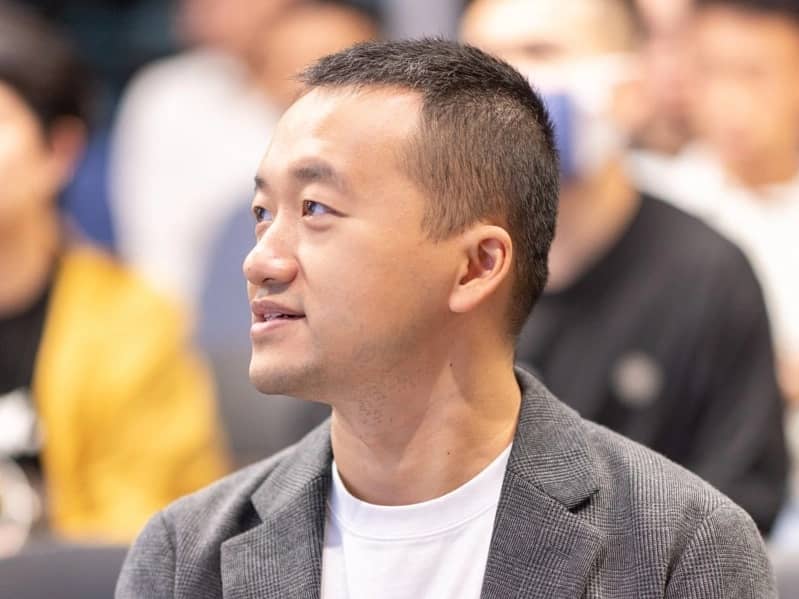
Matt Liu is a Singapore-based finance executive and blockchain entrepreneur who is the chief executive officer of Primary Labs and a co-founder and former chief strategy officer of SynFutures, an onchain derivatives trading protocol.[1] His career, spanning roughly 15 years, has moved from institutional trading and corporate treasury into financial technology and Web3.[2]
Early Life and Education
Liu completed a period of undergraduate study between 2005 and 2010 and is a graduate of Peking University in Beijing.[3][4] He subsequently earned a Master of Business Administration in Finance and Analytical Finance from Northwestern University's Kellogg School of Management in Evanston, Illinois, attending from 2012 to 2013.[1] During the program he held the Kellogg-GSM Fellowship, which covered full tuition, and took PhD-level advanced finance coursework covering programming, derivatives pricing, and empirical finance.[1]
Career
Deutsche Bank
Liu began his finance career as a fixed income trader at Deutsche Bank in Shanghai, a role he held from July 2010 to June 2012.[1] He was engaged in market making across China government bonds, treasury bills, and financial bonds, and conducted proprietary trading and risk management in interest rate swaps, cross-currency swaps, long-term foreign exchange forwards, and other derivatives.[1]
General Motors
From July 2013 to November 2016, Liu worked as Manager of Corporate Finance and Treasury at General Motors, a role that placed him in New York, Detroit, Frankfurt, and Shanghai.[1] In the United States he oversaw cash flow and a short-term investment portfolio exceeding $20 billion, and in the Asia-Pacific, Middle East, and Africa region he handled foreign exchange and cash trading alongside short-term funding activities.[1] He also led treasury transformation projects in Korea, Australia, and New Zealand and managed European capital-markets financial risk covering foreign exchange, rates, commodities, and financing.[1]
Ant Group
Liu joined Ant Group, the Chinese financial technology company headquartered in Hangzhou, in December 2016, and remained until June 2021.[1] He first served as Head of International for Group Treasury from December 2016 to July 2020, where he established the company's international treasury practice, leading balance sheet management, financing, and hedging, and arranged more than $5 billion in syndicated credit facilities.[1]
He then moved into blockchain-based finance as Head of Trade Credit RWA Business from July 2020 to June 2021, a role also described elsewhere as Head of Global Partnerships tied to Ant's Trusple blockchain trade-finance platform.[1][2] In this position he led a real-world-asset business that tokenized credit facilities for investment-grade corporates and tokenized trade credit lending to small and medium-sized enterprises, running on high-performance blockchain infrastructure.[1] The effort involved partnerships with banks including Morgan Stanley, JP Morgan, HSBC, DBS, OCBC, Mizuho, SMBC, BBVA, and Emirates NBD.[1] Liu has described this as building a consortium with nearly 20 global banks aimed at improving cross-border SME trade finance, and has said the platform stabilized after roughly two years of operation.[6]
SynFutures
In 2021 Liu co-founded SynFutures with Rachel Lin, serving as its Chief Strategy Officer from June 2021 until May 2026.[1][4] SynFutures is a Web3 financial infrastructure company for derivatives, operating an onchain trading protocol for crypto and real-world assets that aims to bring stocks, exchange-traded funds, and derivatives onchain.[1]
SynFutures has raised $37.4 million in total funding across two prior rounds, backed by investors including Pantera, Polychain, Dragonfly, Standard Crypto, and Framework.[1] According to the interview account, the company adopted a conservative treasury policy during its early years: Liu has said his team declined to hold Terra despite its high yields, treating stablecoins as bonds carrying credit risk, and withdrew company funds during rumors about FTX ahead of that exchange's collapse.[6]
Primary Labs
In May 2026 Liu became chief executive officer of Primary Labs, a research and advisory venture where he holds a C-level general management role.[1] The role marks his transition from SynFutures leadership into an independent research and advisory position.[3]
Talks and Interviews
Liu has represented SynFutures as a speaker at a series of blockchain and finance conferences, focusing on decentralized derivatives, cross-chain infrastructure, and asset security. At the WOW Summit Hong Kong on March 29–30, 2023, he spoke on a panel about interoperability, outlining three use cases: cross-chain margining and liquidity provision for more efficient collateral management, cross-chain messaging to enable order execution between trading platforms, and cross-chain oracles to combine asset variety with reliable data sourcing.[3] He appeared at WebX2024 in a session titled "Securing the Future: Innovative Approaches to DeFi Asset Protection," held on August 28, 2024, alongside Bit2Me's Abel Peña, SafePal's Veronica Wong, and moderator Wasim Fukase of Chainsight; the panel addressed encryption methods, risk management in DeFi protocols, and hardware wallet solutions.[9]
He has also described discussing SynFutures and DeFi with the International Monetary Fund, speaking at Thailand Blockchain Week and an event with SCB 10X, meeting the Dragonfly team in New York, joining a DistrictX panel in Bangkok on decentralization after the FTX crisis, and sharing views on DeFi derivatives at the invitation of Cambridge Associates.[3]
In a published interview with The Silicon Dreams, "Decoding the Future of Finance," Liu recounted spending over a decade trading on Wall Street and managing funds for global corporates and fintech firms before entering crypto.[6] He said his first encounter with DeFi was Uniswap, whose "transparency and efficiency" he found captivating and which prompted him to leave his previous job to co-found the protocol, and he remarked that "in crypto, three years feels like over 10 years."[6] He attributed his firm's survival through market volatility to a mix of "luck, skill, and experience," and predicted that blockchain and DeFi would produce a "more efficient capital allocation system," democratize credit and lending, and reshape banking toward more inclusive financial products.[6] He advised newcomers to research thoroughly to avoid scams, use decentralized exchanges, and start with small amounts, encouraging hands-on learning because "the tipping point comes when users try it themselves and feel the difference."[6]
See something wrong?
Official Website:
Social Profiles: