0% read
Last updated:
William Mougayar
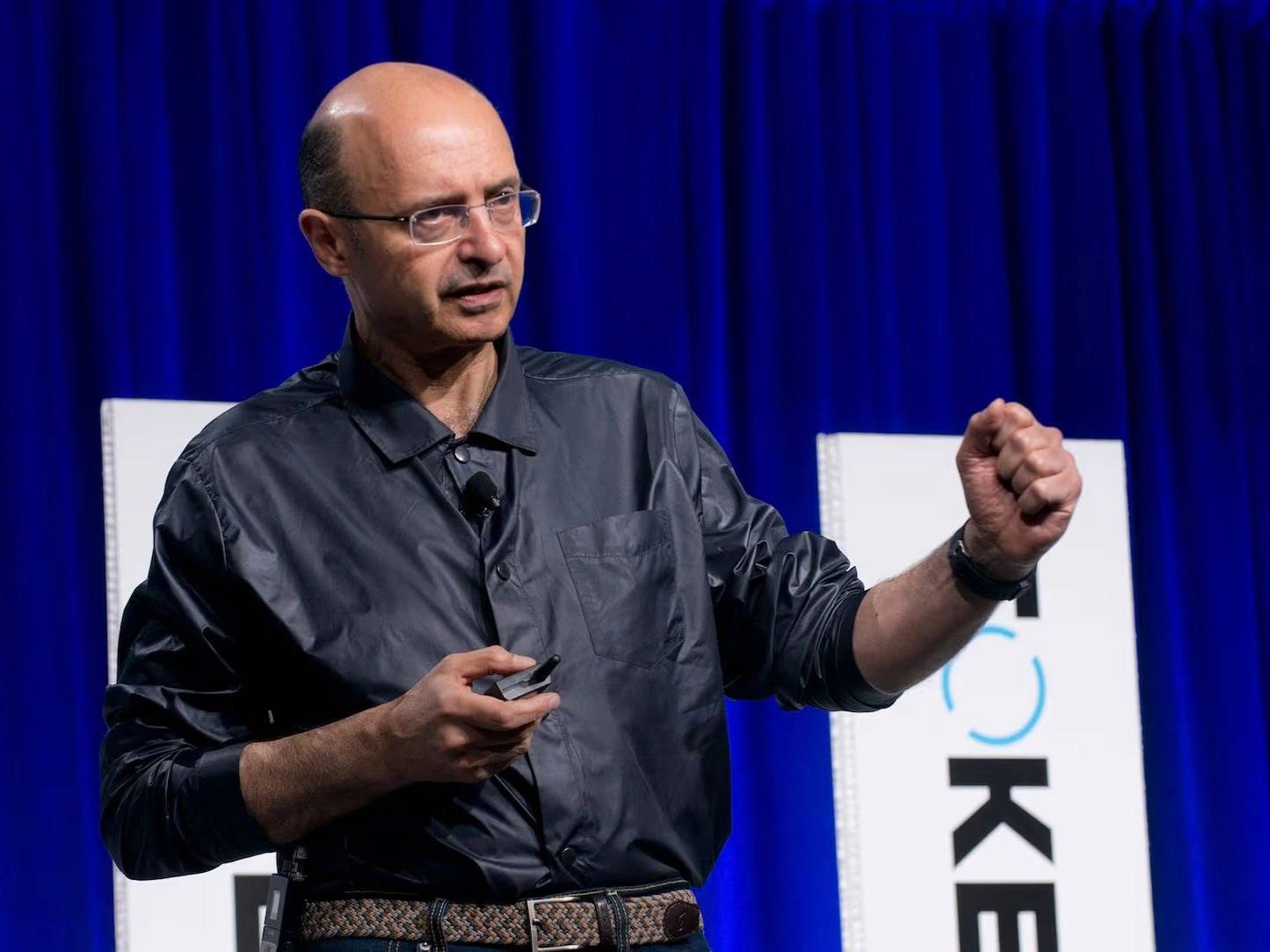
William Mougayar is known for authoring The Business Blockchain (2016), producing the Token Summit series, and advising blockchain organizations and startups. Public biographies describe more than four decades of experience across technology, markets, and strategy, and locate his base in the Toronto area. [1] [2]
Education
Mougayar is listed as a graduate of the University of Washington and the Ivey Business School at Western University, and as having attended the University of British Columbia’s Graduate Commerce School. [3] [4]
Career
Early corporate experience and technology sector roles
William Mougayar worked in the technology sector before becoming involved with blockchain-related projects and research. Between 1982 and 1995, he held several positions at Hewlett-Packard, including systems engineering, sales, sales management, marketing management, and business process re-engineering functions. His work at the company included responsibilities connected to enterprise systems, healthcare information systems, industry-focused marketing programs, and operational process management.
Following his tenure at Hewlett-Packard, Mougayar operated as a business strategy consultant, author, and speaker through CYBERManagement from 1995 to 2005. His consulting work focused on business technology strategy, globalization, digital business practices, and organizational transformation. Public descriptions of this period also reference his involvement in research publications, speaking engagements, advisory work for corporations, and contributions to technology and business media. During this period, he published books related to internet business and digital markets, including works addressing e-business and intranet technologies.
From 2005 to 2006, he served as Vice President and Service Director of Technology Research at AberdeenGroup, where his responsibilities included technology research strategy, customer relations, business development, and research services.
Between 2006 and 2008, Mougayar worked as Vice President of Corporate Marketing and Communications at Cognizant Technology Solutions. Public profiles describe his responsibilities as relating to marketing and communications activities within the information technology outsourcing sector.
He later held executive and entrepreneurial positions at multiple technology companies. From 2008 to 2012, he served as President and CEO of EQENTIA, a software platform focused on digital content management, monitoring, curation, and publishing. In 2012 and 2013, he was Founder and CEO of Engagio, a platform designed to manage online conversations and social network interactions. In 2013, he also served briefly as Chief Evangelist at Influitive, where his work focused on advocate marketing initiatives.
Public biographies and company profiles additionally identify Mougayar as the founder of several technology startups and entrepreneurial initiatives associated with enterprise software, digital publishing, internet technologies, and online communication systems.
Blockchain and decentralized technology activities
Beginning in 2013, Mougayar became involved in blockchain-related investment, advisory, research, and analytical work through Startup Management. Public profiles describe this period as the beginning of his long-term involvement with blockchain technologies, decentralized systems, and digital asset ecosystems.
He later became associated with multiple organizations connected to blockchain infrastructure, governance, venture investment, and public policy. Public records identify him as a former Advisory Board Member of the Ethereum Foundation between 2015 and 2017. The organization is associated with the development and support of the Ethereum ecosystem and decentralized technology research.
Additional advisory and board positions listed in public biographies include roles with OMERS Ventures, Coin Center, Stratumn, Blockchain Valley Ventures, and OB1, the company associated with the OpenBazaar protocol. These affiliations connected him to venture capital organizations, nonprofit policy groups, blockchain infrastructure companies, and decentralized commerce initiatives operating in North America and Europe.
His activities in the blockchain sector have included advisory work, governance participation, investment analysis, conference organization, and research publication related to decentralized networks and digital asset systems.
Venture capital and investment affiliations
Mougayar is identified in public biographies as General Partner at Virtual Capital Ventures, a venture capital firm focused on decentralized technologies and peer-to-peer applications.
Portfolio summaries and industry profiles also associate him with early-stage participation or investment involvement in projects including Dapper Labs, Ethereum, Filecoin, OpenBazaar, Blockstack, Mirror, Kin, Roll, Cardinal, MediaChain, ChangeTip, Lighthouse, and other blockchain-related infrastructure and decentralized application projects.
Between 2018 and 2019, he served as Managing Partner and Chief Investment Officer at JM3 Capital. Public descriptions of this role reference his involvement in a blockchain-focused investment division connected to digital asset and decentralized technology markets.
Executive leadership and governance roles
From November 2020 until February 2023, Mougayar served as Executive Chairman of the Kin Foundation. During the same period, he also held a board role associated with the Kin ecosystem.
Public profiles also identify him as a board member of Blockchain Valley Ventures between 2019 and 2022, and as a board member of Stratumn between 2017 and 2019. Additional governance-related roles include his board position with OB1 and advisory board memberships connected to Coin Center and OMERS Ventures.
These positions involved participation in governance, advisory activities, investment oversight, and ecosystem-related organizational structures associated with blockchain and technology companies.
Research, publishing, and ecosystem initiatives
Mougayar founded the Ethereum Market Research Center in 2025. Public descriptions characterize the initiative as a research-oriented platform focused on Ethereum-related market analysis, ecosystem developments, and research publications connected to decentralized technologies.
He is also the founder and producer of Token Summit, a conference series centered on token economics, governance systems, decentralized organizations, and blockchain-based business models. Event descriptions identify the conference as a forum for discussions involving tokenized networks, digital asset markets, protocol governance, and decentralized finance structures.
Public biographies additionally credit Mougayar with creating OnCoins.org, a blockchain and cryptocurrency news aggregation platform focused on industry information and curated content distribution.
He has also been identified as the manager of the WMX cryptocurrency index hosted on the ICONOMI platform. Publicly available descriptions reference his role in overseeing the index, although technical details regarding methodology and composition are generally published separately by the platform itself.
Publications, research themes, and industry analysis
Mougayar’s published articles, conference presentations, essays, and research materials have addressed subjects including blockchain infrastructure, token economics, decentralized governance, digital assets, market structure, and network-based organizational systems.
Public materials associated with his work frequently discuss the use of blockchain technologies in areas such as decentralized coordination, programmable trust systems, incentive structures, tokenized ecosystems, and digital network governance.
His published commentary has also examined Ethereum’s role within blockchain infrastructure, including discussions surrounding scalability, decentralized applications, market coordination systems, and blockchain-based organizational frameworks.
Through conference initiatives, research publications, advisory work, and investment-related activities, his professional work has remained connected to topics involving decentralized technologies, blockchain ecosystems, and digital asset markets. [1] [3] [4] [7] [9] [8]
Publications and Writing
The Business Blockchain (2016)
Mougayar is the author of The Business Blockchain, a widely referenced book on business applications of blockchain technology published by Wiley in 2016. Publisher materials describe it as an early contribution to business thinking around blockchain and state that it has been translated into more than ten languages. Public bios often associate the book with his positioning at the interface of crypto-native ideas and institutional understanding. [1] [2]
His author biographies also note that he published an early institutional analysis of Ethereum on the Ethereum Foundation’s blog in 2015, situating his writing at a formative stage of Ethereum’s public articulation to business audiences. [1]
Blog and essays
Beyond books, Mougayar maintains a personal website where he publishes essays, commentary, and research on blockchain, token design, and market structure. Recent posts in 2026 include analyses arguing that programmable trust is the principal value of blockchain, that Ethereum’s value case is distinct from Bitcoin’s, and that the crypto industry is in a “cleanup” phase requiring better governance and structure. Post titles and dates include: “Why Trust, Not Speed, Will Determine Blockchain’s Future” (April 15, 2026), “ETH Is a Snowflake: The Case for ETH Decoupling” (April 6, 2026), “Crypto’s Cleanup Phase: Twelve Structural Mistakes the Industry Must Outgrow” (March 9, 2026), “TRUSTSHIFT: Ethereum and the Reinvention of Trust” (February 20, 2026), and “Two Blockchains Are Emerging. Ethereum Is Both” (February 17, 2026). [7]
TRUSTSHIFT: Ethereum and the Reinvention of Trust (forthcoming)
In 2026, Mougayar announced a forthcoming book, TRUSTSHIFT: Ethereum and the Reinvention of Trust, planned for mid‑September 2026 publication by Ideapress Publishing with distribution by Simon & Schuster. Public summaries indicate that the work will address themes such as trust architecture, public goods, governance and ownership, Ethereum as a settlement layer, and the intersection of privacy and AI. [7] [1]
Interviews
Blockchain and Digital Value Systems #01
On July 20, 2016, William Mougayar participated in a presentation on the Talks at Google channel focused on themes discussed in his book The Business Blockchain.

During the session, Mougayar discussed blockchain technology in relation to digital transactions, distributed networks, and peer-to-peer systems. He described blockchain as a framework for recording and transferring digital assets without centralized intermediaries. According to his interpretation, blockchain networks could be applied to assets such as financial instruments, licenses, ownership records, and other forms of digital data.
Mougayar referred to blockchain systems as part of an “internet of value,” a term used to describe the transfer of digital assets across decentralized networks. He also discussed the use of smart contracts, programmable transactions, and distributed ledgers, stating that blockchain-related developments involved technical, commercial, and legal considerations.
The presentation included references to blockchain-based marketplaces, digital identity models, token systems, and financial applications operating through decentralized infrastructure. Mougayar cited OpenBazaar as an example of a peer-to-peer commerce platform designed to operate without conventional intermediary structures.
Mougayar also addressed regulatory discussions surrounding blockchain technology. He stated that regulatory frameworks were still developing during the early growth of the sector and commented on the relationship between experimentation, governance models, and adoption. In addition, he compared the development of blockchain networks to earlier phases of internet expansion, describing the sector as being in an early stage of development during the period of the interview. [10]
Ethereum as Public Infrastructure #02
On December 23, 2025, DeFi Dad released an interview with William Mougayar titled “You're Valuing Ethereum Wrong (And Here's Why)”. The discussion focused on Mougayar’s interpretation of Ethereum’s economic role and valuation framework.

During the interview, Mougayar stated that Ethereum should not be evaluated solely through traditional corporate valuation methods based on revenue or profit generation. Instead, he described Ethereum as a form of digital infrastructure whose value is connected to the economic activity conducted through its network.
Mougayar characterized Ethereum as a public good, citing properties such as open access, non-exclusivity, and its use as a shared infrastructure layer for blockchain-based applications and financial systems.
He also described a valuation model based on three components: network-generated fees and staking activity; economic flows associated with Ethereum-based services, including stablecoins, decentralized finance protocols, tokenized assets, and Layer 2 networks; and what he referred to as “trust surplus,” a term used to describe operational efficiencies associated with decentralized systems and automated smart contract execution.
In addition, Mougayar compared Ethereum’s network structure to the layered architecture of the internet. He described Ethereum’s base layer as comparable to foundational internet protocols, while higher layers were associated with applications, financial services, and scaling networks operating on top of the protocol. [11]
See something wrong?
Official Website:
Social Profiles: