Joe Suzuki
Joe Suzuki is a business development and sales professional whose career has spanned banking, international development, enterprise consulting, cybersecurity, and digital assets. He currently serves as Business Development Manager at CertiK, a blockchain security company that provides smart contract auditing, security monitoring, and risk management services for Web3 applications. [1]
Education
Suzuki attended the University of Nevada-Las Vegas, where he studied International Business. [2]
Career
Suzuki began his career in the financial sector as a Licensed Personal Banker at Wells Fargo, where he worked from 2011 to 2015. He later served as an executive assistant at Transform.PR, gaining early exposure to the cryptocurrency industry, before joining the Peace Corps as a Community Economic Developer in Costa Rica. In that role, he worked with local communities on economic development initiatives, entrepreneurship, and business capacity building.
Following his Peace Corps service, Suzuki worked as a consultant for Adept Group in Japan, focusing on business consulting and client development. In 2021, he joined Tesla as a Tesla Advisor, where he worked in customer engagement and sales.
In June 2022, Suzuki entered the blockchain security sector as a Senior Account Executive at Immunefi, a platform focused on blockchain bug bounties and security services, where he worked with blockchain projects on security and vulnerability disclosure programs. In April 2026, he joined CertiK as Business Development Manager, focusing on strategic partnerships, client development, and the adoption of blockchain security solutions across the digital asset ecosystem. [3]
Panels
Evolution of Crypto
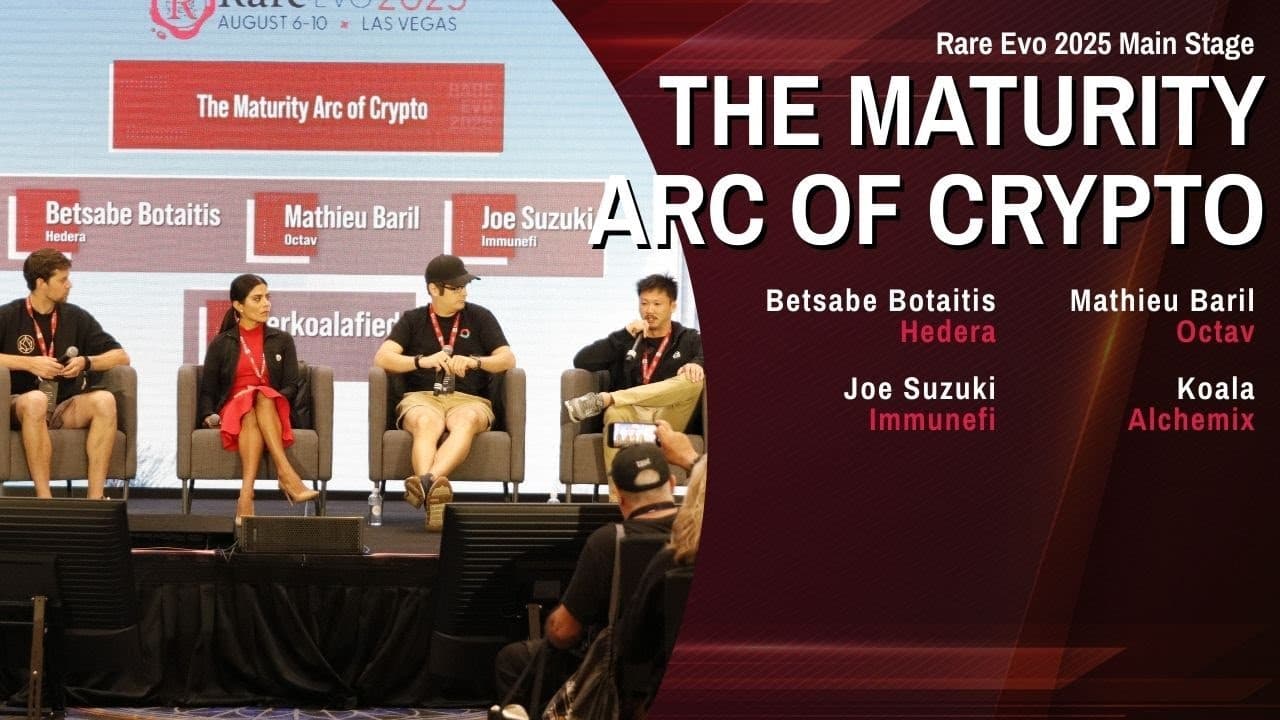
At Rare Evo 2025 in September, Joe Suzuki participated in a panel moderated by 0v3rkoalified of Alchemix alongside Betsabe Botaitis of Hedera and Mathieu Baril of Octav to discuss the evolution of the cryptocurrency industry and its growing maturity. The panel examined how blockchain infrastructure, security practices, and regulatory compliance have advanced since the industry's early years, with participants noting a shift from limited smart contract auditing to more comprehensive security frameworks that incorporate automated monitoring, bug bounty programs, and enterprise-grade risk management tools. Suzuki contributed to the discussion on the increasing importance of security and collaboration across the Web3 ecosystem, particularly as blockchain applications attract broader institutional and enterprise participation. The panel also explored the role of compliance standards, including the growing adoption of frameworks such as SOC 2, while acknowledging the challenges of applying traditional regulatory models to permissionless networks. Participants reflected on how blockchain's original goals of decentralization, financial inclusion, and transparency have expanded into areas such as enterprise adoption, cross-border payments, and services for underserved populations, while remaining grounded in open-source development. Looking ahead, the discussion considered emerging trends, including artificial intelligence in security, improved user experience, and new blockchain-enabled business models as factors expected to support continued industry growth and mainstream adoption. [4]