0% read
Last updated:
Daniela Amodei
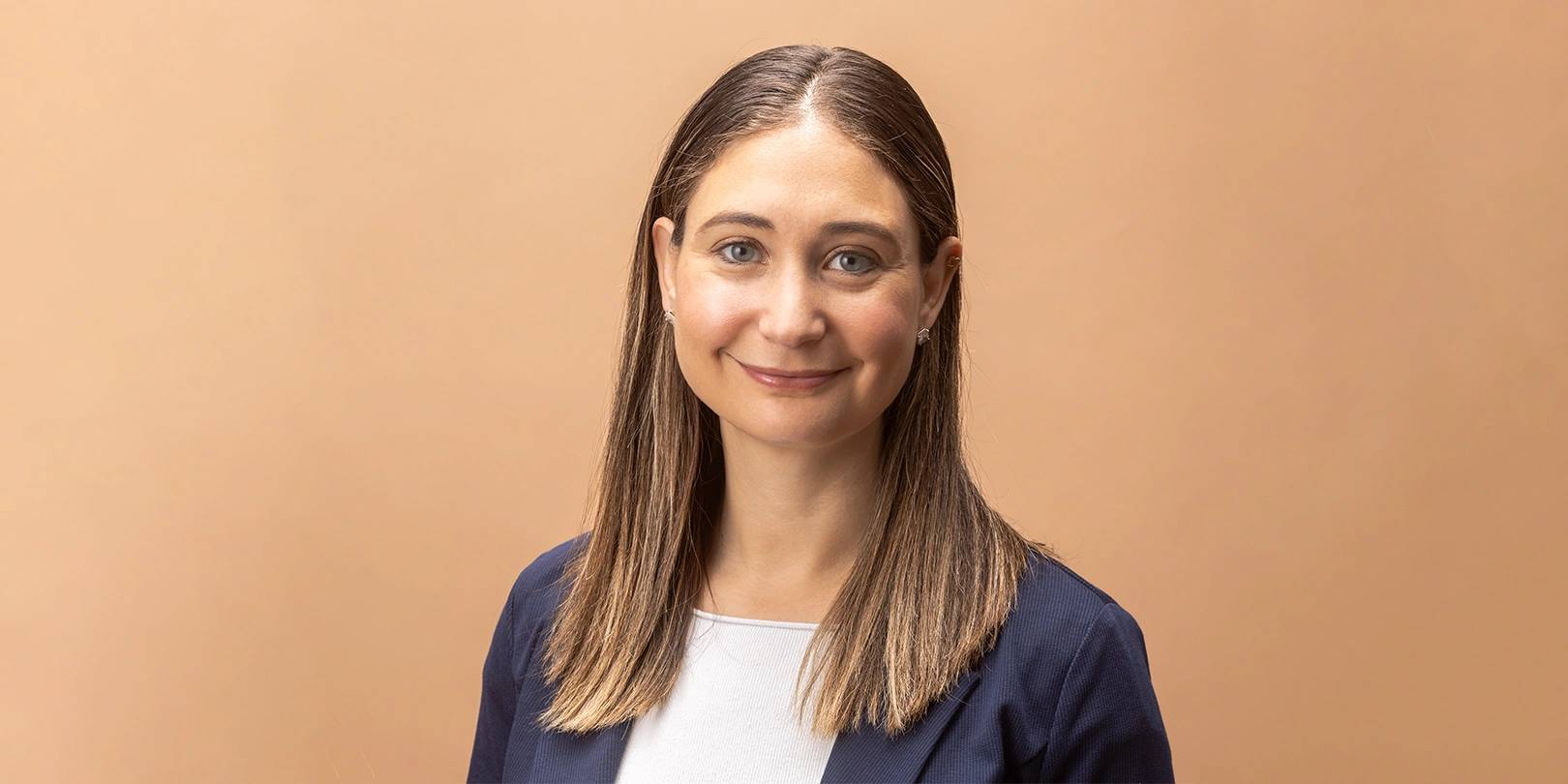
Daniela Amodei is an executive working in AI governance, safety, and organizational leadership, with a career spanning policy work, risk management, and leadership roles in technology companies. Her work has primarily focused on operationalizing safety, policy, and organizational systems within high-growth technology environments. She is currently president and co-founder of Anthropic, where she oversees company operations and safety-related organizational strategy. [3]
Education
Amodei attended the University of California, Santa Cruz, where she earned a Bachelor of Arts in English Literature. [2]
Career
Amodei began her career in development and field operations roles, including work with the IRIS Center at the University of Maryland, where she focused on business development for international programs. She later worked in public-sector campaign roles in the U.S. House of Representatives and in political organizing, including field and communications responsibilities on congressional and campaign teams, with a focus on operations, coordination, and outreach.
She subsequently moved into nonprofit work with Conservation Through Public Health in Uganda, where she supported field-based program activities. After returning to the United States, she joined Stripe, where she worked in risk management and operations roles, focusing on user policy enforcement, underwriting processes, and risk infrastructure, before moving into broader program management and recruiting leadership.
She later joined OpenAI, where she held roles including leadership in technical recruiting, people operations, and engineering management, as well as Vice President of Safety and Policy. In these roles, she worked on organizational scaling, hiring systems, and the development of internal safety and policy frameworks for advanced AI systems. Since 2020, she has been president and co-founder of Anthropic, where she is responsible for company operations and for integrating safety and policy considerations into organizational and technical decision-making. [4] [5]
Interviews
Future of Claude
In a June 2026 Bloomberg Tech interview focused on the future of Claude, Amodei discussed Anthropic’s evolution since its founding in 2021 after leaving OpenAI, describing the company’s leadership dynamic with Dario Amodei as a balance between long-term technical vision and operational execution, supported by structured disagreement and multi-perspective decision-making. She outlined Anthropic’s growth from a startup to a major AI developer, emphasizing its focus on responsible AI development, cautious infrastructure scaling, and a more enterprise-oriented strategy than competitors, particularly given the high cost and complexity of training frontier models. Amodei also explained that Claude is currently deployed mainly in enterprise contexts such as coding, finance, and HR, with gradual expansion into areas like cybersecurity, while maintaining a controlled-release approach that prioritizes safety evaluation over rapid consumer rollout. This is alongside broader industry concerns about capital intensity, compute planning, and regulatory engagement. [6]

Building AI
In a May 2026 interview with Stanford Graduate School of Business’s “View From the Top” series, Amodei described her unconventional path into artificial intelligence, which included earlier work in arts, politics, and operations roles before moving into the tech sector. She emphasized that her transition into AI was driven more by curiosity and an interest in impact than by formal technical specialization, and that she developed the ability to contribute in technical environments by asking questions and learning on the job. She also discussed the founding of Anthropic in 2020 following her departure from OpenAI, framing the decision as a response to concerns about AI safety and a desire to pursue development under a public benefit corporation structure.
The interview also focused on Anthropic’s emphasis on AI safety, governance, and responsible deployment. Amodei described safety as a core design constraint that should be integrated into both technical development and institutional decision-making, including risks such as misuse, misinformation, and cybersecurity threats. She highlighted the importance of collaboration between industry and regulators, and noted tensions between rapid technological advancement and cautious deployment. She also discussed broader societal implications, including uneven global adoption of AI and concerns about overreliance on automated systems for cognitive and interpersonal tasks, arguing that human skills such as empathy, communication, and judgment remain essential even as AI capabilities expand. [7]

Building Anthropic
In December 2024, the Anthropic co-founders, including Daniela and Dario Amodei, reflected on the company's origins and goals, and on their shared focus on developing advanced AI systems with an emphasis on safety and societal benefit. They described how prior academic and industry experiences shaped their view that AI progress needed to be paired with concrete, engineering-focused approaches to safety, including efforts such as the “Concrete Problems in AI Safety” research agenda. The discussion highlighted the importance of translating abstract risk considerations into measurable technical challenges and of building organizational structures to support ongoing evaluation and oversight of increasingly capable models. They also outlined frameworks, such as the Responsible Scaling Policy, as examples of structured, iterative governance intended to guide development in line with capability growth.
The conversation further addressed the role of institutional design and coordinated standards in managing long-term risks from advanced AI systems, emphasizing that safety is an ongoing process rather than a one-time solution. The co-founders pointed to interpretability research and AI applications in scientific domains, including biology, as areas of active interest with potential societal impact. They also discussed broader implications for governance and public systems, framing AI development as requiring transparency, accountability, and cross-institutional cooperation. Overall, the discussion presented their work as an effort to integrate safety considerations directly into the organizational and technical foundations of frontier AI development. [8]

See something wrong?