0% read
Last updated:
Harry Grieve
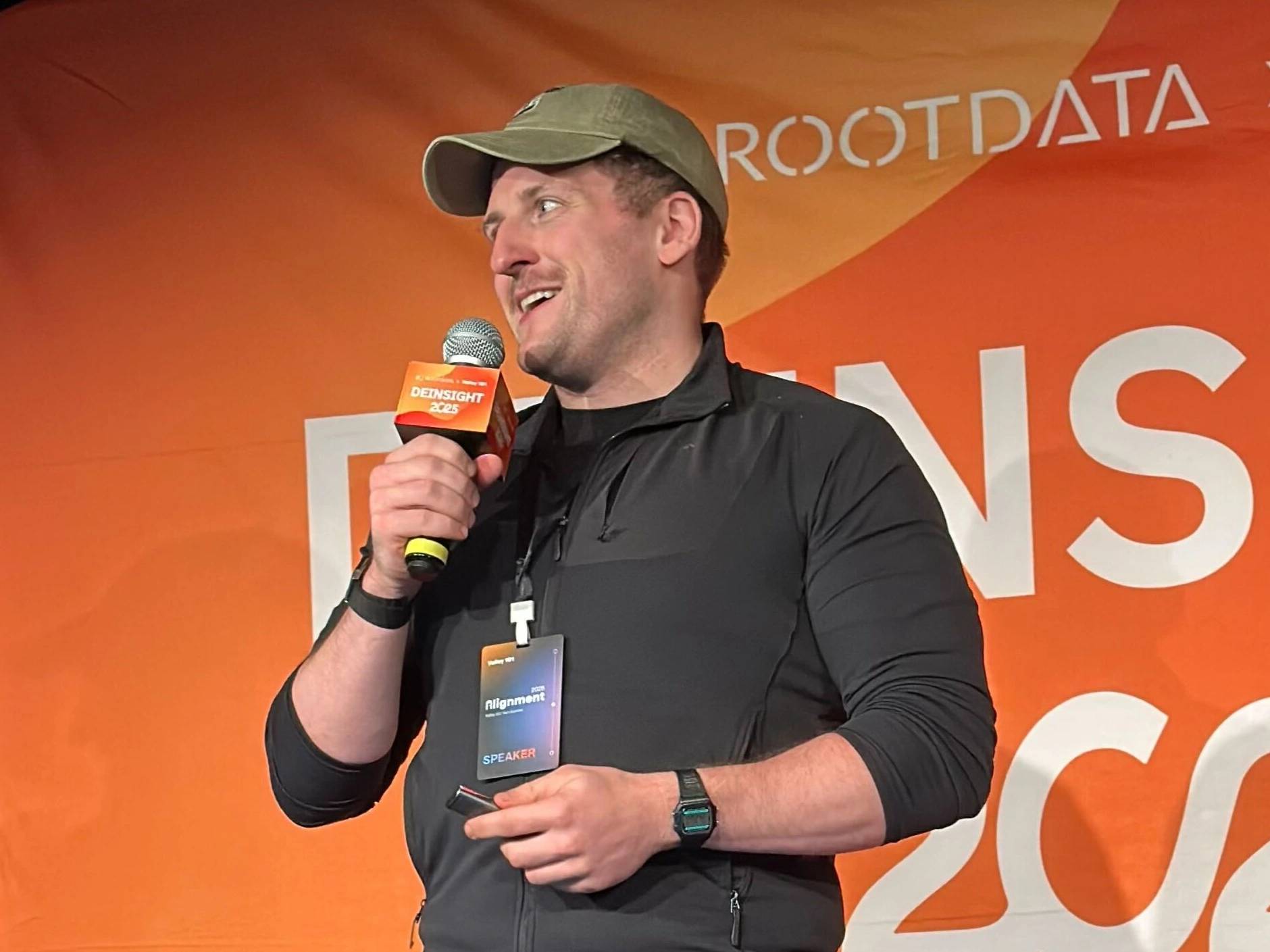
Harry Grieve is a technology entrepreneur and researcher with a background spanning artificial intelligence, data research, finance, and software development. He is the co-founder and CTO of Gensyn and previously worked as Director of Data Research at Cytora and held research and investment-related roles in the United Kingdom and United States. [6]
Education
Grieve graduated from the University of Aberdeen with a Master’s in Economics and Finance with a focus on Econometrics and Quantitative Economics in 2015. He later earned his MPA in Public Policy, Econometrics and Quantitative Economics from Brown University in 2017. [1]
Career
Grieve began his career with a Retail Banking Internship at BNP Paribas in April 2011, followed by a Market Analyst Internship at Beijing-based investment firm Beijing Joseph Investment Co. in April 2012. He later worked as a Corporate Finance Intern at Simmons & Company International in August 2013 and as a European Equities Intern at Aberdeen Asset Management from May to July 2014. From September 2012 to September 2015, he served as President of the University of Aberdeen Trading and Investment Club. He also co-founded the anonymous messaging application Storq in September 2014 and worked as a Digital Marketing Intern at Aberdeen Asset Management from May to July 2015. From August 2015 to May 2016, he undertook freelance tutoring and software development work and worked as an Analyst at Kames Capital from September 2015 to May 2016.
Grieve joined Brown University as a Graduate Research Assistant in September 2016, assisting with the direction of resources toward social ventures, and later worked as a Postgraduate Researcher at the Rhode Island Innovative Policy Lab from January to May 2017, where he developed statistical models related to food assistance programs. He joined Cytora as Director of Data Research in August 2017, leading its data research team and working on machine learning applications for commercial insurance data until February 2020. In February 2020, he joined Entrepreneur First as a cohort member and co-founded Gensyn, where he became Co-founder and CTO in March 2020. He has held that role since then and also began working as an angel investor in various companies in February 2021. [2]
Interviews
Machine Intelligence
In a March 2025 episode of the DePINed Podcast, Grieve, alongside co-founder Ben Fielding, discussed Gensyn’s approach to decentralized machine learning infrastructure. Grieve described Gensyn’s goal of connecting machine learning hardware across different devices while providing mechanisms for consistent execution, communication, and verification. The discussion examined how this infrastructure could reduce barriers to developing large language models and shift parts of the AI ecosystem toward users and infrastructure providers. Grieve also discussed Gensyn’s economic model, which uses market-based transactions to coordinate resource providers and users rather than relying primarily on token subsidies, with supply intended to respond to demand. The conversation covered the potential for a diverse ecosystem of AI models with different characteristics and biases, decentralized and modular systems similar to the structure of the internet, and increased machine-to-machine communication. Grieve and the hosts also discussed open-source development, transparency, and machine-based consensus as mechanisms for establishing trust in AI systems and reducing reliance on centralized institutions, as well as Gensyn’s efforts to collaborate with researchers and developers through partnerships and internships. [5]

Panels
AI Training
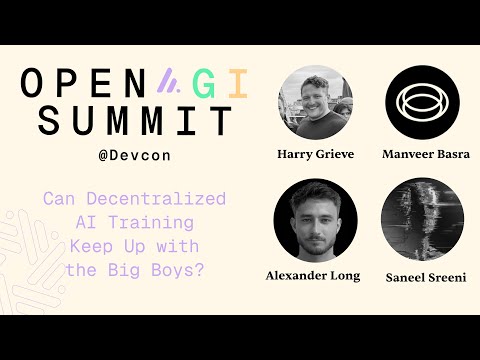
At the Open AGI Summit in November 2024, Grieve participated in a panel with Manveer Basra of Prime Intellect, Saneel Sreeni of Ritual, and Alexander Long of Pluralis, moderated by Dovey Wan of Primitive, discussing decentralized AI training and the relationship between cryptocurrency and artificial intelligence. The panel examined how decentralized AI could expand access to AI development despite skepticism from parts of the machine learning community, as well as the difficulty of recruiting senior AI researchers and the potential for open-source projects and alternative funding models to attract early-career talent. Grieve and the other panelists discussed advances in distributed training, including efforts to train large models across multiple data centers, and the technical developments required to make distributed training practical outside centralized infrastructure. They also explored model parallelism, fundamental AI research, and potential future data sources such as brain-machine interfaces, alongside the use of decentralized networks to access idle computing resources and reduce dependence on centralized hardware providers. The discussion further considered how distributed infrastructure could support collaborative and fractional ownership of large AI models, potentially allowing participants in different locations to contribute to and access large-scale AI development. [4]
See something wrong?
Social Profiles:
Blockchains: