Last updated:
Merkle Tree
A Merkle Tree is a data structure in computer science, used in blockchain technology for efficient and secure encoding of blockchain data.
Updated · 4 min read
Loading the full wiki…
Last updated:
A Merkle Tree is a data structure in computer science, used in blockchain technology for efficient and secure encoding of blockchain data.
Updated · 4 min read
Loading the full wiki…
Last updated:
A Merkle Tree is a data structure in computer science, used in blockchain technology for efficient and secure encoding of blockchain data.
Updated · 4 min read
A Merkle tree, also known as a binary hash tree, is a data structure used in computer science applications. In the context of blockchain technology, Merkle trees serve to encode blockchain data more efficiently and securely.[1]
In this wiki
Investopedia - Merkle Tree in Blockchain
Medium - Applications of the Merkle Tree Data Structure
Medium - Merkle Tree: A beginrer's guide
Phemex.com - Merkle Tree and Merkle Root Blockchain: How Bitcoin’s Algo Hashes Transactions
blockchain-council.org - What Is A Merkle Tree?
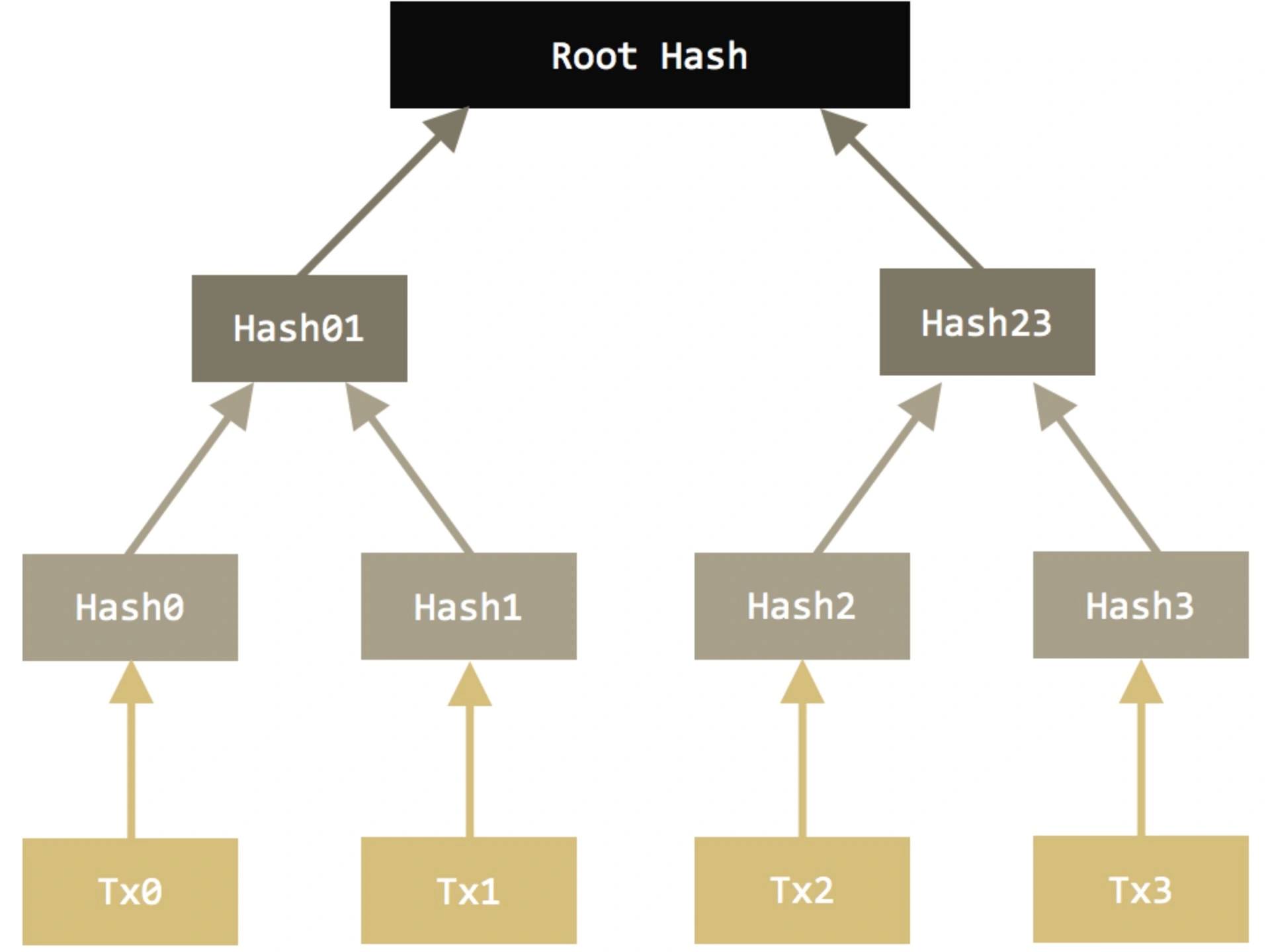
In Bitcoin’s blockchain, each transaction in a block is hashed. The transaction hashes are combined in pairs and hashed repeatedly until a single hash, the Merkle root, remains. This structure resembles a tree: the hashes at the bottom are called “leaves,” the intermediate hashes are “branches,” and the hash at the top is the “root.” When a level has an odd number of hashes, Bitcoin duplicates the final hash to form a pair.
The Merkle root is included in the block header and contributes to the block hash, but it is not itself the block hash. A change to a transaction changes the resulting Merkle root.
A user can verify that a transaction is included in a block using a Merkle proof: the sibling hashes along the path from that transaction’s leaf to the root. This allows verification without downloading the full blockchain; lightweight Simplified Payment Verification (SPV) clients use this approach.[1][4][7]
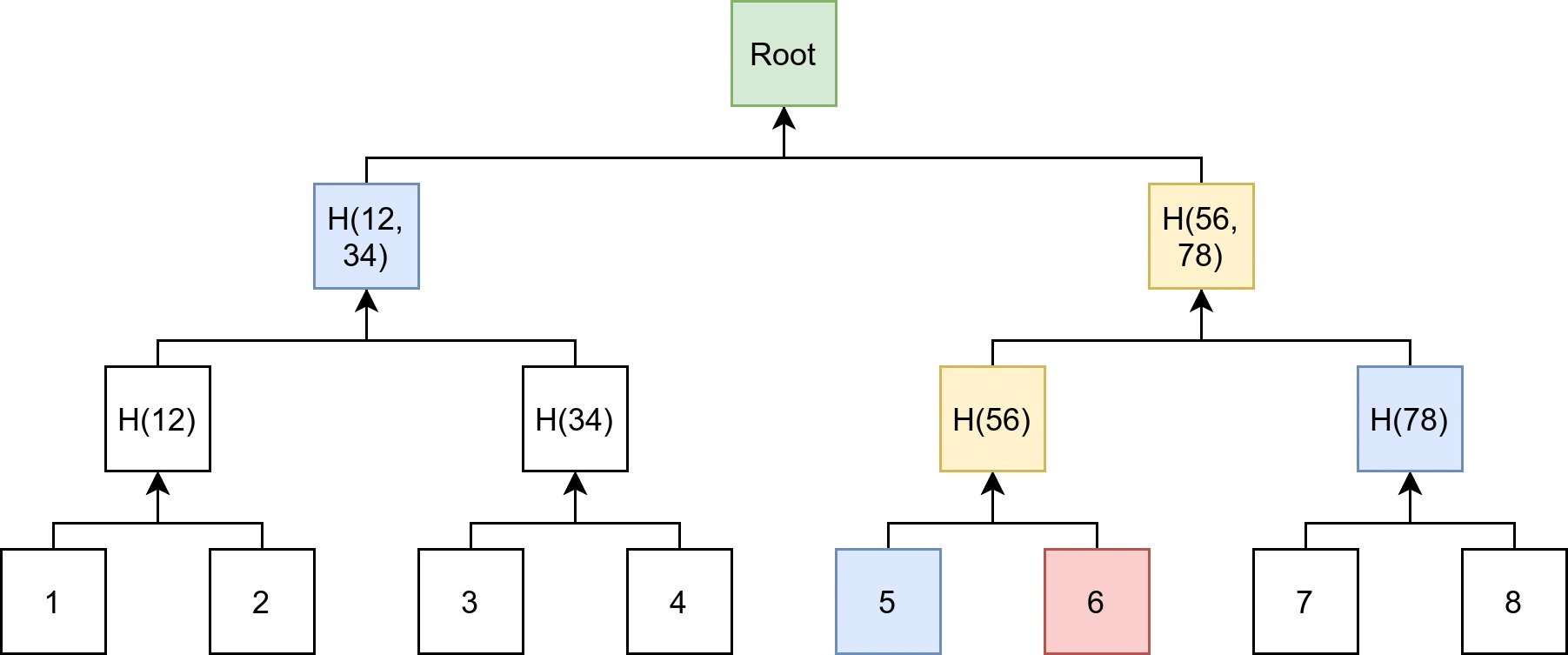
The main purpose of a Merkle tree is to verify the integrity of data. In blockchain systems, it supports efficient verification of large data sets and helps check that transactions in a block have not changed. Merkle trees do not themselves prevent double spending; transaction validity and the network’s consensus rules address that problem.[1]
The concept of a Merkle tree was proposed by Ralph Merkle in a 1987 paper titled "A Digital Signature Based on a Conventional Encryption Function". The technology behind the Merkle Tree was patented in 1989.
Before the invention of Bitcoin, cryptography was used in software development to secure data. Merkle, renowned for public-key cryptography, introduced the Merkle Tree for verifying data integrity in a peer-to-peer network. Merkle trees are now used in various applications including peer-to-peer networks, distributed systems, and blockchain technology. They are fundamental to the operation of cryptocurrencies like Bitcoin and Ethereum.[1][5][9]
Merkle trees can be designed for different data structures and purposes. Some examples are:[8]
Merkle trees are used in systems that need to verify data integrity or compare data efficiently:[2][7][10]
Some examples of Merkle tree implementations are:[7]
IQ.wiki is written by its community. Suggest an edit and an editor will review it.