0% read
Last updated:
ActionModel
ActionModel is a decentralized artificial intelligence project that aims to develop a community-owned Large Action Model (LAM). The platform is designed to execute digital tasks by interacting with graphical user interfaces (GUIs), with the goal of compensating users who contribute training data through a browser extension.[2]

Overview
ActionModel is being developed as a decentralized alternative to centralized AI systems controlled by large technology corporations. The project's foundational concept is that individuals who provide the data used to train an AI model should have a share in the value that the model creates. The system is designed to learn how to perform computer-based tasks by observing page structure through its browser extension. This approach allows the model to automate tasks across various websites and applications without requiring access to their Application Programming Interfaces (APIs).
The ecosystem's three core products are the browser extension, Actionist, and ActionFi. ActionFi offers rewards for completing online tasks on partner platforms, including discovering, testing, and engaging with digital products.[12] The project states that the model is owned by the Foundation and the Foundation is owned by $LAM token holders. It also presents contributors as earning $LAM and increasing their stake in the system by training.[12]
The project's long-term vision is to create an "automation layer of the internet" that is owned and governed by its community of contributors and users. The token is intended to serve as a utility instrument for accessing services within the ecosystem and as a governance tool, allowing holders to participate in key decisions regarding the platform's development and future direction. The ecosystem is structured to create a cycle where user contributions improve the AI, which in turn enables more powerful automation tools that can be utilized by the community.
Products
The ActionModel ecosystem is built around three core products designed for data contribution, task automation, and rewarded online tasks.[12]
ActionModel Browser Extension
The ActionModel Browser Extension serves as a tool for contributing to training the Large Action Model (LAM). Its two modes of data contribution are Passive Training, which automatically supports training, and Active Training, which allows users to intentionally record specific workflows or tasks to generate higher-quality, labeled data for complex, multi-step processes. Participants receive tokens for their contributions, reflecting a community-driven approach to AI training. ActionModel states that personal data is never collected or stored and that training learns from page structure rather than personal content.
Users can choose training settings, block websites or traffic types, and pause training at any time.[12] The extension is designed for simple installation and background operation.[2][9]
Actionist
Actionist is ActionModel’s flagship desktop application designed to automate computer-based tasks without requiring coding knowledge. It operates by controlling the user’s mouse, keyboard, and screen, allowing it to perform digital activities similar to a human user. The platform enables the creation of AI agents that execute workflows on schedules, supported by memory, history tracking, and integration with external tools.[10]
ActionFi
ActionFi rewards users for completing online tasks on partner platforms. Tasks include discovering, testing, and engaging with digital products, and the project describes ActionFi as helping train the Large Action Model while users complete tasks for digital products and companies.[12]
Core Features
- Agents & Workflows: Create specialized AI agents for departments such as marketing, sales, human resources, and operations. The workflows build or import automated tasks that agents can execute with precision.[4]
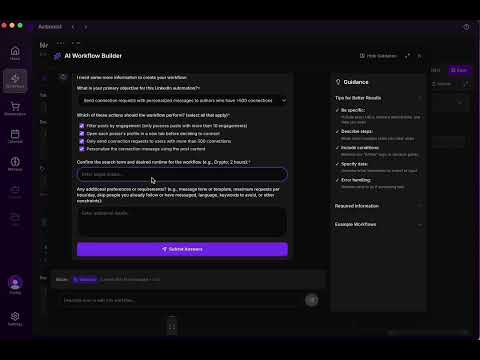
- Calendar: Schedule automations to run at designated times, functioning like shift management.[5]

- Memory: Agent Memory is a feature within ActionModel that enables AI agents to retain information and context over time. It functions as a persistent knowledge base, allowing automations to adapt based on prior interactions, user preferences, and cross-platform relationships. This capability transforms agents from performing isolated tasks to executing context-aware processes informed by accumulated knowledge.[6]
- History: Agent History is a monitoring and transparency feature within ActionModel that records and tracks every action taken by AI agents. It provides full audit trails, allowing users to review, analyze, and verify automated workflows. The system offers detailed visibility into decision-making processes, supporting debugging, performance assessment, and compliance management.[7]
- Tool Integration: Tool Integration in ActionModel allows AI agents to access and utilize a wide range of digital tools to perform complex automation tasks. These include capabilities such as web scraping, API interaction, file management, and computer vision. By connecting agents with external tools and systems, the feature enables more versatile and efficient task execution across different platforms.[8]
Use Cases
- Personal Use: The platform aims to help individuals automate routine tasks such as managing social media accounts by scheduling posts, planning and booking travel arrangements, automatically filling out online job applications, monitoring e-commerce websites for price changes, and organizing email inboxes.
- Business Use: For business applications, ActionModel is designed to handle repetitive tasks like data entry, execute complex multi-step processes that span different software platforms without APIs, and schedule recurring operational tasks to improve efficiency.
- Enterprise Use: At the enterprise level, the platform's Cloud VPC mode is intended to allow for the deployment of entire fleets of AI agents that can run continuously to perform large-scale automation, such as data processing, system monitoring, and quality assurance testing.
Architecture
The technical architecture of ActionModel is based on two proprietary concepts that govern how the AI learns and executes tasks.
The Action Loop
The Action Loop is the fundamental, cyclical process that the LAM uses to perform any given task. This process consists of four distinct steps that repeat until the final goal is achieved:
- View Screen: The AI first captures and analyzes the current state of the screen to understand the context, identify available interactive elements like buttons and form fields, and assess the overall layout of the application.
- Decide: Based on its training data and the current objective, the model determines the next optimal action to take. This could be clicking a specific button, typing text into a field, or scrolling the page.
- Action: The AI executes the chosen GUI action by directly controlling the mouse cursor or keyboard.
- Loop: After the action is performed, the system verifies the result by observing the change on the screen and then begins the cycle again from the "View Screen" step, continuing this process until the task is complete.[10]
The Action Tree
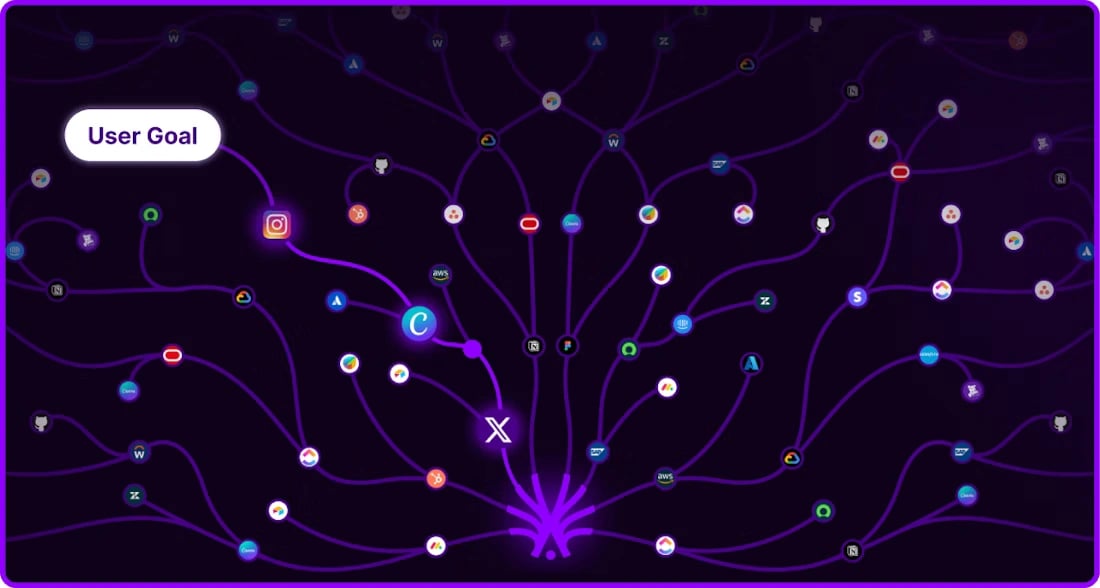
The Action Tree is a conceptual framework representing a comprehensive map of all possible user actions and workflows across the digital landscape of websites and applications. This "map" is constructed and continuously expanded through the data collected from user contributions, which are referred to as "Action Branches."
Each contribution adds a new path or refines an existing one within the tree. As more users contribute data from a diverse range of applications, the Action Tree grows larger and more detailed, which in turn enables the LAM to navigate and execute an increasingly wide variety of complex tasks with greater precision and reliability.[11][1]
Tokenomics
The native utility and governance token for the ActionModel ecosystem is designated as $LAM. The token is designed to be integral to the platform's economic model, value distribution, and decentralized governance structure.
Allocation
- Creator Distribution: 33%
- Burn: 34%
- Ecosystem: 33%[3]
Token Utilities
- Action Fuel: Every action performed by the LAM through the Actionist app is intended to consume a small amount of $LAM tokens, creating a consistent source of demand tied to platform usage.
- Training Rewards: Users who contribute data to train the model by running the browser extension are rewarded with $LAM tokens for their participation.
- Marketplace Revenue: Creators who build and sell automation workflows on the platform's Marketplace will earn their revenue in $LAM tokens.
- Governance Rights: Holding $LAM is intended to grant users voting rights on key proposals related to the platform's development, treasury management, and overall governance.
- Burn Mechanism: The tokenomics model includes a deflationary burn mechanism. A portion of the $LAM tokens used as "Action Fuel" is planned to be permanently removed from circulation, which is intended to reduce the total supply over time.[1][11]
Governance
The project's goal is to implement a decentralized governance model where holders of the $LAM token can actively participate in the decision-making process. This structure is intended to give the community of users and data contributors direct influence over the future direction of the ActionModel platform, including protocol upgrades and feature development.
See something wrong?