0% read
Last updated:
Adam Zarazinski
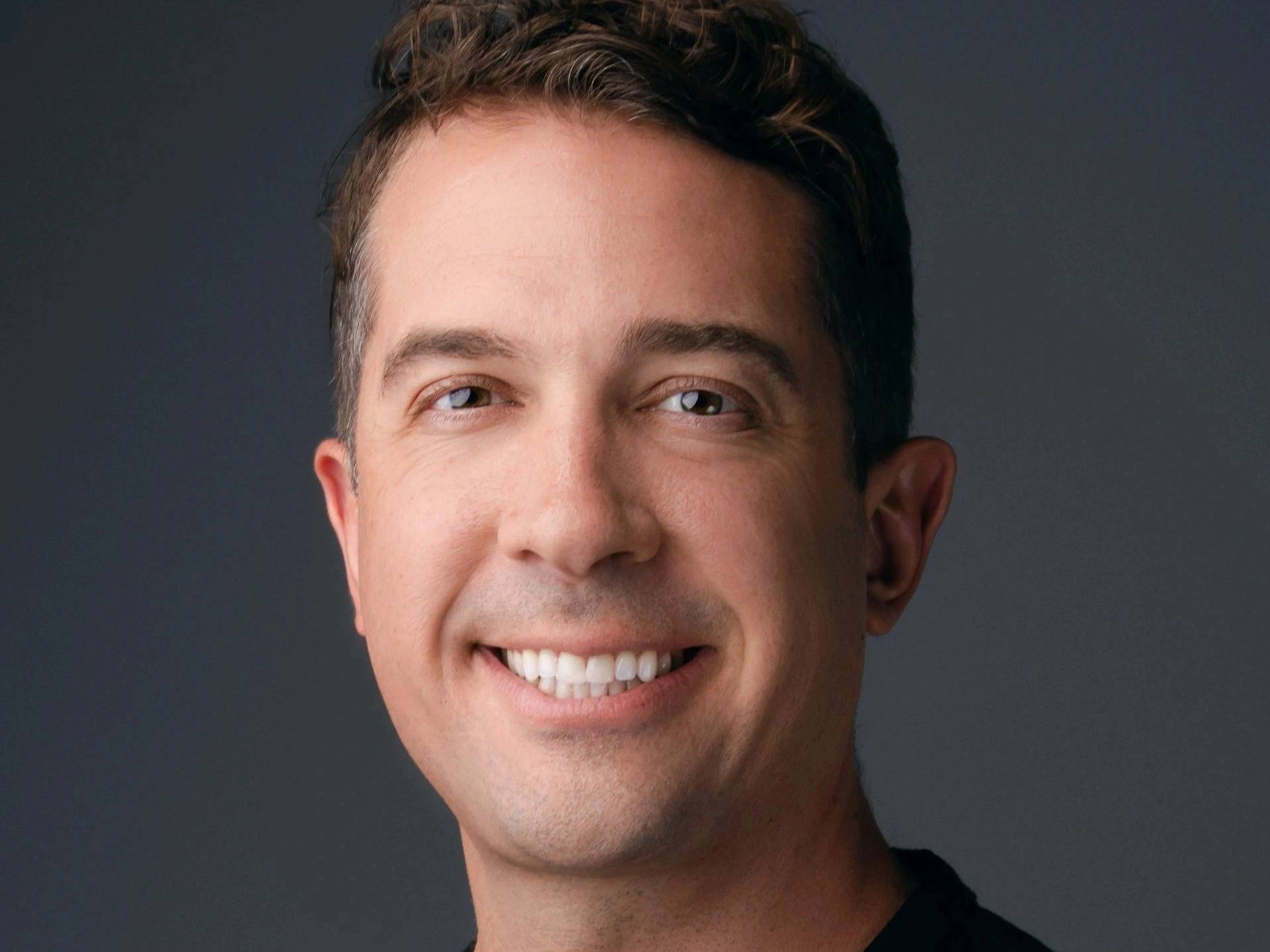
Adam Zarazinski is the CEO and founder of Inca Digital, a data analytics firm that specializes in cryptocurrency risk management, compliance, and intelligence. He is a former U.S. Air Force intelligence officer and a current Reserve Judge Advocate, drawing on his experience in national security and financial technology to advise on fintech security and digital asset market trends. [9]
Early Life and Education
Zarazinski earned a Bachelor of Arts in Political Science from DePaul University in 2007. The following year, he obtained a Master of Arts in International Relations from the University of Nottingham in the United Kingdom. Zarazinski later attended the University of Michigan Law School, graduating with a Juris Doctor (JD) in 2013. [4]
Career
U.S. Air Force
Zarazinski served for over a decade in the United States Air Force in a series of legal and operational roles. From 2014 to 2016, he was the Deputy Chief of Military Justice at Andrews Air Force Base in Maryland, where he served as a criminal prosecutor and gave counsel on more than 50 investigations in the National Capital Region and at the Pentagon.
In 2016, he was deployed to Afghanistan as an Assistant Staff Judge Advocate. In this capacity, he advised NATO commanders on matters of international humanitarian law, human rights law, rules of engagement, and Afghan national law. Upon returning to Andrews Air Force Base, he served as Chief of Operations Law from 2016 to 2019. In this role, he was the chief legal adviser to the 320th Air Expeditionary Wing, providing guidance on operations policy, homeland defense, exercise planning, and Defense Support of Civil Authorities (DSCA) operations. Since January 2020, he has continued his military service as a Reserve Judge Advocate at Andrews Air Force Base. [2] [3]
Inca Digital
In January 2020, Zarazinski became the CEO of Inca Digital, a company he founded to provide data analysis and risk intelligence for the cryptocurrency and banking sectors. The firm offers business-to-business (B2B) services to Web3 companies, cryptocurrency exchanges, financial institutions, and government agencies. Inca Digital's methodology focuses on a "top-down" approach to analytics, emphasizing proactive risk management over traditional, post-incident blockchain forensics. [2]
Atlantic Council
From July 2020 to July 2021, Zarazinski was a Millennium Fellow at the Atlantic Council, where he participated in its Millennium Leadership Program for rising leaders. He remains affiliated as an expert with the council. [2] [3]
Interviews
Global Security Threats
In a November 2024 appearance on Raoul Pal’s The Journeyman podcast, Zarazinski discussed cryptocurrency, fintech risk management, and national security implications. He described Inca Digital’s work providing B2B risk intelligence for Web3 companies, exchanges, and government agencies, emphasizing proactive risk management rather than traditional forensic analysis. Zarazinski shared his career journey from an intern at Interpol to intelligence roles in the U.S. Air Force, explaining how these experiences inform his approach to crypto risk and compliance.
The conversation explored the intersection of crypto and national security, including the potential origins of Bitcoin, the intelligence community’s view of crypto as a tool for both illicit finance and national security, and the challenges of coordinating regulation across U.S. agencies. Zarazinski expressed skepticism about the immediate need for a U.S. central bank digital currency and offered insights into how countries such as Iran and North Korea use crypto for financial resilience and illicit activity. He also addressed the future of crypto, highlighting opportunities for growth as adoption increases while noting that scams continue to pose challenges for the industry. The episode concluded with reflections on the broader potential of blockchain technology and the importance of informed engagement in the crypto space. [1]

Decoding the Genius Bill
In a September 2025 interview on Luke Mulks' The Brave Technologist podcast, Zarazinski discussed stablecoin adoption, regulatory developments, and compliance challenges in the crypto industry alongside Austin Campbell of Zero Knowledge Consulting. They examined the implications of the Genius Act, highlighting its role in aligning stablecoin regulations with government money market structures and its impact on banks and fintech firms navigating the evolving regulatory landscape. Zarazinski noted that banks entering crypto often build risk management frameworks from scratch and face challenges applying emerging technologies such as zero-knowledge proofs due to limited in-house expertise.
The discussion also addressed differences between stablecoins and central bank digital currencies, the need for practical strategies to integrate real-world assets into blockchain, and the risks of overly idealistic approaches to decentralization. Both speakers emphasized the importance of balancing regulatory compliance, technological innovation, and operational feasibility in the adoption of crypto assets by traditional financial institutions. [6]

Crypto Surveillance
In a July 2023 interview on the Galaxy Brains podcast, Zarazinski discussed cryptocurrency surveillance, fraud, and data analytics. He analyzed market conditions, including Federal Reserve interest rates, inflation, labor markets, and housing stability, and explored how these factors influenced Bitcoin pricing and broader investor sentiment. Zarazinski explained Inca Digital’s top-down approach to analytics, contrasting it with traditional blockchain forensics, and provided insights into common crypto scams, such as “Pig Butchering,” in which scammers exploit personal relationships to defraud victims.
The discussion also covered geopolitical and national security considerations, including the use of cryptocurrencies by nation-state actors and by illegal actors, as well as privacy, sanctions, and the risks posed by foreign criminal enterprises. Zarazinski addressed criticisms of blockchain analysis firms, emphasizing their role in mitigating crime and supporting legitimacy in crypto markets. He concluded with an optimistic outlook on a potential crypto bull run and the industry's transformative possibilities. [5]

Panels
Crypto Crime Uncovered
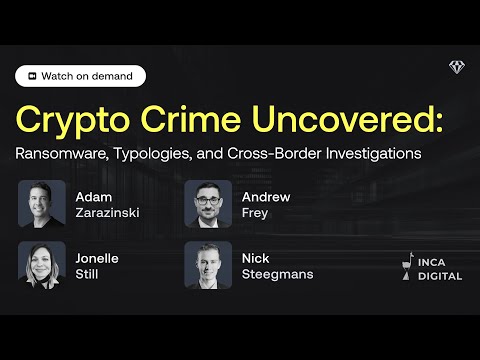
In October 2025, Zarazinski participated in a webinar hosted by Crystal Intelligence alongside Andrew Frey of the U.S. Secret Service, Jonelle Still of Mastercard, and Nick Steegmans of Crystal Intelligence. The panel examined cryptocurrency-related fraud and compliance challenges, beginning with an overview of address poisoning schemes, which were compared to email compromise tactics that misdirect users to fraudulent addresses. The discussion included an analysis of a high-profile $70 million address-poisoning incident and the use of automated scripts to conduct such attacks at scale. Panelists also reviewed case studies involving attempted fund recovery and negotiations between victims and perpetrators.
The conversation later shifted to the concept of “riskwashing,” referring to practices used to obscure exposure levels in order to evade transaction monitoring systems, and the importance of robust compliance controls. Zarazinski highlighted concerns related to Bitcoin ATMs and their association with scams and illicit activity, emphasizing the need for stronger oversight and institutional awareness. The session concluded with closing remarks and a question-and-answer segment focused on risk mitigation and vigilance in cryptocurrency compliance. [7]
Battle for Consumer Confidence
In November 2025, Zarazinski participated in a panel at the DC Fintech Summit alongside Pierre Woozevelt of AON and Dorothy Giobbe of Alston & Bird. The discussion addressed the role of artificial intelligence in compliance and fraud detection within financial institutions, with Zarazinski emphasizing that effective AI deployment depends on strong foundational data integration. The panel also examined governance frameworks for AI, highlighting the need for structured oversight to manage legal and regulatory risks.
Additional topics included investor expectations regarding cybersecurity standards in fintech, particularly the differing approaches of early-stage and later-stage investors, as well as the risks associated with “AI washing,” where companies overstate their technological capabilities. The panelists discussed best practices for communicating security breaches, stressing transparency, preparedness, and strategic messaging to maintain consumer trust. They also considered the balance between disclosing insurance coverage to reassure customers and mitigating potential security risks. The session concluded with closing remarks from the moderator. [8]

See something wrong?
Official Website:
Social Profiles: