0% read
Last updated:
Alec Radford
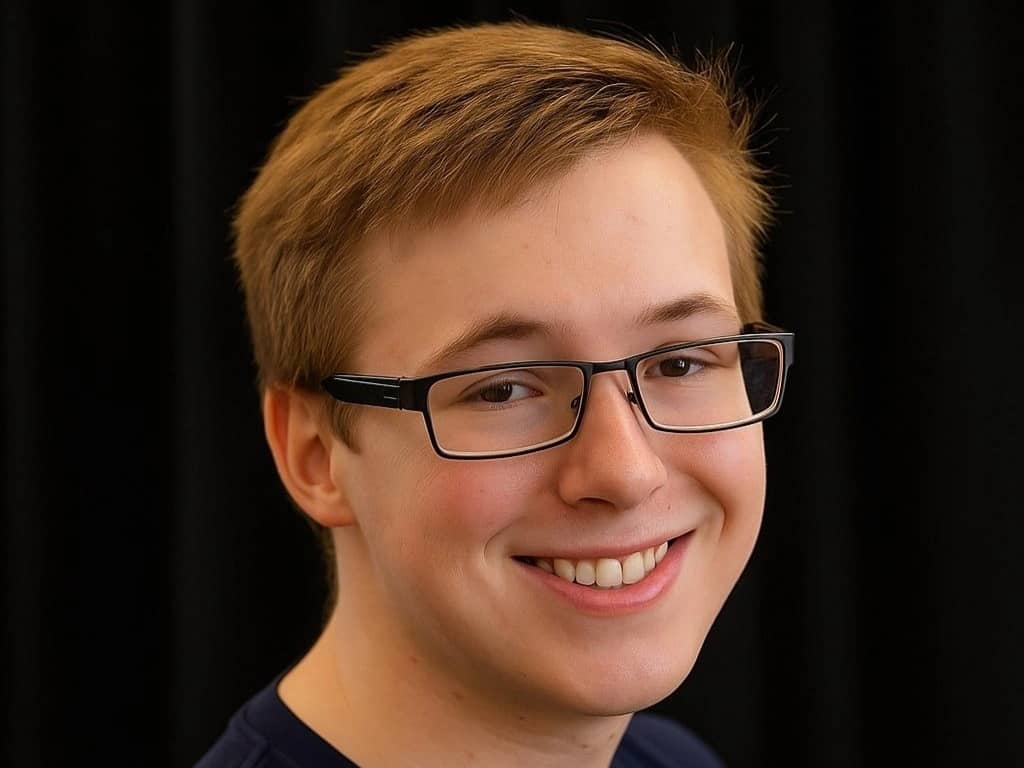
Alec Radford is an American artificial intelligence researcher recognized for his foundational contributions to generative AI. Born in April 1993, he is a central figure in the development of modern deep learning, best known for his work at OpenAI on models such as the Generative Pre-trained Transformer (GPT) series, Contrastive Language-Image Pre-training (CLIP), and Deep Convolutional Generative Adversarial Networks (DCGANs). His work has been instrumental in advancing the capabilities of transformer-based architectures and multimodal AI. Radford has been called "the father of modern generative AI" by deep learning pioneer Jeff Clune and "a genius at the level of Einstein" by OpenAI CEO Sam Altman. [1] [2]

Early Life and Education
Alec Radford was born in April 1993 and raised in the suburbs of the Dallas-Fort Worth Metroplex in Texas. His interest in technology began at a young age; with his father's assistance, he built his first computer at the age of five. From 2007 to 2011, he attended a highly competitive and academically rigorous high school in the Dallas area. During this time, he was a nationally ranked academic quiz tournament player, an Eagle Scout, a competitive runner, and an editor for his school's award-winning literary magazine. [1]
In 2011, Radford enrolled at Olin College, a small engineering institution known for its emphasis on self-directed learning. During his freshman year, he met two future collaborators: Luke Metz, with whom he would later co-author the DCGAN paper, and Slater Victoroff, his future co-founder at Indico. In August 2014, at the beginning of what would have been his senior year, Radford dropped out of college to pursue his work at Indico after the company was accepted into the Techstars accelerator program. [1]
Career
Indico
Inspired by the 2012 breakthrough of the AlexNet deep learning model, Radford co-founded the data science company Indico with Slater Victoroff in their Olin College dorm room. Other co-founders included Diana Yuan and Madison May. The early team was active in Kaggle data science competitions, and Radford served the company in an open-ended research capacity, later holding the title Head of Research around 2014. The company secured initial seed funding from Rough Draft in the spring of 2013 and was accepted into the Techstars Boston accelerator program in August 2014. By the end of 2014, Indico had raised a $3 million seed round. At an unspecified date, Radford made what was described as a "sudden and unexpected departure" from the company. [1] [3]
OpenAI
In 2016, Radford joined OpenAI as a research scientist, where he became a senior researcher and an influential, long-serving member of its research team. [3] [4] During his tenure, he was a pivotal figure in the development of many of the organization's most significant models, including the GPT series of language models, the multimodal model CLIP, the text-to-image generator DALL-E, and the speech recognition system Whisper. [2]
Radford’s departure from OpenAI was reported on December 19, 2024. At the time, his stated intention was to pursue independent research while continuing to collaborate with OpenAI and other AI developers. [4] [2]
Post-OpenAI
Following his departure from OpenAI, Radford took on an advisory role. On April 8, 2025, it was reported that he had joined Thinking Machines Lab, a new AI startup founded by former OpenAI Chief Technology Officer Mira Murati. He serves as an adviser to the company alongside Bob McGrew, another former OpenAI researcher. [2] [4]
Research and Contributions
Radford's research is characterized by a hands-on, experimental style that merges computer science with creative exploration. His work has focused on enabling neural networks to generate high-fidelity, human-like content across different modalities, including text, images, and audio. [2]
Generative Adversarial Networks (GANs)
Radford was an early innovator in the field of Generative Adversarial Networks. In 2015, he was the lead author of the paper "Unsupervised Representation Learning with Deep Convolutional Generative Adversarial Networks," which introduced DCGANs. This architecture significantly improved the stability of GAN training and the quality of the images they could produce, making it a foundational technique in image generation. [4] [5]
His early experiments in 2015 attracted wider attention. In July 2015, he posted what is believed to be the first-ever GAN-generated image to Twitter. This work caught the eye of researchers at Facebook AI Research, including Soumith Chintala, who became a mentor and co-author on the DCGAN paper. [1]
Generative Pre-trained Transformer (GPT)
Radford is a central architect of the GPT series of models. OpenAI CEO Sam Altman has credited him as the creator of "GPT-1 and onward," highlighting his foundational role. [6] In 2018, Radford was the lead author of the paper "Improving Language Understanding by Generative Pre-Training," which introduced the first GPT model. This work established the paradigm of using a two-stage process—unsupervised pre-training on a massive text corpus followed by supervised fine-tuning—that became the basis for modern large language models (LLMs). [3]
He continued to lead this line of research as the lead author of the 2019 paper "Language Models are Unsupervised Multitask Learners," which introduced GPT-2. This model demonstrated that large-scale language models could perform a wide range of tasks with no task-specific training, a capability known as "zero-shot" learning. He was also a key contributor to its successor, GPT-3. For his work on this technology, Radford is also credited as the inventor of ChatGPT, the chatbot that gained mainstream public attention following its release in November 2022. [4] [1]
Multimodal AI: CLIP and DALL-E
Radford was a key figure in OpenAI's development of multimodal models that connect text and images. He was the co-creator and primary author of CLIP (Contrastive Language-Image Pre-training), which was introduced in a 2021 paper. CLIP learns visual concepts directly from natural language supervision by predicting which caption corresponds to which image from a large dataset. This method created a robust link between text and images without needing manually curated and labeled datasets like ImageNet. The model's ability to perform zero-shot classification on a wide variety of visual tasks made it a cornerstone for subsequent multimodal AI systems. [1] [4]
Building on the principles of GPT and CLIP, Radford was also a co-author and key researcher on the team that created DALL-E, OpenAI's text-to-image generator. DALL-E demonstrated the ability to generate complex and novel imagery from simple text prompts, showing the creative potential of generative models. The combination of CLIP and DALL-E is considered a pivotal moment in the growth of text-to-image generation. [1] [3]
Whisper
In 2022, Radford led the development of Whisper, an automatic speech recognition (ASR) system. The model was trained on 680,000 hours of multilingual and multitask supervised data gathered from the web. The result was a highly accurate and robust transcription system capable of handling a wide array of languages, accents, and noisy environments. The model and its code were released open source, making state-of-the-art ASR technology widely accessible to developers and researchers. [4] [2]
Other Contributions
In addition to his work on language and vision, Radford was a co-author of the paper for Jukebox, OpenAI's music generation model, further expanding his work in generative AI to the audio domain. [1]
Legal Disputes
In March 2025, a court filing in the U.S. District Court for the Northern District of California revealed that Radford had been served a subpoena in a copyright lawsuit against OpenAI. The case, "re OpenAI ChatGPT Litigation," was filed by a group of authors including Sarah Silverman, Michael Chabon, and Paul Tremblay, who allege that OpenAI used their copyrighted works to train its AI models without permission. As a key architect of the GPT models, Radford was subpoenaed to provide a deposition and produce documents related to his work and the data used to train the models. [7]
See something wrong?
Official Website:
Social Profiles: