0% read
Last updated:
Derar Islim
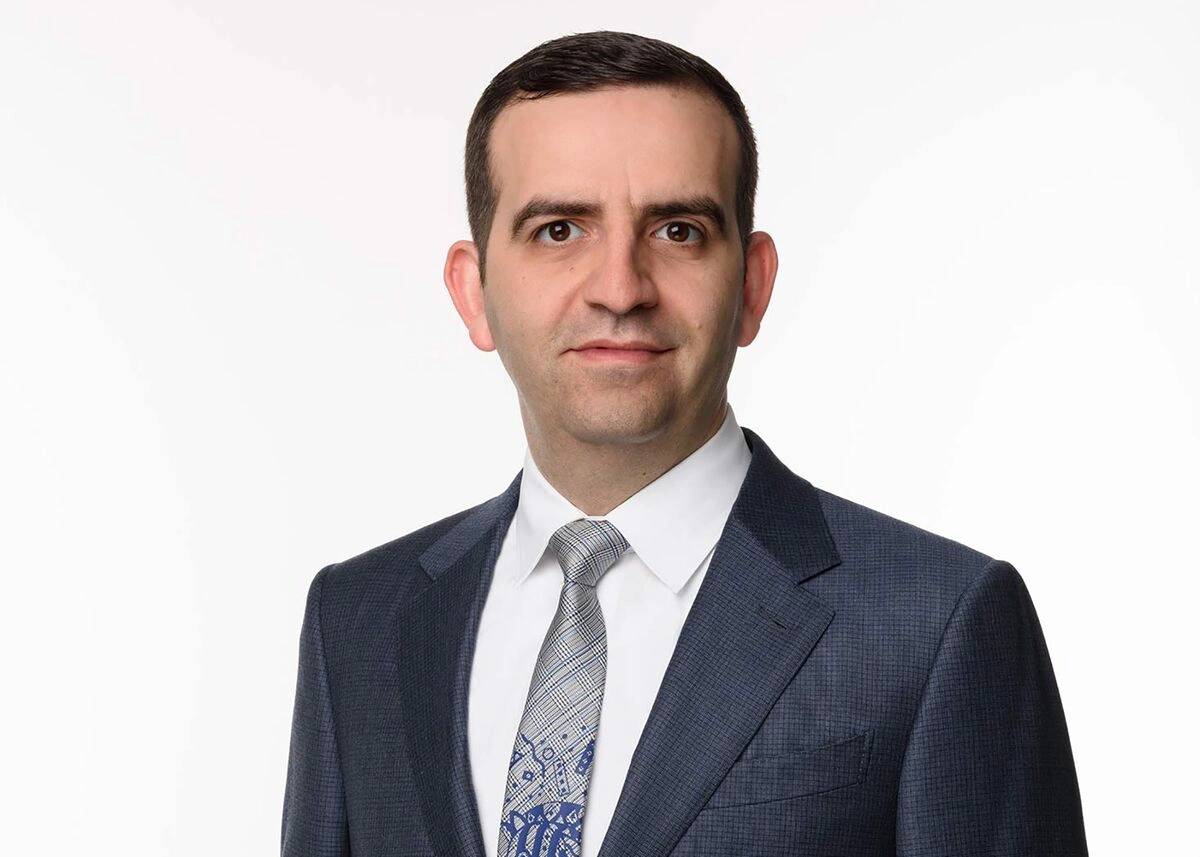
Derar Islim is a financial executive with experience in quantitative finance, risk management, and corporate strategy, focused on the digital asset and cryptocurrency industries. He has held leadership positions at crypto-focused firms, including Genesis and Antalpha, after beginning his career in quantitative roles at traditional financial institutions like Bank of America Merrill Lynch. [4]
Education
Islim earned a Bachelor of Engineering degree in Informatics Engineering and Artificial Intelligence from Aleppo University in 2007. During his undergraduate studies, he also attended the Intensive Academic English Program (CELOP) at Boston University's Center for English Language & Orientation Programs. He later attended Florida State University from 2010 to 2014, where he earned a PhD in Financial Mathematics. His doctoral research focused on methods for pricing and hedging exotic options. While at Florida State University, he also served as a teaching assistant in the mathematics department and as a research assistant, supporting coursework related to research methods, modeling, and scientific presentation. [1] [3]
Career
Islim's early career included participation in the U.S.-Middle East Partnership Initiative (MEPI) as an alumnus in 2004 and an appointment as a Fulbright Scholar from 2008 to 2010. He transitioned into quantitative finance with a quantitative internship at Bloomberg in 2011, where he focused on foreign exchange, credit derivatives, and commodities. In the summer of 2012, he was a summer associate on the quantitative rates team at Bank of America. Islim joined Bank of America Merrill Lynch full-time in 2013 and worked there until 2018. He began as a quantitative finance analyst, where he specialized in credit structured notes and derivative-linked products. He was later promoted to senior trader, a role in which he managed a Funding Valuation Adjustment (FVA) trading desk. His responsibilities included hedging multi-asset class portfolios across foreign exchange, credit, and interest rate instruments, as well as supporting the firm's pricing and risk infrastructure.
In 2018, Islim moved into the digital asset industry, joining Hard Yaka as Head of Risk. In this position, which he held until 2020, he was responsible for overseeing treasury, liquidity, and risk management for a cryptocurrency portfolio and for developing reporting and hedging frameworks for the firm.
Islim joined Genesis, a digital asset financial services firm, in 2020 as its Chief Operating Officer. He led global operations, efforts to secure regulatory licensing, organizational expansion, and product initiatives across derivatives, custody, and prime services. In 2022, he was appointed interim Chief Executive Officer and became a board member for Genesis entities. In this capacity, he guided the company through significant restructuring efforts, with responsibilities spanning governance, trading, and lending operations. In early 2024, his role shifted to that of a senior advisor, focused on operational and treasury management projects for the Genesis estate and its plan administration.
In 2025, Islim became a senior advisor to Hard Yaka Ventures, providing guidance on deposit tokens, crypto treasury management, and corporate strategy. In July 2025, he was appointed Group Chief Operating Officer of Antalpha, a publicly traded financial technology company (NASDAQ: ANTA) that provides solutions to institutional clients in the digital asset space. He also serves as the CEO for the company's Americas and EMEA regions, responsible for driving growth and operational strategy in these markets. [1] [2] [3]
PInterviews
Bitcoin in Pakistan
In a December 2025 interview with Minister Bilal Bin Saqib at Bitcoin MENA, Islim discussed Bitcoin's potential in Pakistan, highlighting its economic relevance given the country’s large youth population. The conversation covered Pakistan’s plans to innovate with digital assets, including regulatory frameworks, major exchanges, and sandbox environments to safely integrate crypto into the economy. They explored opportunities to use excess energy in Bitcoin mining and AI, turning wasted electricity into digital exports. Islim and Bilal emphasized structured regulation, phased implementation, and real-time supervision to attract investment and protect users. The discussion also noted Bitcoin’s ability to provide financial solutions, such as inflation-resistant savings and access for the unbanked. They concluded that leadership in digital assets could shift toward emerging markets, with the global south playing a key role in driving adoption and economic innovation. [8]

Panels
Future of Financing
In a November 2025 panel at Bitcoin Amsterdam, Islim joined Matt Williams, David Bailey, and Tyler Evans to discuss the evolving landscape of Bitcoin financing for miners. The panel noted that financing has become more accessible, with smaller miners increasingly using Bitcoin-backed loans and larger miners tapping a broader range of capital market options. They highlighted a significant decline in the cost of capital over the past year and the availability of diverse financing structures, including energy loans and Bitcoin-backed credit. Panelists discussed the early stages of a credit expansion cycle in Bitcoin markets, emphasizing the importance of operational health metrics in lending decisions. The conversation also explored emerging Bitcoin-denominated financial products and the potential for crypto firms to become established financial institutions. The panel concluded by stressing that treasury companies should focus on deploying and monetizing capital effectively, with expectations for further innovation in energy-related financial products and integration of Bitcoin into global financial systems. [6]

Bitcoin Service Providers
In a November 2025 Bitcoin Conference panel, Islim joined Allen Helm, Brett Reeves, and Kwon Park to discuss the role of service providers in Bitcoin custody and treasury management. The panel addressed challenges faced by treasury teams, including falling bitcoin prices and heightened stakeholder scrutiny, and emphasized that selecting reliable partners is critical to performance. They highlighted the distinctions of institutional-grade custodians, including regulatory oversight, security architecture, and asset protection strategies. The discussion also covered the importance of execution and liquidity when working with OTC partners, as well as the evaluation of lending products based on a company’s risk appetite and financial strategy. Panelists considered the trade-offs between diversifying service providers and operational efficiency, stressing due diligence and assessing providers on their reputations, compliance, and operational frameworks. The session concluded with guidance for CFOs on evaluating partners and underscored that successful Bitcoin treasury management relies on strong relationships and robust operational infrastructure. [7]

Institutional Exposure
In a September 2025 Bitcoin Conference panel, Islim joined Amanda Fabiano, Ethan Vera, and Emmanuel Montero to discuss financial products and capital formation for Bitcoin miners, with an emphasis on debt and equity financing. The panel described how miners historically relied on equity funding but began using debt structures backed by bitcoin treasuries during 2020–2021, thereby changing how mining companies access capital. They also reflected on lessons from the 2022 market downturn, particularly the risks associated with high leverage and weak collateral arrangements. The discussion noted differences between large public miners and smaller private operators, including varying preferences for bitcoin-backed lending versus infrastructure-backed loans. Panelists said smaller and mid-sized miners often face limited access to financing, which contributes to sector consolidation. They also discussed miners exploring AI-related opportunities, the continued preference for centralized finance over decentralized alternatives, and the growing importance of risk management tools such as derivatives and long-term contracting. [5]

See something wrong?