0% read
Last updated:
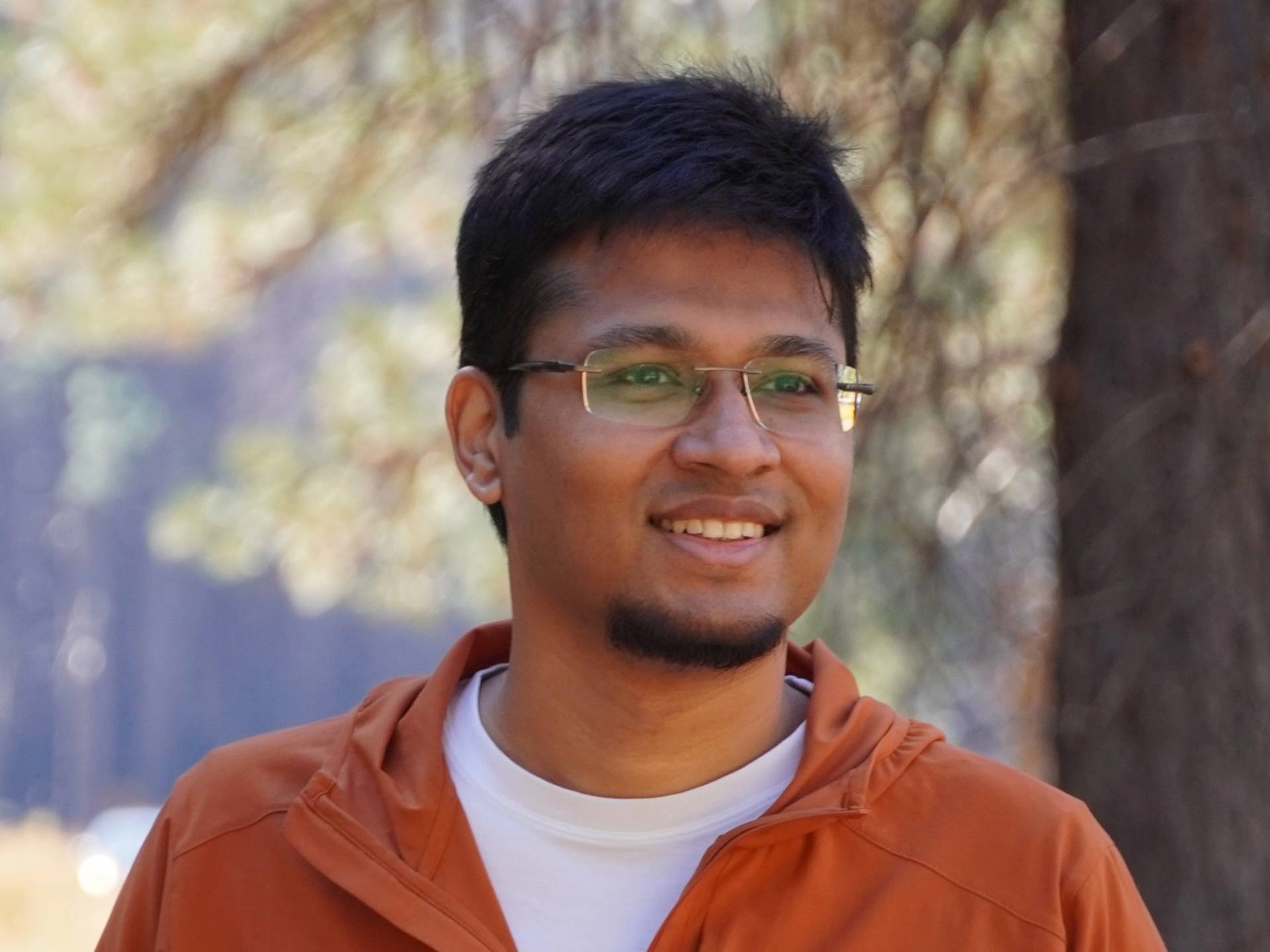
Devendra Chaplot
Devendra Singh Chaplot is an artificial intelligence researcher specializing in embodied AI, robotics, deep reinforcement learning and large language models. As of March 2026, he works at SpaceX and xAI. He previously served on the founding teams of Thinking Machines Lab and Mistral AI and was a research scientist at Facebook AI Research. His work spans autonomous navigation, multimodal models and model-training infrastructure. [1] [2] [3]
Education
Chaplot earned a B.Tech. with honours in Computer Science and Engineering from the Indian Institute of Technology Bombay in 2014, with a minor in Applied Statistics and Informatics. He subsequently completed a master’s degree in Language Technologies at Carnegie Mellon University in 2017 and a Ph.D. in Machine Learning in 2021. [3] [5] [6]
His doctoral dissertation, titled “Building Intelligent Autonomous Navigation Agents,” examined methods that enable embodied agents to perceive, map, plan and navigate through unfamiliar environments. His doctoral research involved Ruslan Salakhutdinov and Abhinav Gupta. [3] [7]
Career
Early Career and Meta AI
After graduating from IIT Bombay, Chaplot worked as a research associate at Samsung’s Software R&D Center from September 2014 to August 2015. In 2017, he completed a research internship with Apple’s Special Projects Group from June to August. [5]
Chaplot worked at Facebook AI Research as a research intern and student researcher from May 2018 to December 2020. He returned as a research scientist in April 2021 and remained at Meta AI until August 2023, conducting research in computer vision, robotics and embodied artificial intelligence. [3] [5]
Mistral AI
In August 2023, Chaplot joined Mistral AI as a research scientist and member of its founding team. He states that he contributed to the training of Mistral 7B, Mixtral 8x7B and Mistral Large, led the multimodal team behind Pixtral 12B and Pixtral Large, and established and led the company’s Palo Alto office. [3] [5]
Mistral AI announced Pixtral 12B in September 2024 and Pixtral Large in November 2024. [8] [9]
Thinking Machines Lab
In February 2025, Chaplot joined the founding team of Thinking Machines Lab, where he worked across research and product development. He helped develop Tinker, an API that allows researchers and developers to fine-tune language models while Thinking Machines manages the underlying training infrastructure. [3] [10]
In March 2026, Chaplot announced that he was leaving Thinking Machines Lab to join SpaceX and xAI. [1] [2] [3]
SpaceX and xAI
In March 2026, Chaplot announced that he had joined SpaceX and xAI to work on superintelligence and the connection between physical and digital intelligence. The move followed his work on embodied AI, multimodal models and large-scale model-training systems at Meta, Mistral AI and Thinking Machines Lab. [1] [3]
Active Neural SLAM
Chaplot was the lead author of “Learning to Explore Using Active Neural SLAM,” which introduced a modular navigation architecture combining learned mapping and policies with analytical path planning. The underlying approach contributed to the winning entry in the CVPR 2019 Habitat PointGoal Navigation Challenge. [3] [11]
Object-goal Navigation
Chaplot led the development of Goal-Oriented Semantic Exploration, a system that creates an episodic semantic map and uses learned semantic relationships to locate objects in unfamiliar environments. The system won the CVPR 2020 Habitat ObjectNav Challenge and was also transferred from simulation to a mobile robot. [3] [12]
Arnold Doom Agent
Chaplot and Guillaume Lample developed Arnold, an autonomous agent that learned to play the first-person shooter Doom using deep reinforcement learning. Arnold combined separate navigation and combat components and competed using visual observations from the game. The project received the Best Demo Award at AAAI-17, and a later version won the Full Deathmatch category of the 2017 Visual Doom AI Competition. [3] [14]
Awards and Honors
Chaplot’s awards and research distinctions include:
- Winner of the NeurIPS 2022 Habitat Rearrangement Challenge
- Winner of the CVPR 2020 Habitat ObjectNav Challenge
- Facebook Fellowship in Computer Vision, 2020
- NVIDIA Graduate Fellowship, declined
- Facebook Research Award associated with the PyRobot project
- Winner of the CVPR 2019 Habitat Navigation Challenge in the RGB and RGB-D tracks
- Best Paper Award at the CVPR 2018 Deep Learning for Visual SLAM workshop
- First place in the 2017 Visual Doom AI Competition’s Full Deathmatch category
- Best Demo Award at AAAI-17 for Arnold
See something wrong?
Official Website:
Social Profiles: