0% read
Last updated:
Fabio Frontini
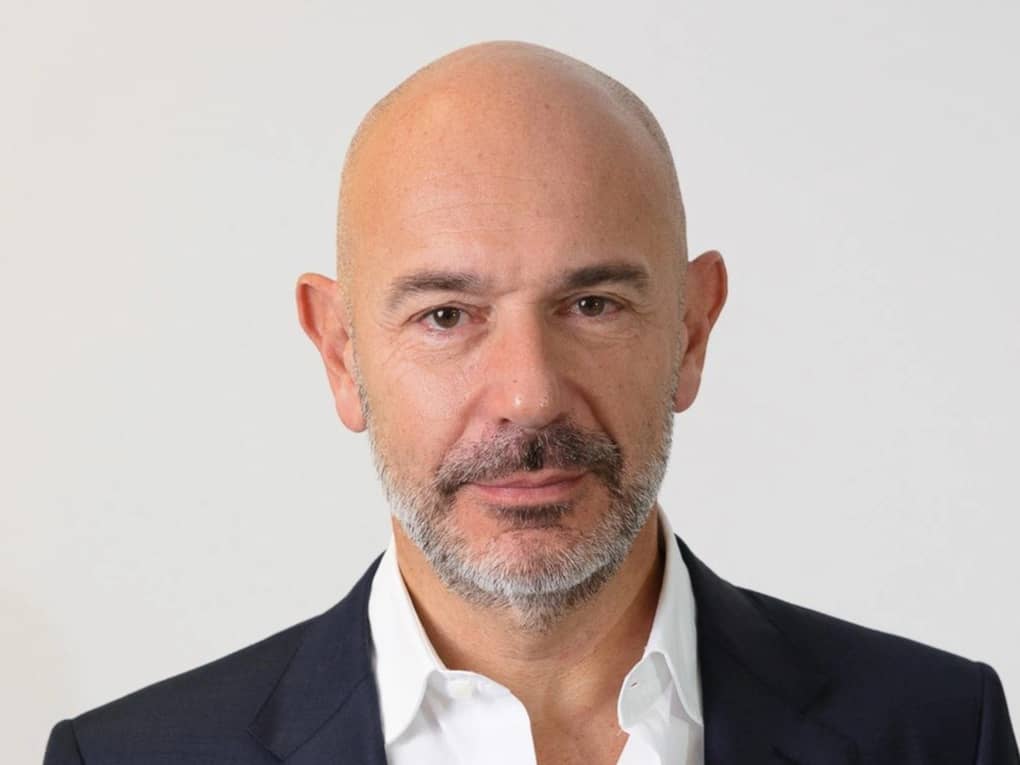
Fabio Frontini is the founder, Chief Executive Officer (CEO), and Chief Investment Officer (CIO) of Abraxas Capital Management. He is known for his work in quantitative finance, transitioning his expertise from traditional derivatives and proprietary trading at UBS, Merrill Lynch, Deutsche Bank, and Dresdner Kleinwort Wasserstein to the digital asset market. Through Abraxas, he has become an institutional figure in the cryptocurrency space, operating systematic, market-neutral funds and engaging in venture capital investments within the blockchain sector.[14][15][1][2]
Education
Frontini graduated summa cum laude in Economics from Bocconi University in Milan in 1994.[22]
Career
Early Career in Traditional Finance
Frontini began his career in the 1990s in London, gaining expertise in derivatives and proprietary trading at several major investment banks.[1] He worked as a derivatives trader at UBS and held a position in the Equity Derivatives Trading division at Merrill Lynch, where he rose to the level of Director and managed the firm's proprietary trading book in European convertible bonds, which served as a basis for later work in the cryptocurrency industry.[4][2]
His career also included a tenure at Deutsche Bank as a Managing Director and Director of European Derivatives and Relative Value Trading, where he managed a team and a proprietary trading book focused on European equity derivatives.[6][2] Prior to founding his own firm, he served as the Head of Strategic Proprietary Trading at Dresdner Kleinwort Wasserstein (DRKW) in London.[3]
Abraxas Capital Management
Frontini founded Abraxas Capital Management, a London-based investment management firm, in the early 2000s.[7][8] The firm has been authorized and regulated by the UK's Financial Conduct Authority (FCA) since 2003.[1]

Founding and Initial Strategy
As Founder, CEO, and CIO, Frontini initially established Abraxas to focus on quantitative investment strategies in traditional financial markets, such as global macro and equity long/short.[8][7] The firm developed systematic and quantitative trading models to deliver returns and preserve capital for sophisticated investors. The principals of the firm, including Frontini, are reported to be significant investors in its funds to align their interests with those of their clients.[8]
Pivot to Digital Assets
Around 2017, Frontini identified the emerging cryptocurrency market as a new frontier for applying quantitative strategies, describing it as "the new macro."[1] Abraxas strategically expanded into digital-asset management in 2017 and launched its flagship Elysium Global Arbitrage Fund in 2018.[23] In 2018, Abraxas obtained a "variation of permission" from the FCA to manage crypto funds and officially pivoted to focus on digital asset management.[1]
In a 2023 interview, Frontini said that a client’s interest in crypto prompted him to research the asset class. He studied a market-neutral strategy of buying Bitcoin on Western exchanges and selling it on Japanese exchanges, then founded Elysium in 2018 to pursue Bitcoin arbitrage. As those arbitrage opportunities narrowed, he shifted the strategy toward stablecoins, buying Tether on one exchange and selling it on another to capture the spread.[25]
Monaco Expansion
Monaco’s government authorized the formation of Abraxas Capital Management (Monaco) S.A.M. and approved its statutes on June 18, 2025; it confirmed that authorization and approval on July 24, 2025.[16][17] In an October 2026 interview, Frontini described Monaco as a key part of Abraxas’s international footprint alongside London and said the firm was developing its local organization and office and recruiting there.[14]
Fund Range and Development
Frontini manages Abraxas’s Elysium strategies.[22] Abraxas’s fund range expanded with the Alpha Bitcoin Fund in 2022, the Alpha Ethereum Fund in 2023, and the Alpha Gold Fund in 2025.[23]
Amphibian and Elysium Funds
Elysium Global Arbitrage Fund is Abraxas’s flagship digital-asset fund and a sub-fund of Heka Funds SICAV. It launched in October 2018 and pursues market-neutral, cross-market arbitrage in liquid digital assets. The strategy initially focused on Bitcoin arbitrage and later shifted toward stablecoin arbitrage, seeking to capture spreads while limiting directional exposure to cryptocurrency prices. Abraxas describes the fund’s aim as capital preservation and minimizing exposure to cryptocurrency prices and volatility.[24][25]
The 2017 date refers to Abraxas’s strategic expansion into digital assets; Elysium launched in 2018.[23][24] The “Amphibian” fund-of-funds described in The Hedge Fund Journal is a separate vehicle. The profile describes Frontini as a shareholder in the vehicle’s management-company general partner.[9]
HEKA Funds
Frontini is the Chairman of the Board of Directors for Heka Funds SICAV plc, a Malta-based digital asset investment platform regulated by the Malta Financial Services Authority (MFSA).[10] Elysium Global Arbitrage Fund launched in 2018. Abraxas and its fund administrator, NAV Fund Services, describe Elysium as the first EU-regulated digital-asset fund to receive a European license and begin operating in Europe.[23][26]
Venture Investments
Through Abraxas, Frontini has directed venture investments into several early-stage blockchain and DeFi projects. These investments include infrastructure projects like LayerZero, zkLink, and Polyhedra Network, as well as the decentralized settlement protocol Kima Network.[5][11]
Investment Philosophy
Frontini's investment philosophy is defined by the application of rigorous, systematic, and quantitative methods from traditional finance to the less efficient and more volatile cryptocurrency markets.[2]
Key tenets of his approach include:
- Market Neutrality: He emphasizes "delta neutral" strategies designed to be profitable regardless of whether the broader crypto market is rising or falling. The goal is to provide a source of returns that are uncorrelated with the performance of Bitcoin or other assets.[9]
- Volatility as an Alpha Source: Rather than viewing volatility as a risk, Frontini considers it a "raw material for alpha." His strategies are designed to be "long volatility," profiting from price fluctuations. In a 2018 interview, he stated, "An explosion in volatility is very good for us and a collapse in it is very bad for us."[7][9]
- Focus on Inefficiency: The core strategy is to extract profit from market inefficiencies, such as pricing discrepancies between exchanges, arbitrage in derivatives and futures curves, and other structural patterns unique to the crypto ecosystem.[12]
- Systematic Approach: He advocates for a data-driven, systematic approach to filter out the "huge amount of noise" in what he has described as a "retail driven market, very emotional."[5]
Frontini has described his team as "amphibians who can live in two worlds: traditional finance and crypto-assets," reflecting their dual expertise.[11] Regarding his motivation, he has said, “The intellectual challenge of figuring out the puzzle of a new asset class, and how to apply quant techniques, was the biggest motivation.”[5]
Speaking Engagements
Frontini is a regular speaker at major financial technology and cryptocurrency conferences, where he shares insights on institutional investment in digital assets. He participated as a speaker at CoinDesk's Consensus conferences in Hong Kong in 2024 and 2025.[1] At Consensus Hong Kong in February 2026, he participated in the panel “The 2026 Outlook: The Institutional Market Cycle.” He said institutions need privacy for large on-chain transactions while retaining controlled auditability, with transactions visible to authorized parties.[18] He has also presented at multiple annual conferences hosted by FinanceMalta.[4]
Media and Publications
Frontini and his firm's strategies have been featured in industry publications. An article in The Hedge Fund Journal profiled the separate “Amphibian” fund-of-funds, describing Frontini as a shareholder in its management-company general partner.[9] He also contributes articles and participates in interviews on platforms such as Binance Square and MEXC, explaining concepts like Decentralized Finance (DeFi) and the firm's investment strategies.[2][13]
Relationship with Tether
Abraxas, primarily through its Heka Funds platform, became a large institutional client of Tether, the issuer of the USDT stablecoin.[10] Frontini reportedly met Tether's CFO, Giancarlo Devasini, in 2019 and was subsequently invited to meet with Tether's banking partner, Deltec Bank, where he was shown evidence of its reserves. Following this, Frontini publicly expressed high confidence in Tether's 1:1 backing and its business model. Protos’s 2021 analysis of tracked on-chain flows through October 31, 2021, estimated that Tether sent Heka more than US$1.5 billion in USDT, about 1.5% of all USDT it tracked as distributed.[27] Separately, PANews reported in May 2025, citing Arkham data, that Heka’s trading volume over the preceding 30 days was US$564 million, ranking eighth among Tether’s major trading counterparts. This figure is trading volume, not an amount received from Tether.[28]
May 2025 Allegations
In May 2025, an article published by PANews, which cited commentary from an on-chain analyst, raised several allegations regarding the activities of Abraxas and Heka Funds. The allegations included claims of opaque transactions involving Tether, with funds allegedly flowing through complex paths to obscure their origin. The analyst also pointed to a perceived discrepancy, suggesting that Heka Funds, with a stated net asset value of €1.3 billion, had acquired $1.5 billion in USDT, an amount that appeared to exceed its reported assets. The report further suggested that Heka might function as a "shell fund" to conceal the true activities of Abraxas, noting that some of its directors and shareholders appeared in offshore data leaks.[10]
Circle Arbitration and 2026 Filings
Arbitration filings made public in July 2026 clarified the history of Heka Funds’ Circle account for Elysium. Heka opened the account in January 2022. During the March 2023 USDC depeg, it bought discounted USDC on secondary markets and redeemed it with Circle at par. Circle became concerned that the trading continued after the arbitrage spread narrowed and could be structured to benefit Tether. Testimony described Tether as Elysium’s dominant backer, with an approximately $800 million investment representing about 75% of the fund’s assets by the time of the arbitration. Circle alleged that it had not been told of Tether’s role during onboarding.[19]
Circle reduced Heka’s minting and redemption limits to zero in November 2023 and suspended the account on December 1, 2023. Heka later sought $49 million in alleged lost profits through arbitration. Arbitrator Robert L. Dondero ruled for Circle on the remaining contract claims, finding that the agreements gave Circle discretion to change limits and suspend service when it reasonably suspected manipulation; Circle was not required to prove that manipulation had occurred. The arbitrator awarded Circle $166,643.25 in expert-work costs related to a lost-profits claim Heka continued pursuing after it had been excluded. The arbitration outcome was not a finding that Heka manipulated the market. Heka denied manipulation and said it had never faced a regulatory investigation for it. Heka dropped its opposition to public filing of the award, and Circle’s petition to confirm it was unopposed at the time of the report.[19]
Lighter Incident
On November 16, 2026, Lighter temporarily paused withdrawals after a trader’s leaked API key was used to move funds through a public pool. Lighter’s postmortem attributed the key exposure to signing software outside its official SDKs that reused nonces; it said its protocol, smart contracts, and infrastructure were unaffected. Lighter reported that its Security Council returned about $5 million USDC to the affected trader and that withdrawals resumed. Bitquery traced a $10.39 million USDC withdrawal from Lighter’s Ethereum contract, while researchers estimated $15.5 million across two market-maker accounts, a total Lighter had not confirmed. Reporting and on-chain observers attributed the affected trading account to Abraxas, but Lighter did not identify the trader.[20][21] Lighter required wallet signatures for transfers to public pools and said it was adding IP allowlists, configurable API-key permissions, and market restrictions.[21]
See something wrong?