0% read
Last updated:
Jennifer Ilkiw
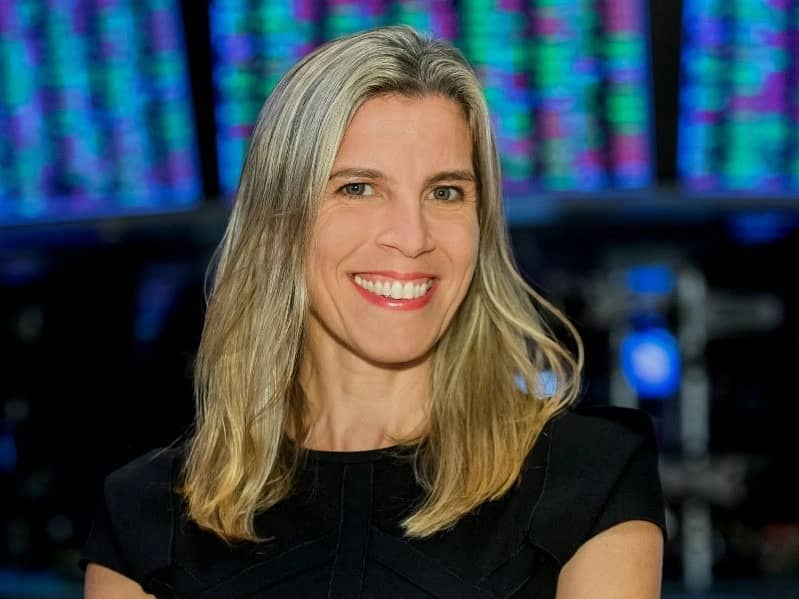
Jennifer Ilkiw is the President of ICE Futures U.S., a regulated futures exchange and a subsidiary of Intercontinental Exchange (ICE). She was appointed to the role in May 2022 after a nearly 15-year tenure in Singapore, where she was instrumental in expanding ICE's presence across the Asia-Pacific region. Her career in the commodity derivatives market began in the late 1990s and includes roles at the New York Mercantile Exchange (NYMEX) and the Monetary Authority of Singapore (MAS). [1] [2]
Education
Ilkiw earned a Bachelor of Arts degree in Economics from Queen's University in Canada, attending from 1992 to 1996. She later completed a Master of Business Administration (MBA) from the University of Toronto's Rotman School of Management between 2000 and 2002. [1] [3] [4]
Career
Jennifer Ilkiw's career in finance began in 1996 on the trading floor of the New York Mercantile Exchange (NYMEX) in New York. She described this period as a time when the floors were "boisterous and busy," an environment that drew her to the energy and pace of the markets. In 1998, she moved to Singapore with NYMEX to open and manage the exchange's Asia-Pacific office, establishing its presence in the region. [1] [5]
From May 2005 to October 2007, Ilkiw worked for the Monetary Authority of Singapore (MAS), the country's central bank and financial regulator. In her role as Manager for Commodity Derivatives, she contributed to the development of Singapore's strategy to grow into a major international hub for commodity trading. [1] [6]
Intercontinental Exchange (ICE)
Ilkiw joined Intercontinental Exchange (ICE) in November 2007 as the Head of Asia Pacific, based in Singapore. For nearly 15 years, she was responsible for ICE's sales operations and overall business affairs across the region. During this period, she established the company's first office in Asia and oversaw its expansion, managing teams in Singapore, Hong Kong, and Tokyo. [1] [7] [8]
A significant achievement during her time in Asia was her role in ICE's 2014 acquisition of the Singapore Mercantile Exchange (SMX). Ilkiw managed the acquisition and subsequent integration of SMX, which led to the creation of ICE Futures Singapore and ICE Clear Singapore. These entities became ICE's first exchange and clearinghouse in the region, solidifying the company's infrastructure in Asia. [2] [3]
Around 2018, in addition to her role at ICE, Ilkiw became the Head of Business Development in Asia for Bakkt, an ICE subsidiary focused on digital assets. She was responsible for developing business for the platform's institutional and consumer applications in the region. [3]
On May 1, 2022, Ilkiw was appointed President of ICE Futures U.S., succeeding Kenneth M. Wolk. The appointment was part of a broader leadership transition at ICE's futures exchanges. For this position, she relocated from Singapore to New York. As President, she is a member of ICE's Executive Management Team and reports to Ben Jackson, the President of ICE. Her responsibilities include overseeing the regulated futures exchange and driving growth, with a focus on areas such as cash-settled agricultural contracts and new energy products. [1] [9] [10]
Board Memberships and Affiliations
In June 2022, the Futures Industry Association (FIA) announced that Ilkiw had been elected to its Board of Governors in the primary member category. She has also served as a member of the Board of Trustees for Dulwich College in Singapore from 2020 to 2023. Previously, she was a committee member for the Financial Women's Association (FWA) of Singapore from 2003 to 2013. [4] [8]
Public Appearances and Views
Ilkiw has been featured in industry publications and has spoken at financial conferences. She has spoken at events such as Consensus: Singapore, where she discussed the relevance of Bitcoin futures in Asia. [3]
In a 2022 interview with John Lothian News, she reflected on the evolution of financial markets and her exchange's product offerings. She stated, "We’ve seen a real inflection point with our customers’ adoption of our cash-settled contracts. These contracts now represent 50% of our ags futures open interest." [5]
In an article for ICE's internal publication, she commented on the company's culture and its strategic approach to market needs:
“When you work at an exchange, you’re at the center of the network. Our value and our growth potential are tied to our ability to not just provide our customers with solutions, but to anticipate the ones they’ll need next. We look at a problem and ask ourselves whether it can be solved by helping people manage risk, and from there we identify the right way to design and launch that solution for our clients.” [11]
Interviews
Bakkt and Regulated Digital Asset Infrastructure #01
In an interview published on January 15, 2020, on the CoinMarketCap YouTube channel, Jennifer Ilkiw discussed the development of Bakkt within the context of regulated digital asset markets. Drawing on her professional experience at Intercontinental Exchange (ICE), she outlined how established financial market practices have informed the creation of digital asset infrastructure.
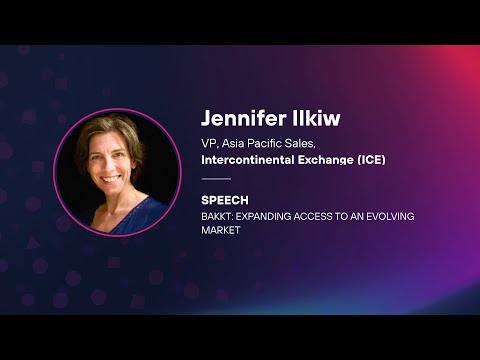
Ilkiw stated that broader adoption of digital assets depends on their usability by the general public, without requiring users to understand the technical aspects of blockchain systems. She presented accessibility and operational simplicity as structural considerations influencing adoption, rather than technological limitations.
She explained that ICE identified a lack of regulated and standardized infrastructure in digital asset markets as a constraint for wider market participation. According to her account, Bakkt was established to address this condition by operating within existing regulatory frameworks and by integrating custody, trading, and settlement services.
Ilkiw described Bakkt as comprising three primary components: a regulated custody service, derivatives markets offering physically delivered Bitcoin contracts, and a consumer-facing platform designed to aggregate various digital assets. She noted that physically delivered contracts were structured to align derivatives trading with underlying asset ownership, following models applied in traditional commodity markets.
She further outlined how ICE’s existing regulatory experience and operational infrastructure were applied to Bakkt’s risk management and compliance processes. These elements were presented as factors intended to support participation by institutions and other market participants. She also referenced plans to streamline consumer interaction with digital assets and to support merchant integration within the platform.
In addition to infrastructure-related topics, Ilkiw addressed workforce representation in finance and technology sectors. She discussed the role of education, mentorship, and early exposure to financial and technical subjects as factors influencing participation by women in digital asset and fintech fields. This perspective was presented in the context of long-term workforce development rather than as a market strategy. [12]
Cresting the Derivatives Wave #02
Jennifer Ilkiw participated in an interview on the IPO-VID In Patrick’s Opinion YouTube channel, streamed live on March 14, 2023. The conversation presents her perspectives as President of ICE Futures U.S. and focuses on her professional background and views on derivatives markets.

During the interview, Ilkiw describes her career path, including early work related to public sector institutions and commodity market development, followed by leadership roles within Intercontinental Exchange. She recounts her period working in Singapore and explains how that experience informed her understanding of Asian commodity markets and cross regional market structures. Within this context, she discusses ICE’s acquisition of the Singapore Mercantile Exchange and its role in establishing exchange and clearing operations in Asia.
Ilkiw outlines ICE’s operational approach to derivatives markets, emphasizing the role of exchanges in serving commercial participants such as producers, refiners, and financial institutions. She addresses factors such as liquidity formation, benchmark construction, and the practical limitations of extending trading hours without consistent market participation. The discussion also covers changes in global commodity benchmarks, including the coexistence of long established global references and newer regional benchmarks.
The interview further addresses developments in environmental derivatives, including carbon credits and renewable energy certificates. Ilkiw explains how these products have been incorporated into exchange offerings in response to regulatory frameworks and market demand. In closing, she comments on the function of exchanges in providing transparent and standardized market infrastructure and notes the growing use of technological tools, such as algorithmic trading, by commercial market participants. [13]
See something wrong?