Last updated:
Joystream DAO
Joystream is an ecosystem, built on blockchain-based protocol that aims to formalize a shared content platform. It has a gateway system, which allows creators ...
Updated · 6 min read
Loading the full wiki…
Last updated:
Joystream is an ecosystem, built on blockchain-based protocol that aims to formalize a shared content platform. It has a gateway system, which allows creators ...
Updated · 6 min read
Loading the full wiki…
Last updated:
Joystream is an ecosystem, built on blockchain-based protocol that aims to formalize a shared content platform. It has a gateway system, which allows creators ...
Updated · 6 min read
Joystream is a developing ecosystem, built on blockchain-based protocol that aims to formalize a shared content platform. It has a gateway system, which allows creators to build their own video- or other kind of content platforms with NFTs as an option. Joystream is operated and governed by its users, and has its own DAO governance tool. The main products at the moment are: Atlas (a gateway framework), Gleev (a video platform about web3), Pioneer (a governance platform and a forum). Joystream is currently in the testnet, with mainnet planned for December, 2022.
In this wiki
The official site of JSgenesis
JSgenesis is registered in Oslo, Norway
Blog post about launching Joystream
Constantinople incentives
Constantinople KPIs first blog post
Joystream valuation is estimated at $60 million10, with more than 30 investors, including Digital Currency Group (DCG, the parent company of CoinDesk), Hypersphere, Defi Alliance and D1 Ventures.
The startup, which has been around since 2015, was originally building atop the BitTorrent protocol. It pivoted to creating a video platform in 2018 and has been preparing for mainnet launch ever since.
11/12/2018
The Joystream project was launched by Jsgenesis (Blog post 3), JSG was created from inception to focus on the coding and system elements of the platform, while the running of the platform was entrusted to users under the motto "We are building Joystream to set it free"
21/12/2018-19/05/2020
Various testnets were launched over this time period (Mesopotamia, Sparta, Athens, Acropolis, Rome).
All incentives were directly paid in USD (XMR) for work performed on the network. This meant that none of the balances on the testnet were of much consequence.
20/05/2020
Constantinople testnet was launched (Blog post). This for the first time created the concept of tJOY and a fiat pool allowing for testnet participants to be directly incentivized by tokens on the testnet and have their incentives be impacted by the DAO and community's decisions. The network was initially backed by a pool of $2500 USD that was managed by Jsgenesis (Blog Post4).
As of early 2022, the fiat pool had increased from the intial $2500 USD to over $65,000 USD, paying out more than $93,000 USD in incentives to users.
The tJOY balances were exchangeable into USD by exchanging them for Monero and eventually Bitcoin Cash.
This release also introduced KPIs which were a set of goals for each council to work toward to gain more incentives (First KPI blog post5).
As of early 2022, the potential weekly KPI rewards had increased from $200 USD to as much as $4800 USD.
14/02/2021
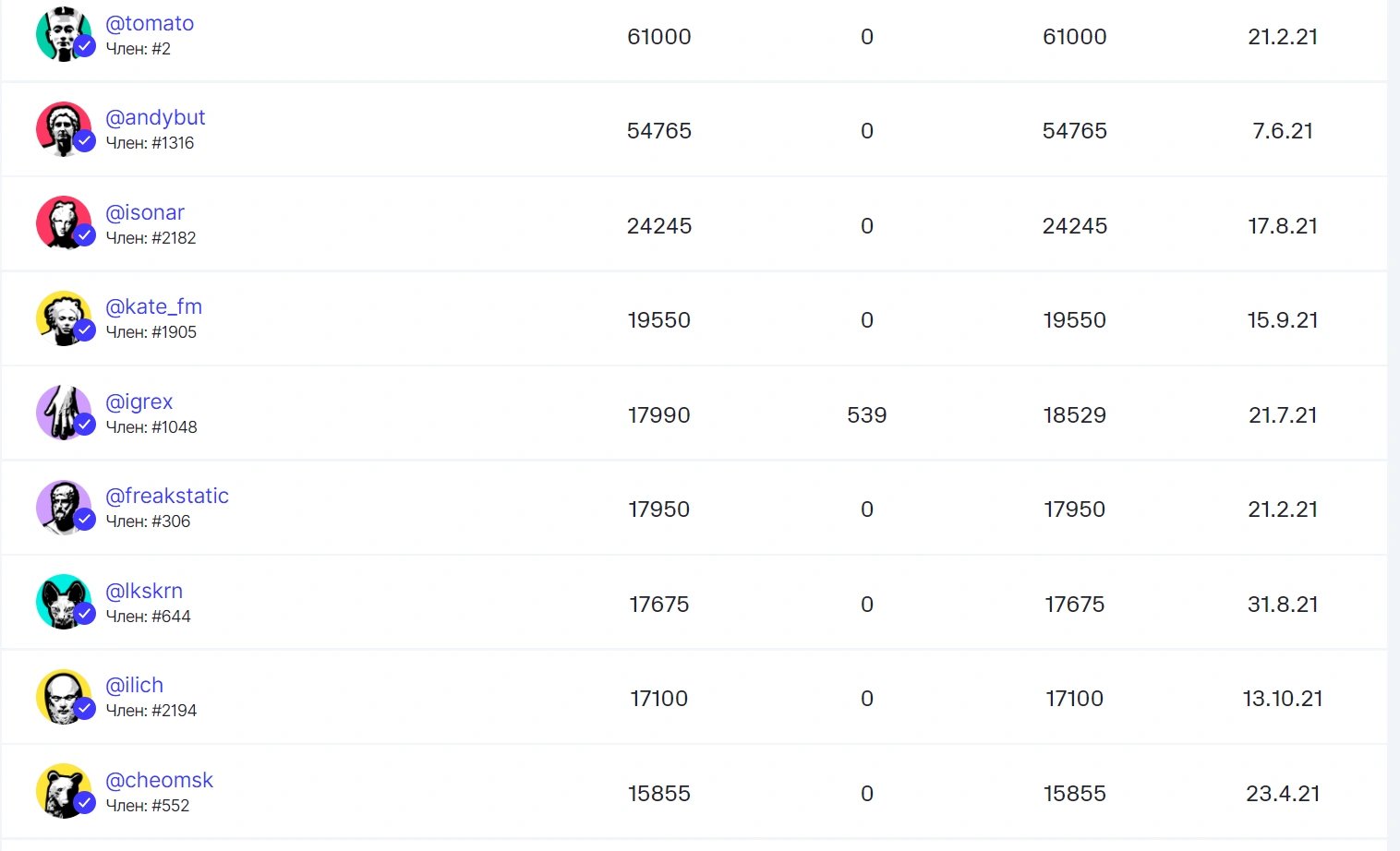
The Founding Members program was launched11. This program offered mainnet tokens to platform participants for the first time, in addition to the more immediate financial incentives available via the incentivized testnet. It was intended for this program to run up until mainnet launch of the project, however in early 2022 it was discontinued in favor of the new system.
Participating users were required to produce a document outlining their activity on the testnet which would be graded and given points, and unlike many programs within cryptocurrency projects, only gave actual allocations to those inducted as Founding Members (selected by JSG based upon the quality of their participation and contributions over time). In addition to monetary incentives, a unique hand crafted avatar was granted to every inducted Founding Member.
Atlas12 is a gateway framework, the easiest way to launch a gateway today. It’s like a software package with tooling and standards, which people in Joystream community can take as an easiest way to build their own video community.
You can customize, without coding:
Gleev14 is the video platform currently under development, run by JSgenesis. It is aimed to be specifically about web3, crypto and blockchain related topics.
Gateways are apps, built on the Joystream system. They re-use the same content, creator pool and assets as Joystream. One of the most powerful features of Web3 in Joystream is that it unlocks the ability for third party developers to build their own apps, using open source tools and APIs, and the network effect is already there. As a gateway operator, you will be able to get paid for the content and for the creators you onboard, because there will be an attribution system.
Whenever someone makes a channel with some content, the application that publishes that content will be able to buy the metadata that says that this was through app A, B or C. Then the Council will review the implicit revenue that comes from the NFT fees and the Creator token fees, and decide to subsidize the content production through payouts. So it can be a business launching an application and acquiring users and content creators.
Each gateway can have its own:
The valuation of $JOY stands at $60M USD as of the last private transactions for mainnet $JOY, subject to vesting schedules19. The initial total supply is 1,000,000,000 $JOY, with no supply cap.
The base unit is called Hapi, equivalent to Satoshis in Bitcoin. There are ten billion (10,000,000,000) Hapi in each $JOY, and hence at genesis there will be 1,000,000,000x10,000,000,000=10^19 Hapi.
There are two sources of inflation, staking rewards for validators and nominators, and the council minting new tokens out of it's budget, however both are dynamic and constrained.
IQ.wiki is written by its community. Suggest an edit and an editor will review it.