0% read
Last updated:
Katherine Dowling
Katherine Dowling is an American legal and compliance executive whose career spans investment banking, federal prosecution in economic crimes, private equity operations, and senior leadership in digital-asset management. She has held executive roles at Bitwise Asset Management and serves as president and a board member of Bitcoin Standard Treasury Company (BSTR), with prior leadership positions at Luminate Capital Partners and Thoma Bravo and more than a decade as an Assistant United States Attorney in San Francisco’s Economic Crimes Unit. [2]
Education
Dowling earned a bachelor’s degree with a dual focus in Economics and History before attending Harvard Law School, where she received a Juris Doctor (JD). [1]
Career
Dowling began her career in investment banking at Credit Suisse First Boston in 1993, where she worked as a financial analyst covering media and telecommunications transactions, including IPOs, mergers and acquisitions, and debt and equity offerings. In 1997, she worked as a summer associate at Skadden Arps and Wilson Sonsini, focusing on mergers and acquisitions and technology-related legal matters. She later joined NationsBanc Montgomery Securities and then Thomas Weisel Partners, advising clients on stock offerings, IPOs, mergers and acquisitions, venture investments, and due diligence activities.
From 2001 to 2003, Dowling worked in financial, operational, and in-house legal roles at Esprit de Corps, where she helped manage the company’s sale process, legal restructuring, contract negotiations, and post-sale wind-down operations. In 2003, she joined the United States Attorney’s Office in San Francisco as an Assistant United States Attorney in the Economic Crimes Unit. Over more than a decade, she prosecuted cases involving insider trading, Ponzi schemes, healthcare fraud, mortgage fraud, tax fraud, identity theft, organized crime, and other financial crimes, while also handling civil litigation matters in employment law and federal claims.
In 2014, Dowling joined private equity firm Thoma Bravo as a director, where she worked on co-investments, investor relations, legal compliance, and operational management. The following year, she became managing director, chief operating officer, and chief compliance officer at Luminate Capital Partners, helping establish the firm’s operational infrastructure, fundraising processes, compliance systems, and investment operations during its early growth period. In 2018, she briefly served as a senior advisor to the firm before joining True Capital Management in 2019 as part of its executive management team, investment committee, and venture capital committee.
In March 2021, Dowling joined Bitwise Asset Management as general counsel and chief compliance officer, later becoming a member of the executive management team. Her work focused on legal, compliance, and regulatory matters related to cryptocurrency investment products and digital asset management. In October 2025, she became a senior strategic advisor at Bitwise. She was also appointed president and board member of Bitcoin Standard Treasury Company, a firm focused on institutional bitcoin treasury management and bitcoin-related financial infrastructure. [3]
Interviews
Bitcoin’s Future
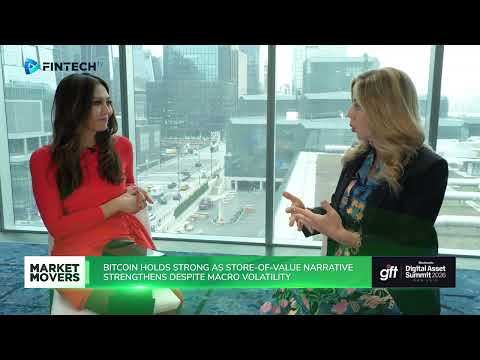
In a March 2026 interview on FintechTV, Dowling discussed the growing institutional adoption of bitcoin and broader developments in digital asset markets. She described how institutional investors were increasingly seeking infrastructure and financial products that extended beyond passive bitcoin exposure, while also noting ongoing regulatory developments involving agencies such as the SEC and CFTC that were contributing to greater regulatory clarity for the sector. Dowling stated that, despite continued market volatility and broader macroeconomic uncertainty, bitcoin was still being evaluated by some institutions as a potential store-of-value asset alongside traditional assets such as gold. She also discussed how financial institutions were adapting their operational systems and exploring partnerships involving blockchain and artificial intelligence technologies to support digital asset management and related financial services. The interview additionally examined the relationship between AI and blockchain infrastructure, with Dowling noting that both technologies were increasingly being integrated into institutional financial operations. She suggested that future developments in the sector would likely focus less on short-term price speculation and more on the operational management of digital assets, institutional infrastructure, and practical business applications involving blockchain-based financial systems. [6]
DeFi & TradFi
On The Bank Tellers Podcast in September 2025, Dowling shared her extensive background spanning finance, legal work, and federal prosecution, which uniquely positioned her for her role in the crypto industry. She recounted her decade-long experience investigating white-collar crimes, emphasizing her ability to follow the money and craft compelling storytelling, skills crucial in legal and regulatory contexts. Dowling highlighted her transition into crypto, driven by her curiosity and her early exposure to Bitcoin through David Sachs. She discussed the evolution of institutional engagement with crypto, noting that perceptions have shifted from skepticism to understanding, especially with the advent of regulated, transparent products like ETFs, which could have mitigated past crises like FTX. She emphasized the importance of clear regulation, education, and storytelling in fostering trust and bipartisan support for crypto legislation. Dowling also detailed Bitwise's role as a crypto asset manager focused on research and compliant product offerings that simplify access for institutional and retail investors alike. She underscored her team's rigorous, efficient approach to working with regulators—highlighting the importance of a small, knowledgeable team capable of clear communication—and offered advice for aspiring crypto lawyers, stressing curiosity, asking questions, and gaining practical experience. Throughout, she expressed optimism about the industry's trajectory, the regulatory progress, and the potential for innovation to reshape finance while emphasizing the importance of a regulatory framework to avoid past pitfalls. [5]

Panels
New Era of Regulation
At the BitGo High Roller Summit in May 2026, Dowling participated in a panel discussion alongside Jody Mettler, Eleanor Terrett, and Grant McCarty focused on cryptocurrency regulation and institutional adoption. The panel examined recent regulatory developments in the United States, including changes in SEC guidance and the restructuring of certain Department of Justice crypto enforcement efforts, which participants described as part of a broader shift toward a longer-term regulatory framework for digital assets. Dowling discussed her involvement in digital asset ETF approval processes and noted the growing participation of institutional firms in the cryptocurrency sector. Terrett addressed policy developments on stablecoin payment infrastructure, taxation, and federal regulatory initiatives, while McCarty discussed bipartisan legislative efforts on software developers and blockchain technologies. The discussion also covered risks associated with decentralized finance, including security vulnerabilities and the need for operational standards and compliance frameworks. Panelists additionally examined the geopolitical significance of bitcoin and blockchain infrastructure, particularly in relation to financial competitiveness and technology policy. Overall, the conversation focused on the importance of regulatory clarity, infrastructure resilience, and institutional participation in the continued development of the digital asset industry. [7]

2025 Crypto Outlook
At ETFcom’s June 2025 webinar, hosted by DJ Shaw, industry experts discussed the outlook for the cryptocurrency market in 2025. Panelists included Dowling, Sylvia Jablonski, and David LaValle. They highlighted recent volatility driven by regulatory changes, macroeconomic uncertainties, and market sentiment, which led major cryptocurrencies such as Bitcoin, Ethereum, and XRP to decline from their previous highs. Despite this, the panel noted positive shifts, including increased institutional adoption, regulatory re-examination leading to clearer frameworks, and ongoing innovation in crypto ETFs and product development. Discussions covered the potential impact of government actions, such as the proposed strategic Bitcoin reserve, the influence of the Trump administration’s stance on crypto, and the prospects for new crypto investment products, including altcoin ETFs. Experts emphasized that regulatory clarity and investor education are vital for mainstream adoption, and they observed that recent regulatory softening, including the dismissal of some lawsuits, could encourage more ETF filings and broader participation from retail and institutional investors. Overall, the panel concluded that while market volatility persisted, foundational shifts toward regulatory clarity, technological development, and strategic policy support pointed to a more stable and growth-oriented environment for crypto in the coming years. [4]

See something wrong?

Social Profiles:
Blockchains: