0% read
Last updated:
Sangmin Seo
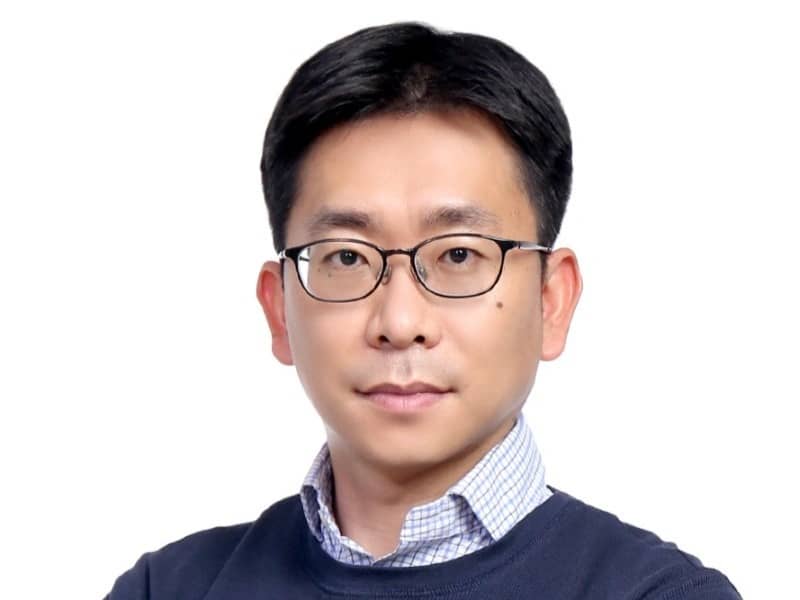
Sangmin Seo (서상민), also known as Sam Seo, is a South Korean computer scientist, blockchain executive, and the Chairman of the Kaia DLT Foundation. [1] [2] With a background in distributed systems, he played a central role in the development of the Klaytn blockchain and later orchestrated its merger with the Finschia blockchain to form Kaia. [3] Seo is a prominent figure in the Asian Web3 space, known for his strategic vision of creating an "Asian stablecoin super-app" and for his public commentary on South Korea's digital asset regulations. [4] [5]
Education
Sangmin Seo earned a Ph.D. in Computer Science and Engineering from Seoul National University. His academic research concentrated on large-scale distributed systems, data management for flash memory, query processing, and indexing in distributed environments. This technical foundation in core blockchain-related fields informed his later career in the industry. [1]
Career
Early Career
Before entering the blockchain industry, Seo worked as a researcher at SK Planet from July 2013 to June 2018. During this time, he focused on the research and development of large-scale distributed systems and data processing technologies. [1]
Ground X and Klaytn Development
In July 2018, Seo joined Ground X, the blockchain subsidiary of South Korean technology company Kakao, as the Head of Platform. In this role, he led the engineering team responsible for the development of the Klaytn blockchain platform. He was a central figure in the technical creation and launch of Klaytn from its early stages. [1] [6]
Foundation Leadership
Seo's role evolved from technical development to executive leadership within the Klaytn ecosystem. In February 2022, he became a Director at the Klaytn Foundation, a non-profit organization based in Singapore dedicated to the growth and development of the Klaytn network. By October 2022, he was appointed its Representative Director. In this capacity, he headed the foundation, focusing on protocol governance, ecosystem growth, and research into blockchain scalability and decentralization. He was the primary leader of the foundation during the period when it proposed and executed a merger with the Finschia Foundation. [1]
As of January 2024, following the merger, Seo became the Chairman of the newly formed Kaia DLT Foundation. He oversees the strategic direction of the unified Kaia blockchain, its global expansion, and its mission to drive mass Web3 adoption in Asia. [1] [3]
Key Initiatives at Kaia
As the leader of the Kaia DLT Foundation, Seo has spearheaded several significant projects aimed at establishing Kaia as a leading blockchain platform in Asia.
Klaytn-Finschia Merger
Seo was the chief architect behind the merger of the Klaytn Foundation, backed by Kakao, and the Finschia Foundation, backed by LINE Corporation. The initiative, approved in early 2024, combined two of Asia's largest public blockchain ecosystems to create the unified Kaia mainnet. The goal of the merger was to create a dominant Web3 ecosystem in Asia by leveraging the combined technology, governance, and vast user bases of both platforms, which collectively reach over 250 million users through their parent companies' applications. The new foundation was established in international financial hubs like Singapore and the Abu Dhabi Global Market (ADGM) to support its global ambitions. [3]
Mainnet Launch and "Kaia Wave" Program
Under Seo's leadership, the Kaia mainnet officially launched in mid-2024. [1] The launch was accompanied by the announcement of the "Kaia Wave," an on-chain ecosystem growth program. This initiative is designed to fund and support projects that can accelerate consumer adoption by attracting high user traffic to the Kaia network. [7]
Vision: "Asian Stablecoin Super-App"
Seo's primary strategic vision for Kaia is the creation of an "Asian stablecoin super-app." The initiative, also referred to as "Project Unify," aims to bridge the highly fragmented Web3 and digital payment markets across Asia, including Japan, South Korea, and Southeast Asia. The strategy involves using a common, trusted stablecoin, or a suite of regional stablecoins managed by an orchestration layer, as the core of a super-app. This application would integrate various services like payments, decentralized finance (DeFi), gaming, and digital identity, making them accessible to hundreds of millions of users within familiar applications like LINE Messenger. [3] [4]
Strategic Partnerships
To realize the super-app vision, the Kaia Foundation has pursued key partnerships:
- LINE NEXT: A core partner for the super-app initiative. This collaboration aims to leverage LINE's extensive user base and experience in building consumer applications to drive mass adoption of Kaia's Web3 services. [4]
- CARV: The CARV protocol, a decentralized layer for data ownership and monetization, went live on the Kaia mainnet. This integration provides users and dApps within the Kaia ecosystem with tools to manage and benefit from personal data, particularly in gaming. [8]
Public Commentary
Seo is a frequent commentator on blockchain strategy and regulation, often sharing his views through interviews and publications.
On South Korean Stablecoin Regulation
In late 2025, Seo emerged as a vocal critic of the South Korean government's proposed "bank-only" or "bank-first" regulatory framework for stablecoin issuance. He argued that the policy, which would restrict the issuance of won-denominated stablecoins to commercial banks, "lacks logic" and is a protectionist measure for the traditional financial sector rather than a technologically informed policy. [5] [9]
His key concerns included that the policy would stifle innovation by preventing Web3-native companies from developing new stablecoin models, and that South Korea would miss an opportunity to become a leader in the digital asset space by adopting an overly restrictive model. [3] In a public statement, Seo remarked:
"Labeling K-stablecoins while only allowing commercial banks to issue them lacks logic and reason." [5]
On Mass Adoption Strategy
Seo has emphasized a user-centric approach to Web3 adoption. He advocates for building "killer services" first and then bringing users on-chain, rather than expecting mainstream users to navigate the complexities of Web3 wallets and private keys from the start. He has compared this strategy to the early days of the internet. [3] In a 2024 interview, he stated:
"The killer internet services like Google and Facebook didn’t begin their stories by telling users to buy a modem and get an ISP. They began their stories with their own amazing services." [3]
Publications and Research
During his academic career at Seoul National University, Seo authored and co-authored several peer-reviewed papers on database systems and distributed data management. His notable publications include "Ftree: a direct-mapped ftl for nand flash memory" (2010), "Lazy-adaptive denormalization for flash-based databases" (2012), and "A temporal-spatial index for mobile peer-to-peer query processing" (2010). [1]
In his professional capacity, he has contributed opinion pieces and articles to industry publications such as CoinDesk, where he has written about topics like Asian stablecoin adoption and the strategic implications of different regulatory frameworks. [2]
Awards and Honors
Seo has been recognized for his academic achievements. His honors include:
- A Bronze Prize awarded by Samsung Electronics in February 2009.
- A Doctoral Fellowship from the Korea Foundation for Advanced Studies, awarded in September 2008. [1]
Interviews
Klaytn NFT Tech Stack Overview #01
This interview, published on August 22, 2021 on the Chainlink YouTube channel, presents statements by Sangmin Seo of Ground X regarding the technical structure of the Klaytn blockchain, with emphasis on its NFT-related components.
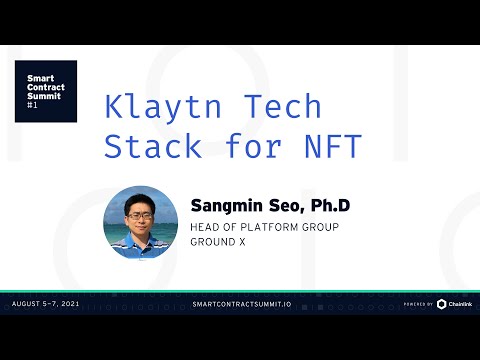
Seo describes Klaytn as an Ethereum-compatible blockchain that incorporates a consensus model based on Practical Byzantine Fault Tolerance (pBFT). According to his explanation, the network produces and finalizes blocks in approximately one second and supports transaction throughput above 4,000 transactions per second under certain conditions.
He outlines a set of token standards used within the network, including KIP-17, KIP-7, and KIP-37, which are derived from Ethereum standards such as ERC-721, ERC-20, and ERC-1155. These standards define formats for non-fungible tokens, fungible tokens, and multi-token structures within the Klaytn environment.
Seo also references development tools associated with the platform, including software development kits (SDKs) and application programming interfaces (APIs), which provide methods for interacting with smart contracts and managing digital assets. These tools support functions such as token issuance, transfer, and contract interaction.
The interview further mentions components of the broader ecosystem, including platforms for NFT creation and exchange, as well as planned integrations of external data services through oracle mechanisms. These elements are described in relation to use cases such as digital assets, in-game items, certification records, and other tokenized representations.
The content reflects Seo’s description of Klaytn’s architecture and associated infrastructure, focusing on its design and functionality within the context of NFT development. [10]
See something wrong?