0% read
Last updated:
Somnia Network
Somnia Network is a Layer 1, EVM-compatible blockchain designed to provide high-performance and low-cost infrastructure for mass-consumer and real-time decentralized applications (dApps). The network aims to support a "fully onchain world" where complex applications such as metaverses, on-chain games, and social media platforms can operate with all their data and logic stored on the blockchain. [1] [2]
Compare Cryptoassets
Select an asset to compare its price and other stats against Somnia Network.
Overview
Somnia Network was developed to address the scalability and cost limitations of existing blockchains, which often hinder the creation of large-scale consumer applications.
The project's primary goal is to provide the foundational infrastructure for applications that require real-time interaction and a high volume of transactions, such as those catering to millions of users simultaneously. The core technology is engineered to enable sub-cent transaction fees and a high throughput capacity, making it viable for applications that have traditionally relied on off-chain components. [1] [2]
The project is developed by Improbable, a company specializing in virtual world technology, and is also supported by MSquared. The Somnia mainnet is live, and the ecosystem provides resources for developers to build and deploy smart contracts. The network's design focuses on enabling new types of dApps, particularly those that can react instantly to on-chain events, a concept the project refers to as a "Reactive Blockchain." [2]
Technology
Somnia's architecture is built to support high-demand applications by combining a custom database, a unique consensus approach, and specialized developer tools. The entire stack is designed to maintain EVM compatibility, allowing developers from the Ethereum ecosystem to migrate and build on Somnia with familiar tools and languages. [1] [2]
Architecture and Core Components
The foundation of Somnia Network is a Layer 1 blockchain that is compatible with the Ethereum Virtual Machine (EVM). However, it enhances standard EVM execution by compiling EVM bytecode to improve processing speed. This approach aims to provide superior performance while retaining the benefits of the established Ethereum developer ecosystem. [1]
A key component of the network's technology stack is a custom, high-performance database named "IceDB." This proprietary database is cited as a significant factor in the network's ability to offer low transaction fees and more stable, predictable gas pricing.
By optimizing data storage and retrieval, IceDB helps the network handle large volumes of on-chain data efficiently. The network also utilizes a "multi-stream consensus" mechanism, although specific technical details of its implementation are not extensively documented in the provided materials. [1]
Reactive Blockchain Model
A distinguishing feature of Somnia is its "Reactive Blockchain" design. This model enables applications to react in real-time to on-chain data changes and events. This is facilitated through a set of specialized developer primitives that are integrated into the network's core framework.
This reactive capability is intended to support a new class of dApps that require immediate responses to user actions or external data triggers, moving beyond the traditionally passive nature of many blockchain applications. [1]
Developer Primitives
To enable the construction of reactive applications, Somnia introduces novel extensions and tools for developers.
Somnia Data Streams
Somnia Data Streams are a core developer primitive designed specifically for building real-time on-chain applications. This feature allows for the continuous flow and processing of data within the blockchain environment, which is essential for use cases like live-updating games or real-time social feeds.
A mini-hackathon was held to encourage developers to experiment with and build using this feature. [1]
Reactive Primitives
Complementing the data streams, Somnia offers "Reactive Primitives" as extensions to the Solidity programming language. These primitives allow developers to natively implement reactive logic within their smart contracts, simplifying the process of creating applications that can automatically respond to on-chain events without complex external infrastructure. [1]
Performance and Scalability
Somnia Network makes significant claims regarding its performance, positioning itself as a platform capable of handling mass-market consumer traffic. These metrics are central to its value proposition for powering on-chain metaverses and games. [2]
- Transaction Throughput: The network claims a capacity of processing over 1 million transactions per second (TPS). This high throughput is designed to support a large number of concurrent users and interactions. [1] [2]
- Transaction Finality: Transactions on the Somnia Network are reported to achieve sub-second finality, ensuring that user actions are confirmed almost instantly. [2]
- Transaction Cost: The architecture, particularly the use of IceDB, is designed to enable sub-cent transaction fees, making microtransactions feasible for gaming and social applications. [1]
Ecosystem and Use Cases
Somnia is designed to support a new generation of dApps where all logic and data can reside entirely on-chain. This approach aims to enhance transparency, user ownership, and composability. [1]
Targeted Applications
- SocialFi: The network provides an infrastructure for building fully on-chain social networks. This allows for greater user data sovereignty and transparent, community-governed algorithmic feeds.
- On-chain Gaming: Somnia aims to host games where all game state and logic are managed on the blockchain. This enables true ownership of in-game assets and allows for greater interoperability and composability between different games and experiences.
- Metaverses: The platform is built to support fully on-chain metaverses with extensive user-generated content (UGC) and self-contained digital economies, capable of handling the high transaction load of a persistent virtual world.
These use cases are supported by the network's high-performance infrastructure. [1]
Reactive dApps
The reactive capabilities of the Somnia Network are intended to enable specific types of applications that are difficult to implement on other blockchains.
- Real-time Prediction Markets: Markets that can update odds and settle outcomes instantly based on verifiable on-chain events or data feeds.
- Real-time Consumer Targeting: Systems that can deliver targeted content or offers to users based on their immediate on-chain actions and interactions.
Integrations
To expand its ecosystem, Somnia has established integrations with other projects. An integration with Gearbox Protocol was established to bring composable leverage capabilities to applications building on the Somnia Network, enhancing the potential for decentralized finance (DeFi) functionalities within its ecosystem. [1]
Developer Ecosystem
Somnia Network has launched several initiatives and provides resources to attract and support developers. The project fosters a community of builders through events, grants, and accessible testnet tools. [1] [2]
Initiatives and Community
- Dreamathon: An initiative designed to encourage and support the development of new projects on the Somnia Network.
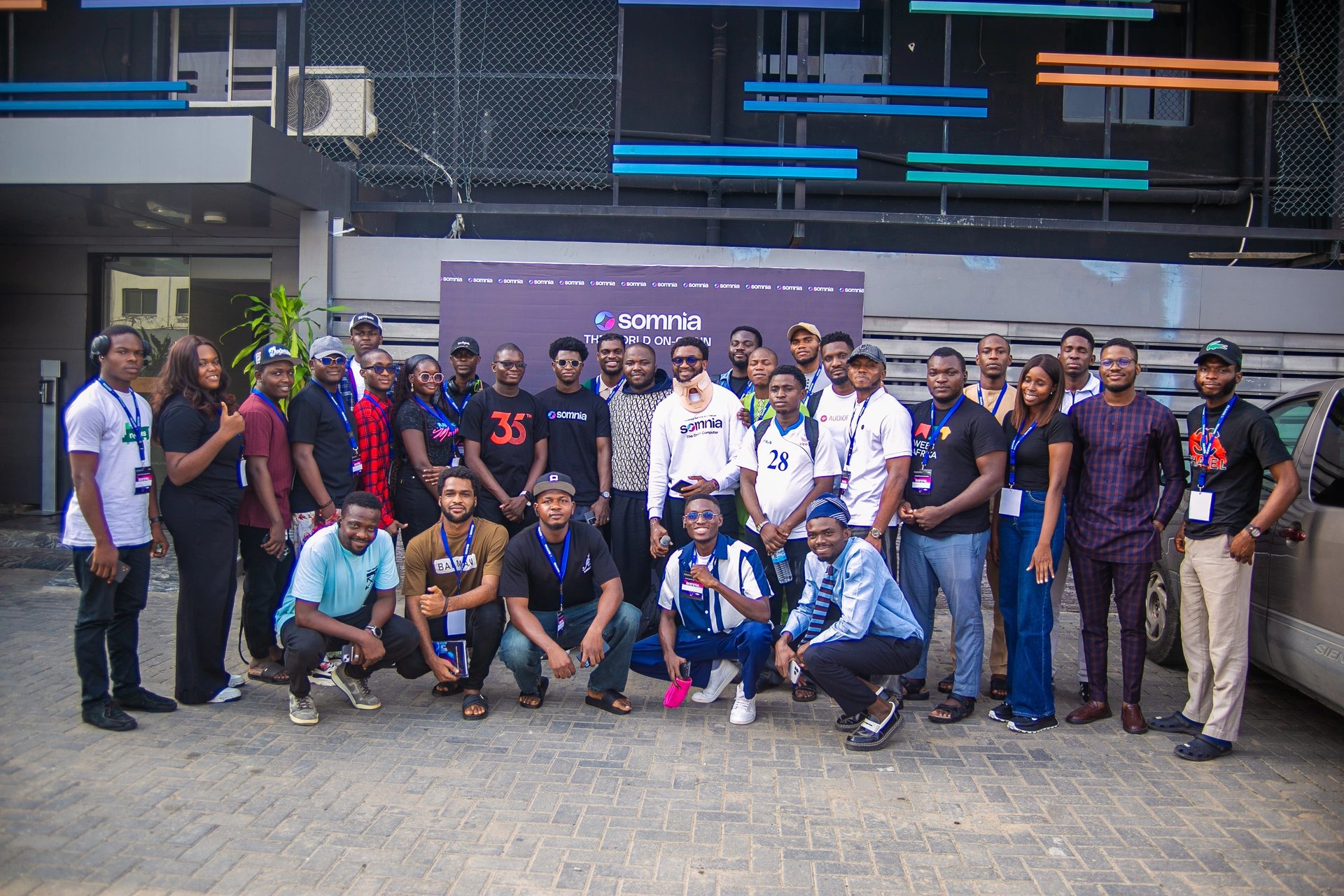
- Somnia DevCircle: A dedicated community for builders and developers. A launch event for the DevCircle was held in Lagos, Nigeria.
- Grants Program: A program that offers funding and support to developers and teams building applications within the Somnia ecosystem.
- Community Platforms: The project engages its community through various platforms and programs, including Quest, Yapstorm, and a Liquidity Points system.
These programs are part of the network's strategy to grow its base of developers and applications. [1]
See something wrong?
Official Website:
Social Profiles: