0% read
Last updated:
Andrew Tulloch
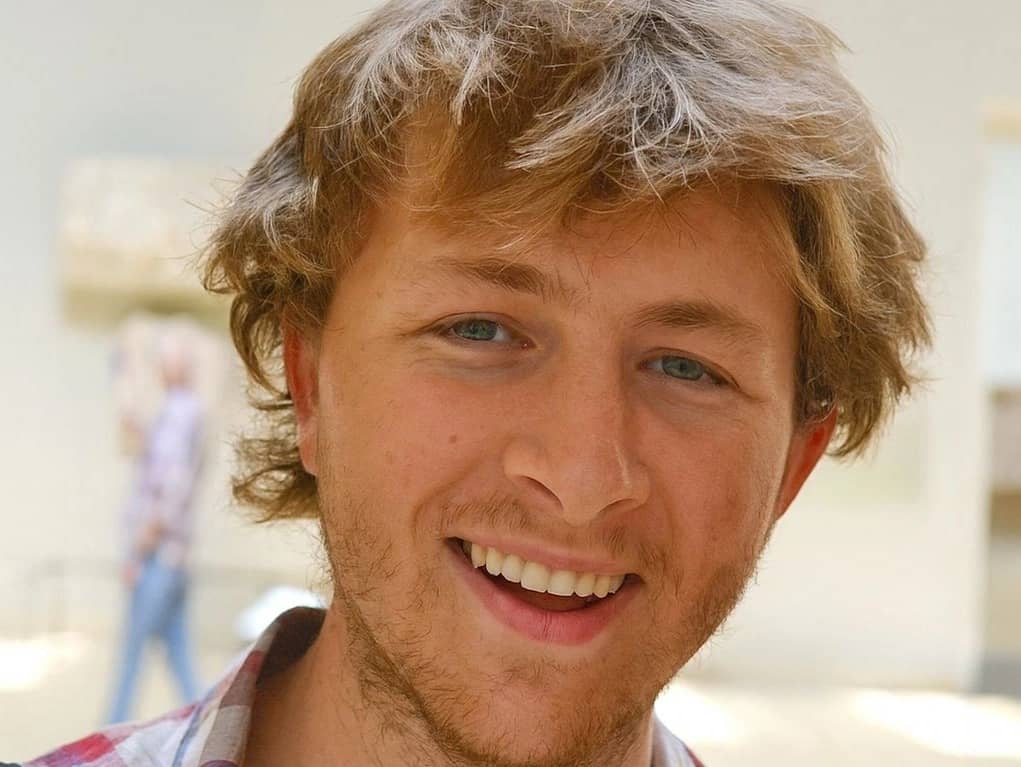
Andrew Tulloch is an artificial intelligence and machine learning engineer and researcher, known as a co-founder of the AI startup Thinking Machines Lab.[12][8] He has held research positions at several prominent technology organizations, including Meta and OpenAI. In late 2024 he co-founded Thinking Machines Lab, rejoined Meta in October 2025 after leaving the startup to work in its TBD Lab within Meta Superintelligence Labs, and left Meta in September 2026 to join Anthropic. At Anthropic, he works on the company’s inference and performance team.[9][10][3][2][7][8]
Education
Tulloch grew up in Perth, Australia, before studying mathematics at the University of Sydney and the University of Cambridge.[12][8]
Andrew Tulloch completed his undergraduate studies at the University of Sydney from 2007 to 2011, where he earned a Bachelor of Science in Advanced Mathematics with a focus on Mathematics and Statistics. He graduated with First Class Honours and was awarded the University Medal, an honor given to the top honours student in the Faculty of Science. Additionally, he received the Science Achievement prize for attaining the highest GPA in the faculty.[5]
Following his undergraduate degree, Tulloch attended the University of Cambridge from 2013 to 2014. There, he obtained a Master of Mathematical Statistics, specializing in Statistics and Machine Learning. He completed Part III of the Mathematical Tripos at Trinity College and graduated with Distinction, the highest possible grade. For his academic performance, he was awarded a prize from Trinity College for achieving the top grade in his examinations.[5]
Career
Goldman Sachs
From November 2010 to February 2012, Tulloch worked as a Strategist at Goldman Sachs in Sydney, Australia. In this role, he developed and structured financial products and derivatives across foreign exchange, commodities, and credit asset classes. He also used statistical and econometric techniques to detect opportunities and develop statistical arbitrage trading strategies across cash equity, equity derivatives, and credit derivatives.[5]
Early Career at Meta and OpenAI
Andrew Tulloch's career has been centered on the development and deployment of large-scale artificial intelligence and machine learning systems. His early work included a role as a researcher at Facebook's AI Research Group, which is now part of Meta. During this time, he was involved in building machine learning systems for the company.[5] According to his personal website, he has worked on machine learning systems at Meta and helped train GPT-4o, GPT-4.5, and o3 at OpenAI.[12] He also worked as a researcher at OpenAI, further establishing his expertise in the field. His technical skills include developing training pipelines, inference systems, and applied machine learning, with a focus on moving AI models from research concepts to large-scale production environments.[1]
Research and Contributions
At Meta, Tulloch worked on large-scale machine learning systems, including recommendation models and inference infrastructure used in production environments.[5][12] His work there focused on scaling training pipelines and deploying research models into high-throughput services.[12]
According to his personal website, Tulloch later contributed at OpenAI to the training of GPT-4o, GPT-4.5, and o3, working on the underlying training and inference systems for these large models.[12] His published research includes work on large-scale stochastic gradient descent for ImageNet, deep learning inference in data centers, and low-precision or mixed-precision training and inference methods for neural networks.[12]
Thinking Machines Lab
In late 2024, Tulloch co-founded the AI startup Thinking Machines Lab alongside Mira Murati, the former Chief Technology Officer of OpenAI. The company focused on creating a platform for fine-tuning open AI models. Tulloch's tenure at the startup was brief; on October 10, 2025, he announced to his colleagues that he was leaving the company. A spokesperson for Thinking Machines Lab confirmed his departure, stating that Tulloch had "decided to pursue a different path for personal reasons."[1][4]
Return to Meta
Shortly after his departure from Thinking Machines Lab, it was reported in October 2025 that Tulloch was rejoining Meta.[6] His hiring was described in media coverage as part of a broader, aggressive recruitment effort by Meta CEO Mark Zuckerberg to secure leading AI talent.[6][1] Because Tulloch had previously worked at Meta building machine learning systems, the move was characterized as a reunion as well as a new start.[1] Reports indicated that Meta had previously attempted to acquire Thinking Machines Lab and, after the attempt failed, approached Tulloch directly for a position.[3][11] His return placed him in Meta’s TBD Lab, described as a small team central to Zuckerberg’s AI strategy within Meta Superintelligence Labs, which was led by Scale AI founder Alexandr Wang.[9][10]
Media reports described his return to Meta as a significant move that underscored the value of his experience deploying research-grade AI at large scale, particularly for recommendation systems and generative AI assistants.[1][10] According to Semafor and The Times of India, Tulloch postponed his resignation until Meta announced Muse in early September 2026, a personal AI agent for mainstream users built on a new family of open-source AI models.[9][10] Tulloch left Meta in September 2026, less than a year after this return.[9][7]
Move to Anthropic
In September 2026, reports indicated that Andrew Tulloch was leaving Meta after less than a year to join Anthropic.[9][7][8] An Anthropic spokesperson stated that he would start in September 2026 and work on the company’s inference and performance team, focusing on optimizing the training of Anthropic’s AI models and how efficiently users can access them.[7][8] Coverage of the move described Tulloch as one of the most sought-after AI researchers, reflecting industry interest in his expertise in large-scale AI systems.[7][8]
Business Insider described Tulloch as one of the most sought-after AI researchers, while Calcalistech wrote that he was considered one of the most prominent researchers in his field, and The Times of India referred to him as one of Meta’s “most famous” AI researchers.[7][11][10] These outlets framed his exit from Meta after less than a year as part of a broader reshuffling of senior AI talent among major technology companies and research labs.[11][10]
Reported Compensation Package (Meta)
In August 2025, prior to Tulloch's official move to Meta, The Wall Street Journal reported on Meta's recruitment efforts. The report claimed that as part of the attempt to hire him, Tulloch was offered a compensation package potentially valued at up to $1.5 billion over a minimum of six years.[3] This figure drew significant media attention and highlighted the intense competition for top-tier AI talent in the technology industry. Calcalistech later wrote that Tulloch initially turned down this reported offer before deciding to join Meta several months afterward, without disclosing any revised terms.[11]
Following the publication of these details, Meta publicly disputed the reported value of the offer. A spokesperson for the company described the characterization of the compensation package as "inaccurate and ridiculous." Another statement from Meta referred to the reported $1.5 billion figure as simply "ridiculous," indicating a significant disagreement over the actual terms of the compensation agreement.[3] The specific details of Tulloch's final compensation package upon joining Meta were not publicly disclosed.
See something wrong?