0% read
Last updated:
Jiahui Yu
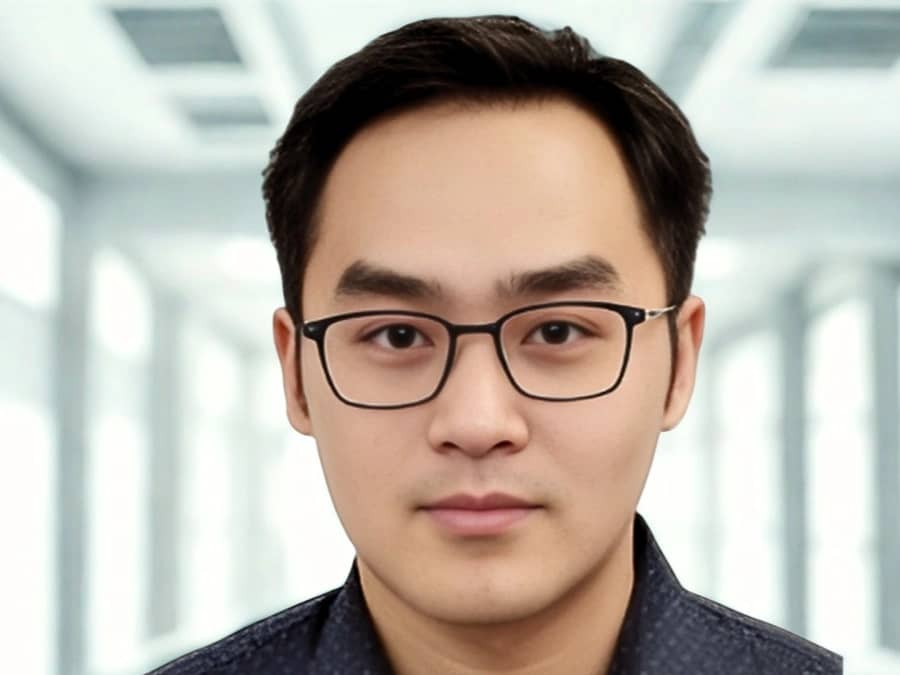
Jiahui Yu is an artificial intelligence researcher and entrepreneur known for his work on multimodal models, computer vision, generative AI, and reasoning models. He previously co-founded TBD Lab within Meta Superintelligence Labs, led perception research at OpenAI, and co-led the multimodal component of Google's Gemini project at Google DeepMind. In August 2026, Yu announced his departure from Meta to start a new company. [7] [8]
Education
Yu earned a Bachelor of Science degree in Computer Science from the University of Science and Technology of China. He later completed a PhD at the University of Illinois Urbana-Champaign, where his research focused on deep learning, computer vision, and efficient neural networks. [1]
Career
Yu began his research career as an intern at Microsoft Research Asia from May to December 2015, where he worked on large-scale deep learning training systems. In early 2016, he joined Megvii Research as a research intern, focusing on object detection and contributing to UnitBox. Between June 2016 and May 2018, he also worked as a research consultant at Jump Trading, developing models involving financial data. [1] [6]
From May to December 2017, Yu interned at Adobe Research, where his work included generative adversarial networks and image inpainting. Projects associated with this period included DeepFill and subsequent work on image completion. From January to August 2018, he worked at Snap Research on efficient deep learning models, including Slimmable Networks. He later interned at Baidu Research, Nvidia Research, and Google Brain, working on areas including AutoML, efficient neural networks, and generative models. [1] [6]
Google and Google DeepMind
Yu joined Google as a research scientist in February 2020. His work included automatic speech recognition, multimodal representation learning, computer vision, and generative models. He later became a senior research scientist and subsequently worked at Google DeepMind. [1] [6]
At Google DeepMind, Yu co-led the multimodal pillar of Gemini, Google's multimodal AI model family. He also worked on multimodal understanding and generation and contributed to research associated with Google's transition toward large-scale multimodal foundation models.
Yu left Google DeepMind in 2023. [1]
OpenAI
In October 2023, Yu joined OpenAI, where he led the Perception team. His work focused on multimodal capabilities that allow AI models to process and reason over information such as images alongside text. [1] [6]
According to Yu's personal website, he contributed to several OpenAI model releases. He worked on data, encoders, pre-training, and post-training for GPT-4o and later served as a pre-training data individual contributor and post-training adviser for GPT-4o's image-generation capabilities. Yu was the project lead for OpenAI's Thinking with Images work, the multimodal post-training lead for o3, and the directly responsible individual for o4-mini from pre-training through post-training. [1]
Yu left OpenAI in 2025 to join Meta's newly formed superintelligence organization. [2] [3]
Meta Superintelligence Labs and TBD Lab
Yu joined Meta's superintelligence initiative in 2025 as the company was recruiting researchers from organizations including OpenAI, Google DeepMind, and Anthropic. Meta formally organized Meta Superintelligence Labs (MSL) in June 2025 as part of a broader effort to develop advanced foundation models and pursue superintelligence. [2] [3]
At Meta, Yu co-founded TBD Lab, a model-development team within Meta Superintelligence Labs, and led its multimodal work. [1] [8] [9]
During his tenure, Yu's multimodal team worked on Muse Spark, Voice Mode, Muse Image, and Muse Video. Yu identifies himself as multimodal pod lead for Muse Spark 1.0, 1.1, and 1.2, as well as Muse Image and Muse Video. [1]
Muse Spark was introduced in 2026 as part of Meta's next generation of AI models. Subsequent releases and projects from the team expanded into voice, image generation, video generation, coding, agentic tasks, and multimodal capabilities. [8] [9]
Yu described building TBD Lab alongside Meta CEO Mark Zuckerberg and Meta Chief AI Officer Alexandr Wang as an important part of his time at the company. He left Meta in August 2026, approximately fourteen months after joining. [8] [9] [7]
New Company
In August 2026, Yu announced that he was leaving Meta to start a new company. [7] [8] [9] [10] [11]
In announcing the move, Yu said that over time he had become increasingly interested in a problem that he believes could have significant implications for humanity's future but remains comparatively underexplored. He said that the problem had become his primary focus and that he would disclose more information as the work developed. [7] [8] [9]
As of August 2026, Yu has not publicly disclosed the name of the new company, its specific research or product focus, its other founders or team members, or its funding arrangements. His personal website currently describes his status simply as "starting a new company." [1] [8] [9]
The new company is separate from TBD Lab, which Yu co-founded while working at Meta. TBD Lab remains part of Yu's previous work at Meta rather than the name of the venture he announced after his departure. [1] [8]
Selected Work
Yu lists a number of major multimodal and foundation-model projects among his selected work:
- Muse Spark 1.0, 1.1 and 1.2 — multimodal pod lead at Meta
- Muse Image and Muse Video — multimodal pod lead at Meta
- Thinking with Images — project lead at OpenAI
- o3 — multimodal post-training lead at OpenAI
- o4-mini — directly responsible individual from pre-training through post-training at OpenAI
- GPT-4o image generation — pre-training data contributor and post-training adviser at OpenAI
- GPT-4o — contributor across data, encoder development, pre-training, and post-training
- Gemini — co-lead of the multimodal pillar at Google DeepMind
Yu's earlier research also includes work in computer vision, neural-network efficiency, image generation, image inpainting, multimodal representation learning, and automatic speech recognition. [1]
Interviews
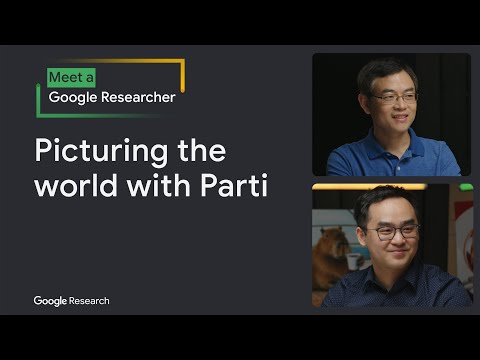
Yu has discussed his research in public interviews and technical presentations. In an episode of Google's Meet a Google Researcher, Yu and researcher Yonghui Wu discussed Parti, an autoregressive text-to-image model. The discussion covered Parti's approach to representing image generation as a sequence-modeling problem, scaling text-to-image models, multimodal research, and the development of increasingly capable generative systems. [4]
See something wrong?