0% read
Last updated:
Marco Dal Lago
Marco Dal Lago is an entrepreneur, researcher, and academic with a background spanning technology, entrepreneurship, blockchain, fintech, and digital transformation. He is Chief Expansion Officer at Tether, having previously served as Vice President of Global Expansion and Strategic Partnerships and Head of Expansion, as well as CEO and Co-Founder of CLARA Swiss Tech. [8]
Education
Dal Lago graduated from the University of Applied Sciences and Arts of Southern Switzerland with a BSc in Management Engineering in 2013 and an MSE in Business Engineering and Production in 2016. He later attended the IE Business School, where he earned his MBA in 2021. [1] [4]
Career
Dal Lago began his career with a Summer Internship at Schindler Group in Locarno in 2012, followed by a Bachelor Thesis position at the company from June to September 2013. From February 2014 to September 2023, he worked in Research and Entrepreneurship at SUPSI's Department of Innovative Technologies in Manno. He also served as a Visiting Research Scholar at BIBA - Bremer Institut für Produktion und Logistik GmbH from September 2015 to February 2016. In 2015, he became CEO and Co-Founder of CLARA Swiss Tech SAGL in Lugano, a position he held until March 2022. From December 2019 to December 2023, Dal Lago was an Associate Professor at Franklin University Switzerland, where he taught in the MSc in International Management program, focusing on digital transformation strategies. From October 2021 to October 2022, he also served as a Strategic Advisor on blockchain, distributed ledger technology, and fintech to the Italian Chamber of Deputies. Dal Lago joined Tether in April 2022 as Head of Expansion and became Vice President of Global Expansion and Strategic Partnerships in June 2024. In June 2026, he became Chief Expansion Officer, overseeing the company's expansion activities and strategic partnerships. [2]
Interviews
Tether’s Playbook
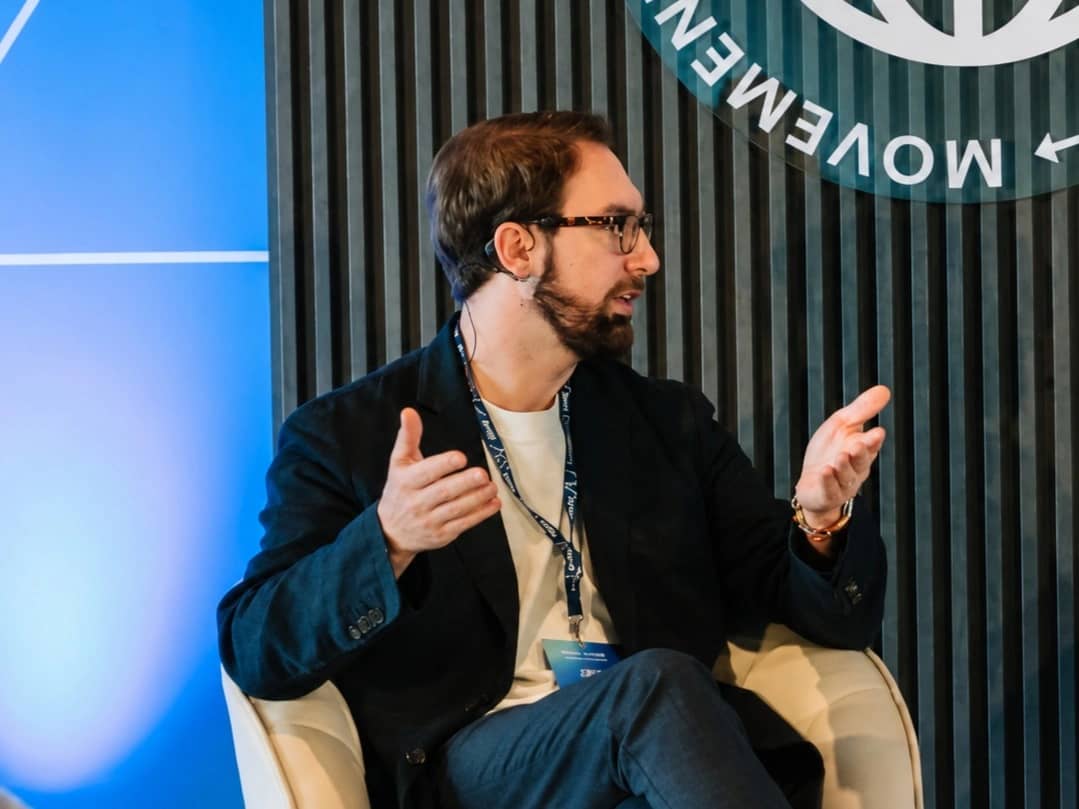
At a fireside chat at Currency Cape Town in March 2026, Dal Lago spoke with Chris Harmse of BVNK about Tether's development and position in the stablecoin market. The discussion examined Tether's early focus on cryptocurrency arbitrage and its subsequent expansion into payments and remittances during the COVID-19 pandemic, driven in part by growing demand from retail users worldwide. Dal Lago emphasized the importance of understanding local markets and user behavior, describing a regional approach based on analyzing transaction flows and influencing established usage patterns rather than relying on broad incentive programs. The conversation also covered Tether's approach to regulation and the U.S. market, including the decision to develop USDT and USAT separately while prioritizing emerging markets and strategic positioning rather than immediately pursuing U.S. domicile or compliance with the GENIUS Act. Dal Lago further discussed Tether's broader product ecosystem, including decentralized artificial intelligence and wallet infrastructure, with the size and engagement of its overall user base serving as important measures beyond USDT issuance. The discussion concluded with his outlook for stablecoins and on-chain payments, including continued experimentation in the sector, the growth of cross-border transactions, gold-backed digital assets, and the possibility that gold or other digital assets could eventually serve as widely used mediums of exchange. [6]

Presentations
USDt
At a presentation at UDC in November 2025, Dal Lago discussed the origins and development of Tether and USDT, explaining that the stablecoin was created in 2014 to facilitate trading and arbitrage between cryptocurrency exchanges by providing liquidity during periods of Bitcoin market volatility. He described USDT's market capitalization growing to nearly $69 billion and its increasing adoption among individual users and institutions, highlighting its ability to process large-scale redemptions during periods of financial stress. Dal Lago emphasized USDT's role in emerging markets where access to U.S. dollars is limited, particularly for remittances, trade, and savings in countries affected by inflation and currency devaluation. He also discussed the predominance of small, local USDT transactions for remittances and everyday payments, as well as Tether's blockchain-agnostic approach, which he described as supporting decentralization and reducing dependence on centralized infrastructure. The presentation also covered USDT's use in cross-border payments, trade finance, and gig-economy payments, along with Tether's cooperation with law enforcement agencies, which Dal Lago described as helping make USDT a transparent and traceable financial tool while discouraging illicit activity. [3]

Digital Gold
At the 18th Bolivian Economists Meeting in February 2026, Dal Lago discussed the role of blockchain technology in financial and economic development, drawing on his experience in innovation and technology education. He described the development of USDT since its launch in 2014, including its use as a globally transferable stablecoin and its backing by U.S. government debt and Bitcoin. Dal Lago also discussed Tether’s integration of gold through XAUT, backed by gold held in Swiss vaults, as well as its exploration of smart-contract applications with Hydron in countries with high levels of cryptocurrency adoption, such as Argentina. He highlighted cryptocurrency adoption in Argentina, Brazil, and Mexico for purposes including protection against currency devaluation and remittances, while also discussing the growth of Bitcoin investment through exchange-traded funds and strategic Bitcoin reserves established by the United States and other countries. Dal Lago concluded that cryptocurrency adoption remains in its early stages, comparing its development to the early history of the internet and arguing that blockchain technology could drive broader changes in the global economy as more countries incorporate Bitcoin into their strategic reserves. [7]

See something wrong?