0% read
Last updated:
Mira Murati
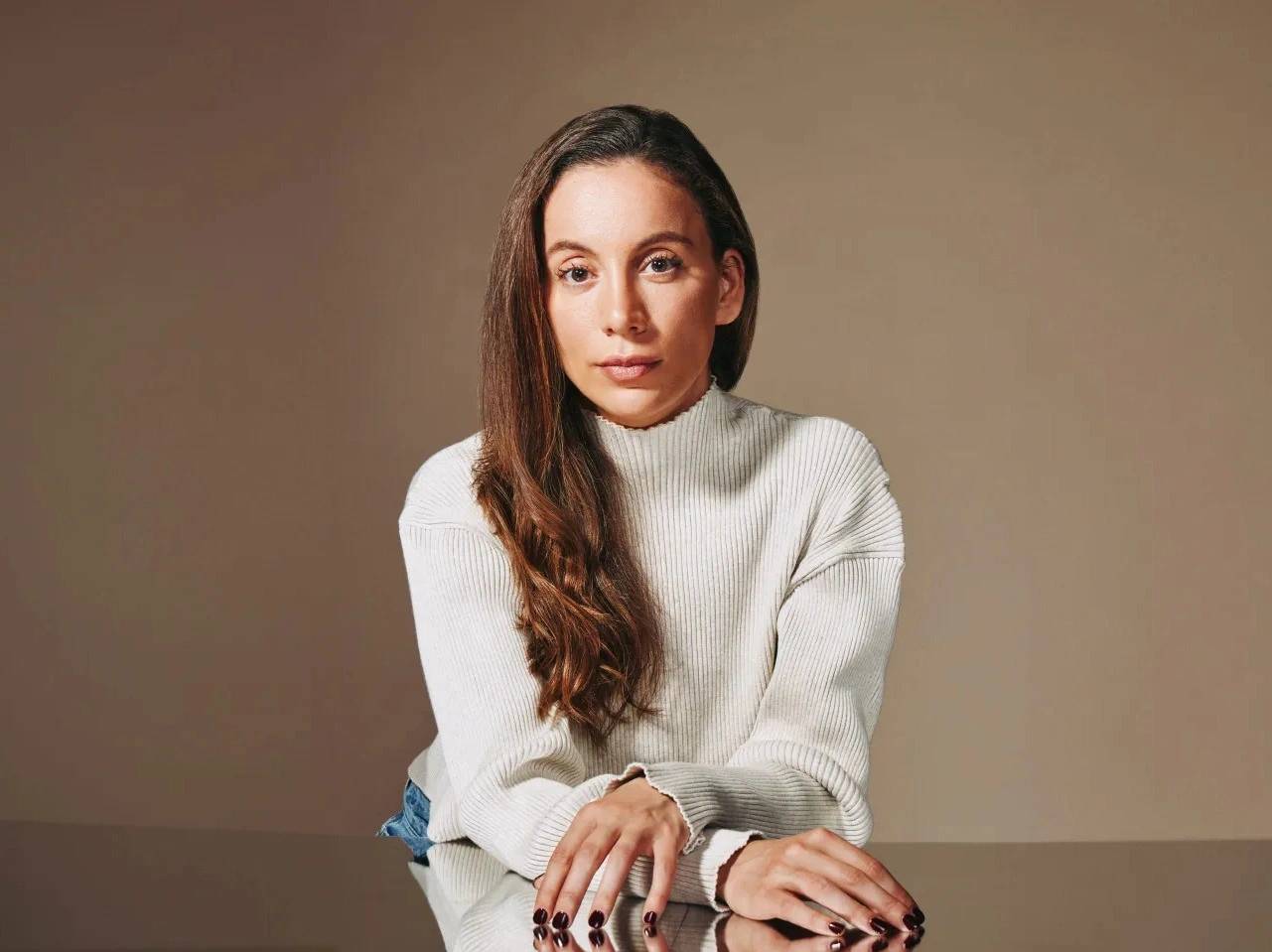
Mira Murati (born December 16, 1988) is an Albanian-American engineer and technology executive, former chief technology officer (CTO) of OpenAI, and founder and CEO of Thinking Machines Lab, founded in February 2025. The company says it focuses on customizable AI systems and human–AI collaboration.[7][2] Murati was included in Time’s 100 Most Influential People in AI list in 2026.[10]

Early Life
Mira Murati was born on December 16, 1988, in Vlorë, Albania.[9] At the age of 16, she moved to Canada on a scholarship from United World Colleges to attend Pearson College on Vancouver Island, an international school that brings together students from dozens of countries.[9] Growing up under a totalitarian communist regime in Albania, with both parents working as high school literature teachers, she has credited the environment's "boredom" with fostering her curiosity for knowledge and a passion for tinkering with computers, and has described having an “organic interest” in mathematics and science that led her to participate in academic Olympiads and competitions.[1][9]
Education
Murati pursued higher education through a dual-degree program between Colby College and Dartmouth College’s Thayer School of Engineering. She completed a Bachelor of Arts in mathematics at Colby College in 2011 and graduated in 2012 with a Bachelor of Engineering in mechanical engineering from Dartmouth.[1][9]
Career
Following her graduation from Dartmouth, Murati’s early professional experience included a summer analyst internship at Goldman Sachs in Tokyo in 2011 and a role as an Advanced Concepts Engineer at Zodiac Aerospace from 2012 to 2013.[9] She then joined Tesla in 2013 as a senior product manager on the Model X program, where she worked on the company's early-stage autopilot function, an experience that sparked her initial interest in artificial intelligence.[1][9] In 2016, she moved to Leap Motion, an augmented-reality startup, where she served as vice president of product and engineering and focused on advancing human–computer interaction technologies.[9]
In June 2018, Murati joined OpenAI, an AI research and deployment company, as vice president of applied AI and partnerships. She later became senior vice president of research, product, and partnerships in 2020 and was promoted to chief technology officer (CTO) in 2022.[9] During her tenure, Murati oversaw teams involved in developing and launching products including DALL-E, an image-generation system; ChatGPT, a conversational AI system; Codex, a coding model; and Sora, a video-generation model.[1][9] She was also involved in managing OpenAI's $13 billion partnership with Microsoft.[1] In November 2023, amidst a period of leadership instability at OpenAI, she briefly served as interim CEO following Sam Altman’s removal by the board before his later reinstatement.[1][9]
Murati’s time at OpenAI brought both recognition and controversy. She was ranked 57th on Fortune’s list of “The 100 Most Powerful Women in Business” in 2023 and featured in Time’s 100 Most Influential People in AI in 2024, and in June 2024 Dartmouth College awarded her an honorary Doctor of Science degree for her contributions to artificial intelligence and engineering.[9] At a speaking engagement at Dartmouth’s Thayer School of Engineering, she drew criticism for comments suggesting that “some creative jobs maybe will go away, but maybe they shouldn’t have been there in the first place,” which some observers viewed as insensitive to workers concerned about automation.[9] Throughout this period, Murati frequently engaged in public discourse regarding the potential and risks of AI, emphasizing the importance of aligning AI models with human intention and ensuring they serve humanity, and has argued that companies like OpenAI need extensive input from regulators and governments to develop responsible AI governance.[1][9]
On September 25, 2024, Murati announced that she was leaving OpenAI after six and a half years. She said she wanted “to create the time and space to do my own exploration” and would focus on ensuring a smooth transition.[19][9] She founded Thinking Machines Lab in February 2025.[7]

Thinking Machines Lab
In February 2025, Mira Murati founded Thinking Machines Lab, an artificial intelligence research and product company, and became its CEO.[4][7] She established the company with a team of fellow OpenAI veterans, including co-founders John Schulman, Barret Zoph, Lilian Weng, Andrew Tulloch, and Luke Metz.[2][1][8] The company describes its mission as making AI systems more widely understood, customizable, and generally capable, with an emphasis on human–AI collaboration.[2]
Murati has described Thinking Machines as building multimodal AI that interacts with humans “through conversation, through sight, through the messy way we collaborate,” and has framed the company’s work as developing “interaction models” that process continuous streams of audio, text, and video in near real time, rather than relying solely on turn-based prompts.[4][11][12] In a 2026 interview, she compared these systems to a “tandem bike,” arguing that advanced AI should augment rather than replace human decision-making and that keeping people continuously involved in shaping system behavior is key to preserving human agency.[12][10] Time’s 2026 Time100 AI profile similarly emphasized her focus on building customizable models that keep humans in control of how powerful systems are adapted to specific tasks.[10]
In a May 11, 2026 research preview, Thinking Machines Lab described TML-Interaction-Small as a model trained from scratch to process audio, video, and text as continuous, time-aligned streams in 200-millisecond micro-turns, rather than waiting for conventional turn boundaries. The company’s technical description says its real-time interaction model can hand longer reasoning and tool-use tasks to an asynchronous background model while remaining responsive to the user.[20] The company described the system as a research preview.[20]
In July 2026, the company released its first generally available AI model, Inkling, an open-weight model designed as a generalist that balances cost against performance and can be downloaded and customized by developers.[13][10] Thinking Machines has stated that Inkling is intended to perform across a wide range of benchmarks and presents it as a building block for more personalized, interaction-centric systems.[13][10] Company materials and press coverage describe Inkling as a 975-billion-parameter system with 41 billion active parameters, supporting text, image, and audio inputs and context windows reportedly up to around 1 million tokens.[13]
Alongside its technical work, the company has experienced departures. Meta’s Superintelligence Labs recruited several founding researchers from Thinking Machines, and other employees departed for firms such as OpenAI.[12][13]
Inkling 2 Small
Thinking Machines Lab introduced Inkling 2 Small on November 5, 2026. The company describes it as a mixture-of-experts model with 594 billion total parameters and 17 billion active parameters, supporting image input and variable reasoning effort.[16][21] After safety testing and red-teaming, it first became available with closed weights through Tinker; on November 12, its weights became downloadable under the Apache 2.0 license.[16][21] The company reported an Artificial Analysis Intelligence Index score of 31 and described improvements in agentic coding, vision, knowledge work, and reasoning.[16] VentureBeat reported the model’s specifications and noted that the benchmark figures in its comparison came from the company’s published release tables.[22] The company’s announcement and model card state that Inkling 2 Small accepts images but not audio.[16][21] On November 12, 2026, Plotly reported that the model scored 39/43 in Plotly’s own data-analysis test, PlotlyDataAnalyticsBench.[23]
Tinker Product Launch
In October 2025, Thinking Machines Lab launched its first product, a tool named Tinker. The product is a managed fine-tuning and post-training API: customers control their data and training loops while the company manages infrastructure. The company's stated goal for Tinker is to enable more people to experiment with and conduct research on AI systems.[8][9]
Tinker manages tasks such as GPU clusters and stabilizing large-scale training runs. It allows users to fine-tune open-source models, initially supporting Meta’s Llama and Alibaba’s Qwen, through methods like supervised learning and reinforcement learning. Upon launch, the company began allowing users to apply for access to the Tinker API, which was initially offered for free. Murati expressed hope that making these tools more widely available would help reverse the trend of leading AI models becoming increasingly closed and proprietary.[8] Tinker has been used by enterprise customers such as hedge fund Bridgewater Associates, which uses fine-tuning to improve AI performance on financial tasks.[13]
In an October 15, 2026 retrospective, Thinking Machines Lab said Tinker had added more than 20 models since its launch, introduced full fine-tuning in beta, and offered a production sampling and inference API compatible with OpenAI and Anthropic interfaces in beta.[17] The company said its direction for Tinker’s second year was to support training and serving custom models at commercial scale. It also reported that Glean’s search agent became twice as fast while using 25% fewer tokens without a quality regression, and that Bridgewater’s custom text-to-SQL model achieved benchmark accuracy at 15% of the cost of Fable 5 and GPT-5.6 Sol.[17]
Funding and Valuation
In July 2025, Thinking Machines Lab raised $2 billion in seed financing at a reported $12 billion valuation. The round was led by Andreessen Horowitz (a16z), with investment from Accel, Advanced Micro Devices (AMD), Nvidia, Cisco, ServiceNow, and Jane Street. The Albanian government was also an early investor, contributing €8.8 million to the startup.[3][1][4][7]
On March 10, 2026, Bloomberg reported that Nvidia was making a strategic investment in Thinking Machines Lab and that the companies had announced a multiyear supply agreement for at least one gigawatt of Nvidia Vera Rubin systems, expected to be deployed in early 2027. The public announcement did not disclose the investment amount.[24] This investment was separate from later reported financing discussions.
TechCrunch’s September 3, 2026 account described an early version of the financing report, with discussions of a $1 billion raise at a valuation of at least $40 billion.[14] The Information’s report, updated after its initial publication, described talks for a proposed $5 billion to $6 billion round at a pre-money valuation of at least $40 billion. Nvidia was reportedly expected to contribute about $2.5 billion to $3 billion, while Accel was discussing a lead role.[25][26] These reported terms described negotiations, not a completed financing.
Business Insider reported on November 6, 2026 that the company was expected to close a proposed $5 billion round at a $40 billion pre-money valuation, led by Accel, as soon as that week. Thinking Machines Lab declined to comment.[15] This was the latest reported financing proposal.
TechCrunch reported on September 3, 2026 that Thinking Machines Lab’s company-wide annualized revenue run rate exceeded $100 million, citing a source familiar with its financials.[14]
Team and Recruitment
The team at Thinking Machines Lab includes scientists, engineers, and builders whose previous work included ChatGPT, Character.ai, open-weight models such as Mistral, and projects including PyTorch, OpenAI Gym, Fairseq, and Segment Anything.[2] The leadership team includes Murati as CEO, Soumith Chintala as CTO after his move from Meta, and John Schulman as chief scientist. Lilian Weng was a co-founder and founding member of Thinking Machines Lab.[12]
Federal hiring data from the first quarter of 2025 showed Thinking Machines Lab paying technical staff base salaries ranging from $450,000 to $500,000. Reported compensation packages could also include sign-on bonuses and equity awards.[6] In July 2025, Meta's Superintelligence Labs reportedly approached more than a dozen staffers at Thinking Machines Lab, with one individual receiving an offer exceeding $1 billion to join Meta.[5] Meta’s lab later hired several founding members of Thinking Machines, including engineer Joshua Gross, while other researchers left for organizations such as OpenAI.[12][13][10] In July 2026, Weng left Thinking Machines, citing health concerns and the workload and stress of working at a startup. She rejoined OpenAI to lead a team focused on accelerating internal research, according to OpenAI.[18]

See something wrong?